

Deciding whether you can defrost steak in the microwave is a common dilemma when you are staring at a rock-hard slab of beef and dinner is only an hour away. While many home cooks worry about the texture or the safety of the meat, it is entirely possible to use this appliance if you follow specific precautions.
You aren’t necessarily ruining your meal, but you do need to be careful about uneven heating and potential bacterial growth. Understanding the mechanics of how your microwave interacts with frozen proteins ensures you get a decent result without turning your expensive cut into a chewy, gray disaster.
The Mechanics of Microwave Thawing
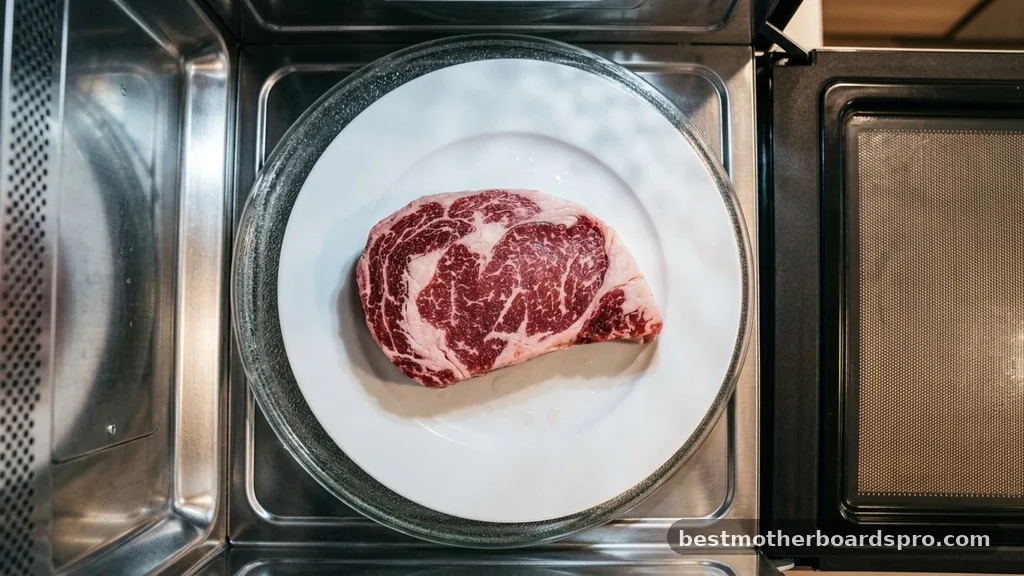
When you use a microwave to thaw meat, the appliance works by vibrating water molecules within the steak. This rapid movement generates friction, which creates heat.
Because microwaves are not designed to thaw food evenly, they tend to heat the outer edges of the steak much faster than the dense center. This is why you often see the edges of a steak turn brown or start to “cook” while the core remains icy.
To mitigate this, most modern microwaves feature a defrost setting. This function pulses the power at a lower wattage, allowing the heat to conduct toward the center of the meat more gradually.
Even with this setting, the process is far from perfect. You are essentially racing against the clock to bring the internal temperature of the steak above freezing without hitting the threshold where the proteins begin to denature and toughen.
Step-by-Step Guide to Safe Microwave Defrosting
If you find yourself in a pinch, follow these steps to minimize the risk of ruining your dinner. Preparation is key to ensuring the meat remains palatable.
- Remove all original packaging, including plastic wrap and foam trays, as these can melt or release chemicals when heated.
- Place the steak on a microwave-safe plate, ideally one that allows for slight elevation to help heat circulate.
- Select the defrost setting or manually set the power level to 20% or 30%.
- Microwave in short bursts of 30 to 60 seconds, flipping and rotating the steak between every interval.
- Stop the process as soon as the meat is pliable; do not wait for it to reach room temperature.
- Cook the steak immediately after thawing to prevent harmful bacteria from multiplying in the temperature danger zone.
Why Speed Often Compromises Quality
The primary drawback of using a microwave is the impact on muscle fibers. Beef contains delicate protein structures that react poorly to the intense, localized heat of electromagnetic waves. When these fibers heat up too quickly, they contract and squeeze out internal juices, resulting in a dry, mealy texture once the steak eventually hits the grill or pan.
Furthermore, the “danger zone”—the temperature range between 40°F and 140°F where bacteria thrive—is a major concern. Because microwave thawing is uneven, parts of the steak may enter this zone while other parts are still frozen.
If you don’t move the meat directly to a high-heat cooking surface, you risk foodborne illness. This is why you should never partially thaw steak in the microwave and then leave it sitting on the counter or in the fridge for later.
Comparing Thawing Methods
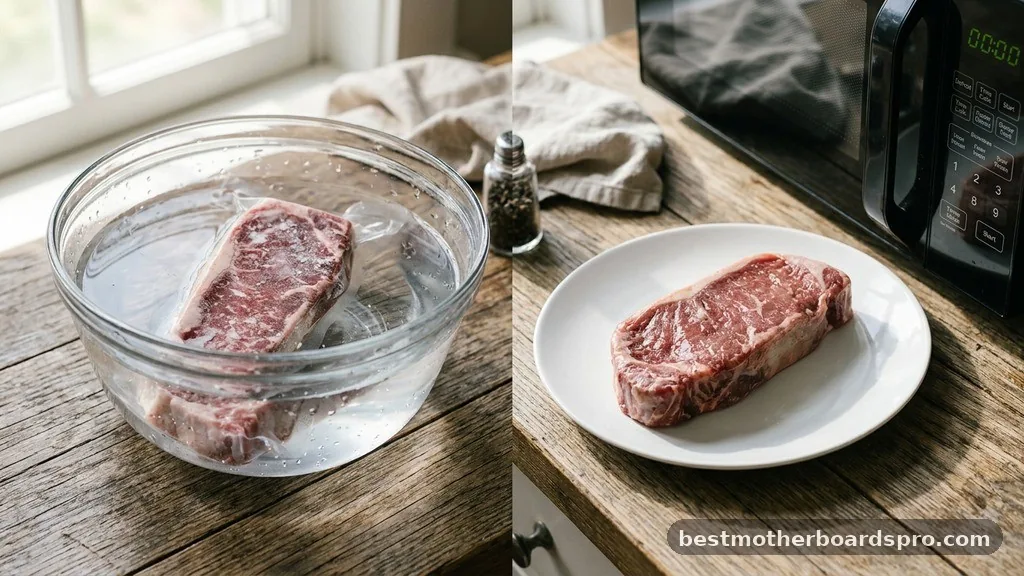
Choosing the right method depends on how much time you actually have. While the microwave is the fastest, it is rarely the best for flavor.
| Method | Time Required | Quality Impact | Effort Level |
|---|---|---|---|
| Fridge Thawing | 12–24 Hours | Excellent | Low |
| Cold Water Bath | 1–3 Hours | Good | Medium |
| Microwave | 5–10 Minutes | Poor/Fair | High (Active Monitoring) |
Addressing Common Misconceptions
Many people believe that using a bowl of water inside the microwave helps the process. While water can act as a buffer to prevent extreme localized heating, it is often unnecessary and messy. If you do use a bowl, ensure the container is deep enough that the water doesn’t boil over, and keep the steak in a sealed, leak-proof bag.
Another myth is that you can “cook” the steak to perfection inside the microwave. Never attempt to cook a steak entirely in this appliance.
The lack of Maillard reaction—the browning process that creates savory flavor—means you will end up with a gray, boiled-tasting piece of meat that lacks the crust essential for a great steak. The microwave should only be used to transition the meat from frozen to thawed, never as a primary cooking tool.
Best Practices for Future Planning
The best way to avoid the microwave dilemma is to manage your freezer inventory effectively. If you know you want to grill steaks on Friday, move them from the freezer to the bottom shelf of your fridge on Wednesday night. This slow, steady thaw preserves the integrity of the muscle fibers and ensures the meat retains its moisture.
If you forget, the cold water method is a superior middle ground. By placing the vacuum-sealed or plastic-wrapped steak in a bowl of cold tap water—changing the water every 30 minutes—you can thaw a standard steak in about an hour. This keeps the meat temperature low while the ice crystals melt, avoiding the “cooked edge” phenomenon entirely.
Frequently Asked Questions
Is it safe to eat steak that has been defrosted in the microwave?
Yes, it is safe, provided you cook the steak immediately after the process is complete. Because the microwave can create uneven spots that reach the temperature danger zone, leaving the meat to sit or returning it to the fridge is risky and promotes bacterial growth.
How do I prevent the edges of the steak from cooking while thawing?
To minimize cooking, use the lowest power setting on your microwave, typically between 20% and 30% intensity. It is also critical to flip the meat and rotate the position of the steak every 30 seconds to ensure the heat distribution remains as uniform as possible throughout.
Can I put the steak directly on the grill after microwave thawing?
Absolutely. In fact, it is recommended to move the steak to a hot grill or skillet immediately. Since the center may still be slightly chilled, the high heat of the cooking surface will finish the thawing process while simultaneously searing the exterior to create a delicious crust.
Why does my steak taste rubbery after microwave thawing?
The rubbery texture is caused by rapid protein denaturation. The microwave’s energy vibrates water molecules so violently that the muscle fibers contract prematurely, expelling the moisture that makes steak juicy. This is why you should limit the microwave time to the absolute minimum required to make the meat pliable.
Final Thoughts on Thawing
While the question of whether you can defrost steak in the microwave often comes with a warning, it remains a functional tool for those moments when you are short on time. By prioritizing low power, frequent rotation, and immediate cooking, you can mitigate the negative effects on texture and food safety. However, whenever the calendar allows, opting for the refrigerator or a cold water bath will always yield a superior culinary result.
Your steak deserves the best treatment possible, so keep the microwave as your last resort rather than your default choice. When you eventually place that perfectly thawed piece of meat onto a hot grill, the difference in quality and flavor will be well worth the extra bit of planning.
