
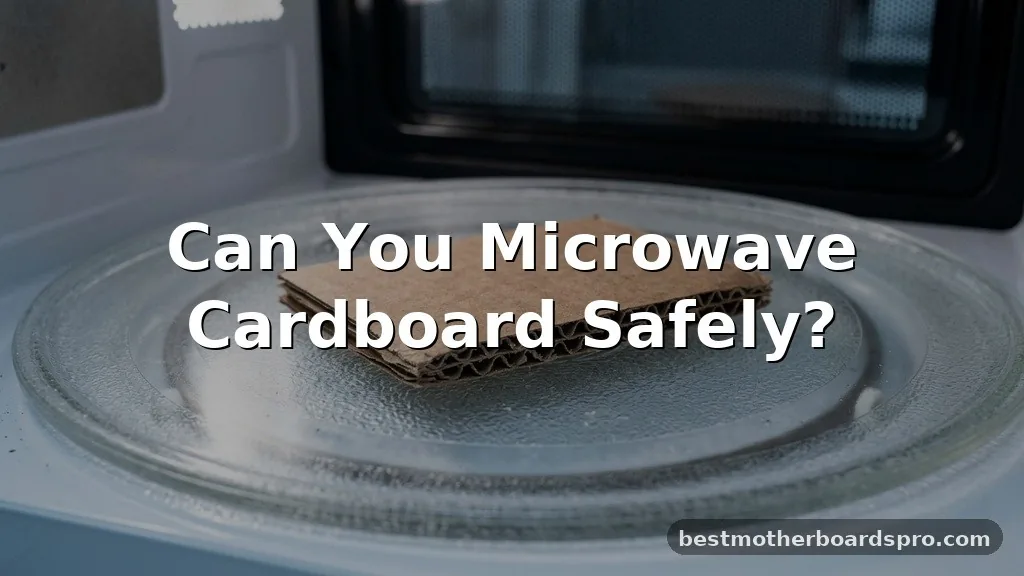
Determining whether you can microwave cardboard depends heavily on the specific type of material and its intended purpose. While many people assume that paper-based products are inherently harmless, the reality is more nuanced because manufacturers often treat food packaging with waxes, adhesives, or plastic linings.
If you are wondering if you can microwave cardboard, you need to look beyond the basic paper fibers and consider what else might be hidden within the structure. Understanding these hidden additives is the key to keeping your kitchen environment safe while you heat up your leftovers.
The Science of Microwaveable Materials
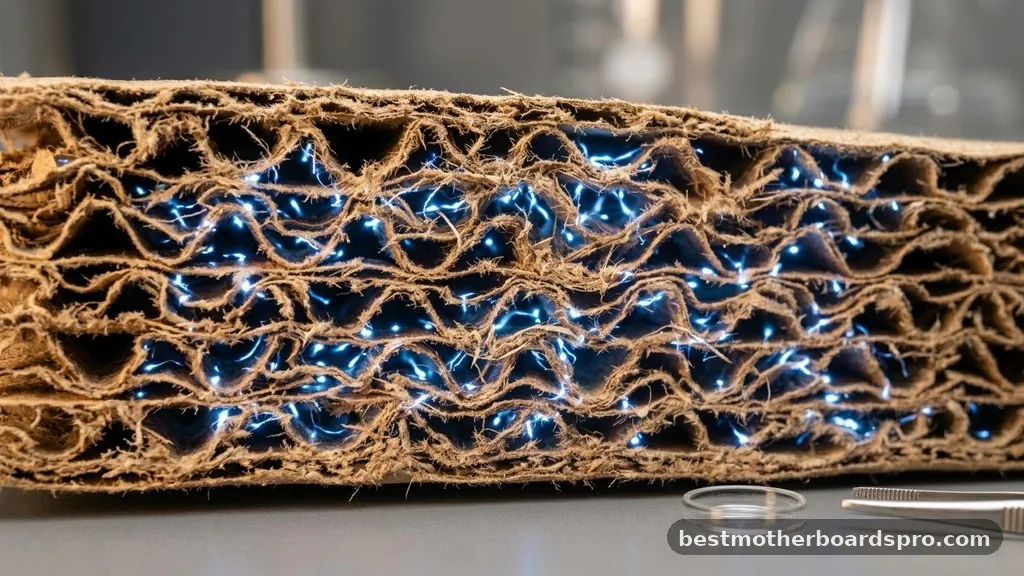
When you place an item into a microwave, the appliance generates electromagnetic waves that excite water molecules in food, creating heat. This process is efficient for moisture-heavy items, but it can be unpredictable when applied to dry, porous materials like paper or fiberboard. Most people ask if they can microwave cardboard because they want a convenient way to reheat takeout, but the structure of that packaging often dictates the outcome.
Standard cardboard is essentially a dense arrangement of cellulose fibers. In its raw form, it is generally stable under short bursts of heat. However, modern food packaging is rarely “raw.”
To prevent grease from soaking through or liquids from weakening the box, companies apply barriers. If those barriers are not specifically rated as microwave-safe, they can degrade, smoke, or even catch fire under the intense localized heat generated by a microwave.
Identifying Safe Food Packaging
Not all paper-based products are created equal. To determine if your container is suitable for heating, look for specific industry markings that indicate it has been tested for high-temperature stability. If you cannot find a “microwave-safe” label, it is generally better to err on the side of caution and transfer your food to a ceramic or glass dish.
The primary risk factor is the presence of synthetic materials. Many takeout boxes contain thin layers of plastic or chemical coatings designed to act as a moisture barrier.
When these coatings reach a certain temperature, they can melt or release volatile organic compounds into your meal. This is why you should be skeptical of any cardboard container that feels waxy or looks unusually glossy on the inside.
| Material Type | Microwave Suitability | Primary Risk |
|---|---|---|
| Plain Kraft Paper | Generally Safe | May char if dry |
| Wax-Coated Cardboard | Risk of Melting | Wax can smoke or melt |
| Plastic-Lined Containers | Not Recommended | Chemical leaching/melting |
| Metallic Ink/Foil | Extremely Dangerous | Arcing and fire hazard |
Common Hazards of Microwaving Cardboard
The most immediate danger when you decide to microwave cardboard is the potential for fire. Cardboard is a combustible material, and if it becomes too dry or is left in the microwave for an extended period, it can ignite.
This is particularly common if the cardboard contains metallic staples, handles, or decorative foil prints. These metal components cause arcing, where electricity jumps between conductive surfaces, creating sparks that can easily set the paper fibers ablaze.
Another concern is the structural integrity of the container. As the food inside heats up, it releases steam.
If the cardboard is not designed to handle this moisture, it may turn into a soggy mess, potentially collapsing and spilling hot contents inside your appliance. Furthermore, if the box contains adhesives or glues that are not heat-resistant, these substances can soften and potentially contaminate your food during the heating process.
Practical Guidelines for Safe Heating
If you are determined to reheat food in its original packaging, you should follow a strict set of safety protocols to minimize risk. Start by inspecting the box for any hidden metal parts, such as wire ties or metallic fasteners. If you see anything shiny or reflective, remove the food immediately and use a different container.
- Check for a microwave-safe symbol or manufacturer stamp on the bottom of the container.
- Avoid heating greasy foods in cardboard for more than 60 seconds.
- Remove any plastic lids or utensils before placing the box in the unit.
- Monitor the microwave closely; never walk away while heating paper-based items.
- Transfer food to a glass or ceramic plate if the cardboard shows signs of warping.
Addressing Common Misconceptions
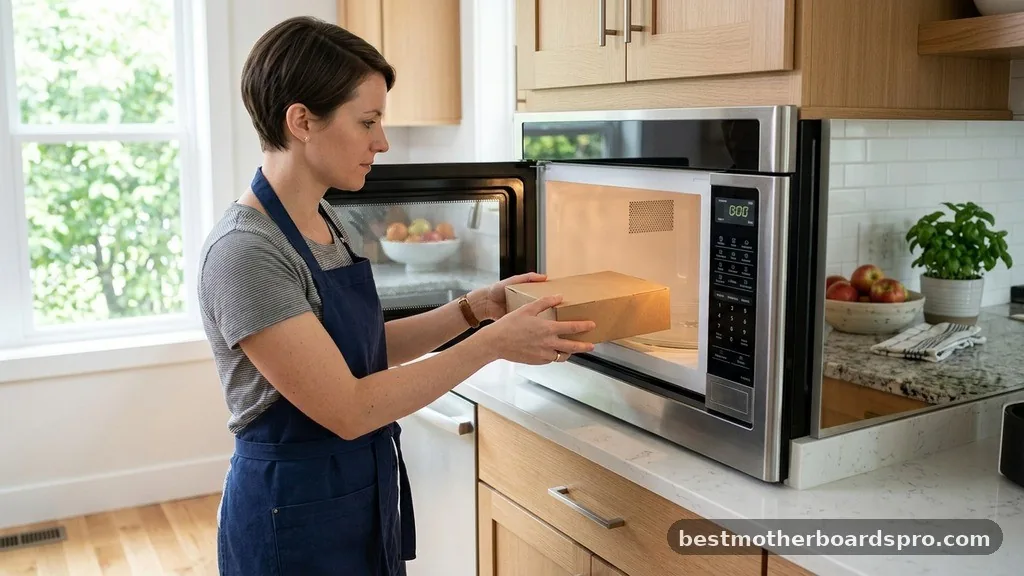
Many people believe that because paper towels are safe to use in the microwave, all cardboard products must be equally safe. This is a dangerous oversimplification.
Paper towels are thin, manufactured without heavy-duty coatings, and designed for quick moisture absorption. Cardboard, by contrast, is engineered for durability and often includes chemical treatments that react poorly to sustained radiation.
Another misconception is that the “brown” color of a box indicates it is natural and therefore safe. The color of the cardboard often comes from the type of wood pulp used, not the absence of chemicals.
Even plain-looking boxes can be treated with fire retardants or anti-fungal agents to ensure they remain sanitary during shipping. These chemicals are meant to stay in the packaging, not to be ingested after being heated.
Can You Microwave Cardboard Takeout Boxes?
Most fast-food and restaurant takeout boxes are designed for transport rather than reheating. When you ask if you can microwave cardboard takeout containers, the answer is usually no, unless the manufacturer explicitly states otherwise. Most of these boxes are made from bleached or unbleached paperboard that is thin and prone to burning.
If you find yourself with a takeout box, the safest approach is to transfer the food to a plate. This eliminates the uncertainty regarding the lining of the box and ensures that you aren’t consuming any chemicals that might leach out during the heating cycle. It also provides a more even heating experience, as the microwave energy can circulate around the food more effectively without the obstruction of the box walls.
The Role of Coatings and Adhesives
The “microwave-safe” designation is not just about the paper itself, but the entire assembly of the container. This includes the adhesives used to keep the box folded and the coatings used to prevent leaks.
Many standard glues are thermoplastic, meaning they lose their adhesive properties when they get hot. If a box pops open while in the microwave, it can create a safety hazard and an unwanted mess.
Furthermore, some modern food packaging uses PFAS (per- and polyfluoroalkyl substances) to provide oil and water resistance. While research is ongoing regarding the long-term effects of these chemicals, studies have suggested that heat can increase the migration of these substances into food. Choosing to avoid microwaving cardboard is a proactive way to reduce your exposure to unnecessary additives.
When in Doubt, Transfer
The best advice for any home cook is to rely on inert materials for heating. Glass, ceramic, and high-quality silicone are chemically stable and do not interact with microwave energy in a way that creates safety concerns. By making it a habit to transfer food, you remove the guesswork entirely.
If you are in a situation where you absolutely must use the original packaging, keep the heating time short. Do not exceed one minute, and check the box for signs of heat stress, such as browning, smoking, or a burning odor. If you notice any of these signs, stop the microwave immediately and let the unit cool down before opening the door.
Frequently Asked Questions
Is cardboard safe in the microwave if it has no labels?
If a cardboard container lacks a microwave-safe label, you should assume it is not safe. Manufacturers typically label items that have passed safety tests. Without this confirmation, you risk exposing your food to melting plastics, waxes, or chemical adhesives that could compromise your health.
Can I microwave a pizza box?
You should never microwave a full pizza box. Pizza boxes are often large, contain trapped air that can lead to uneven heating, and frequently feature metallic inks or adhesives that can spark. Always remove the pizza slices and place them on a microwave-safe plate before heating.
What happens if I microwave cardboard with metallic ink?
Microwaving cardboard with metallic ink or foil accents causes arcing. This occurs when the electric field of the microwave interacts with the conductive metal, causing sparks or electrical discharge. This is a significant fire hazard and can permanently damage the internal components of your microwave oven.
Is it safe to microwave cardboard for short bursts?
While a few seconds might not cause immediate fire, it is still not recommended. Many cardboard containers contain hidden coatings that can start to degrade or release odors even at lower temperatures. It is always safer to transfer your food to a plate to ensure there is no contamination.
Final Thoughts
The question of whether you can microwave cardboard is one that warrants caution. While some specialized, microwave-rated paper products exist, the vast majority of cardboard packaging is designed solely for storage and transport. By opting for glass or ceramic dishes instead of relying on the original box, you protect your food from potential chemical leaching and avoid the fire risks associated with paper-based materials.
Taking the extra few seconds to transfer your meal is a simple, effective way to maintain a safer kitchen environment. If you are ever unsure about the safety of a container, the best rule of thumb is to play it safe and use a dish you know is designed for the job.