
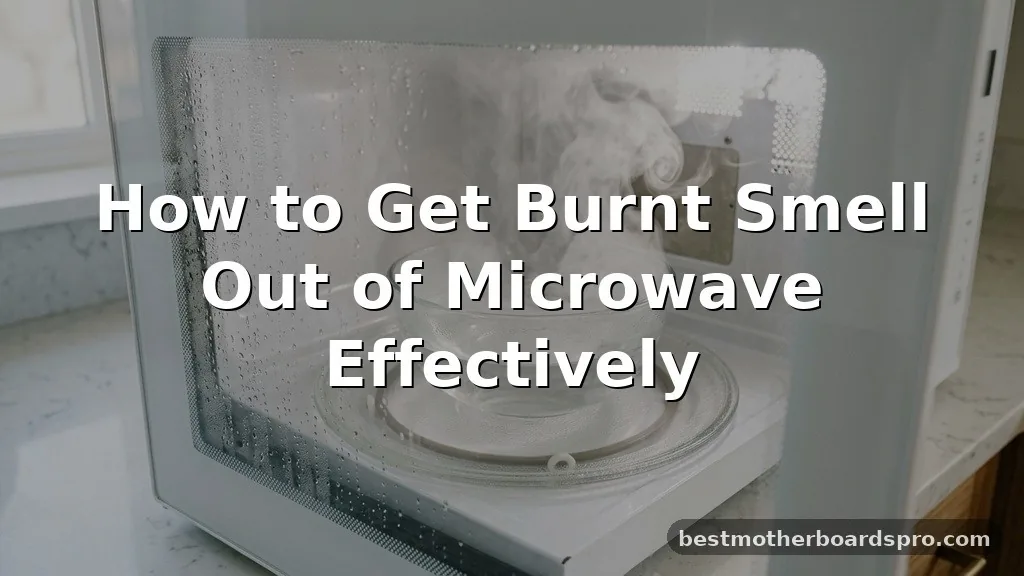
Dealing with a lingering, acrid odor in your kitchen can be incredibly frustrating, especially when you are just trying to reheat a meal. Learning how to get a burnt smell out of a microwave is a common household challenge, but it is one you can solve quickly with the right approach.
Whether it was a forgotten bag of popcorn or an accidental overheating incident, these persistent smells often cling to the interior surfaces. By using simple, natural ingredients found in most pantries, you can restore your appliance to a fresh state without relying on harsh chemicals or expensive cleaners.
Identifying the Source of the Odor
Before you start scrubbing, you need to understand why the smell persists. A lingering scent usually indicates that carbonized food particles have bonded to the interior walls or the roof of the microwave cavity. These tiny, charred remnants continue to off-gas, releasing volatile organic compounds that keep the air inside the appliance smelling like a campfire long after the incident.
If you only wipe the bottom tray, you will likely miss the source. The roof of the microwave often collects grease and food splatters that bake on over time. When you overheat something, these hidden deposits burn, creating a smell that permeates the plastic and metal components of the unit.
Steam Cleaning with Acidic Solutions
The most effective way to loosen burnt gunk is through steam cleaning. By heating a liquid solution, you create moisture that penetrates the porous, burnt-on residue, making it soft and easy to wipe away.
Using White Vinegar for Neutralization
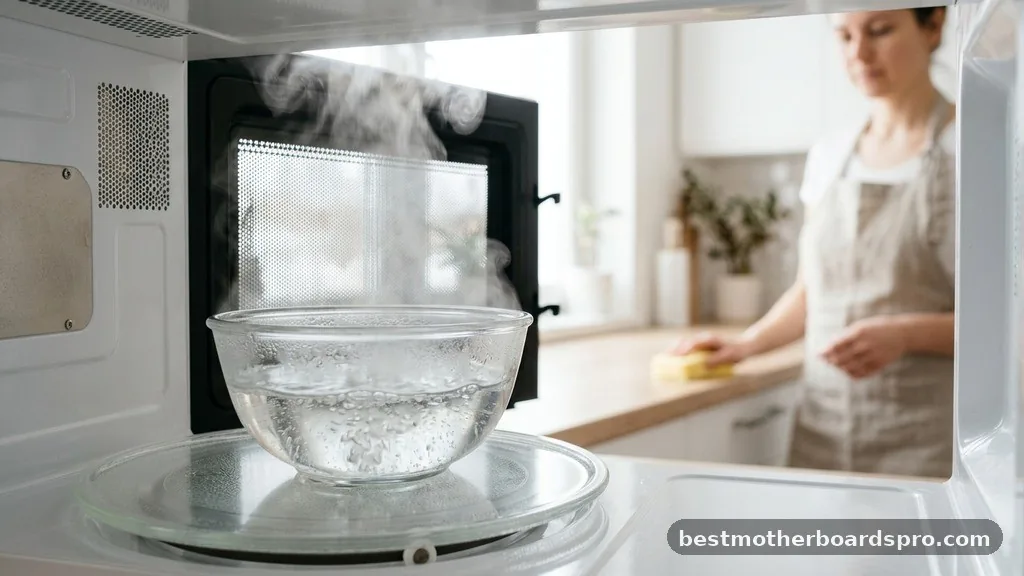
White vinegar is a powerhouse for odor removal because its acidity breaks down grease and neutralizes alkaline smells. To use it, fill a microwave-safe bowl with one cup of water and two tablespoons of white vinegar. Heat the mixture on high for about three to five minutes, or until the window begins to steam up.
Leave the door closed for another ten minutes to let the steam work its magic. Once the time is up, carefully remove the bowl and use a non-abrasive sponge to wipe down the interior walls.
Harnessing the Power of Lemon Juice
If you dislike the scent of vinegar, lemon juice is an excellent alternative. It provides a fresh, clean aroma while effectively cutting through the greasy film that often traps odors.
Follow the same steam method as you would with vinegar, substituting the acidity of the lemon for the vinegar. The natural oils in the citrus will help cut through stubborn buildup, leaving your kitchen smelling like a fresh orchard rather than a burnt kitchen.
| Cleaning Agent | Best For | Application Method |
|---|---|---|
| White Vinegar | Heavy odors & grease | Steam in bowl for 5 minutes |
| Lemon Juice | Mild smells & freshness | Steam in bowl for 3 minutes |
| Baking Soda | Surface scrubbing | Paste application |
Deep Cleaning Tough Residue
Sometimes steam alone is not enough, especially if the carbonized material is thick. You may need to perform a physical scrub to ensure you fully remove all food residue.
Creating a Baking Soda Paste
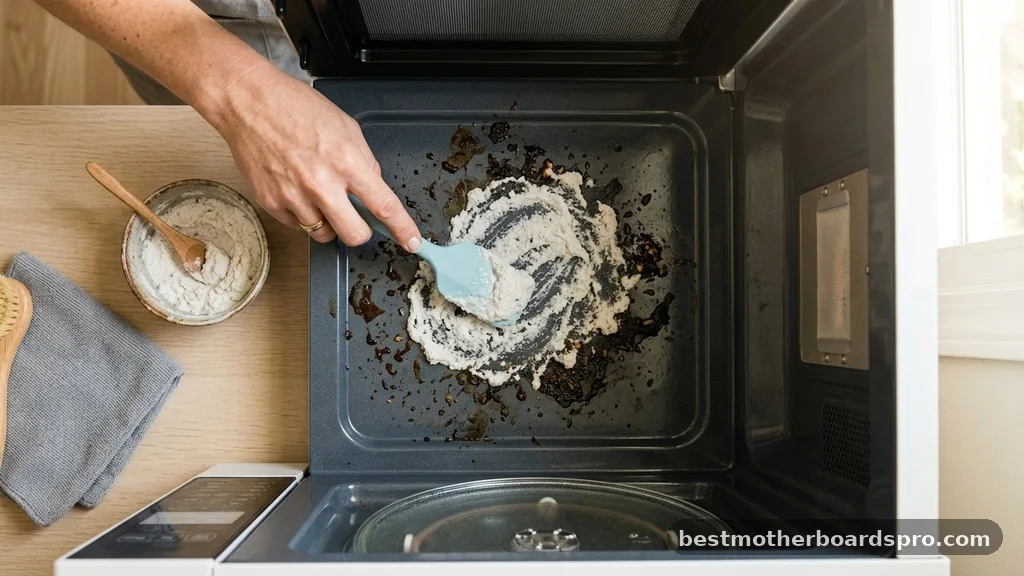
Baking soda is a natural abrasive and an excellent odor absorption agent. Mix three parts baking soda with one part water to create a thick paste. Apply this directly to the areas where you see dark, burnt spots.
Let the paste sit for about 15 minutes before scrubbing gently with a soft cloth. This method is safe for most microwave interiors and won’t scratch the finish, which is crucial for preventing future food buildup in deep scratches.
Addressing the Ventilation System
If you have cleaned the inside but the smell remains, the odor might be trapped in the ventilation fan or the charcoal filter. Many over-the-range microwaves have filters that capture grease and smoke.
If these are saturated, they will continue to circulate the burnt scent every time you use the unit. Check your manual to see how to remove and wash these filters with warm, soapy water.
- Remove the grease filters from the underside of the microwave.
- Soak them in a mixture of hot water and degreasing dish soap.
- Use a soft brush to dislodge trapped particles.
- Rinse thoroughly and let them air dry completely before reinstalling.
- Ensure your kitchen’s external ventilation is clear of any exterior blockages.
Advanced Deodorizing Techniques
When basic cleaning leaves a faint scent behind, you need to neutralize the remaining molecules. Activated charcoal is one of the most effective tools for this purpose. You can place a small bowl of activated charcoal inside the microwave (while it is turned off) and leave it overnight. The charcoal acts as a sponge, pulling lingering odors out of the air and off the surfaces.
Another option is using citrus peel directly. After cleaning, place a few fresh peels on a paper towel and heat them for 30 seconds.
This releases essential oils that mask remaining scents and provide a pleasant, natural aroma. Ensure you do not leave the peels in for too long, as they can burn if the microwave is accidentally activated later.
Addressing Topical Gaps: When the Smell Persists
Many people wonder why the smell returns even after a thorough cleaning. The answer often lies in the waveguide cover. This is the small, usually rectangular piece of mica or plastic located on the side or top of the microwave cavity.
If food splatters behind this cover, it will burn repeatedly. If you suspect this is the case, carefully remove the cover and clean it, or replace it if it is damaged.
Another often overlooked area is the door seal. Food residue can get trapped in the rubber gasket, leading to a persistent, musty, or burnt odor. Use a damp cloth dipped in a light vinegar solution to wipe inside the folds of the seal. Ensuring this area is dry is vital for both hygiene and odor prevention.
Frequently Asked Questions
How do you clean a burnt smell out of a microwave?
You can effectively eliminate odors by steam cleaning the interior with a mixture of water and white vinegar or lemon juice. After steaming, wipe down all surfaces with a non-abrasive sponge and use a baking soda paste on any stubborn, burnt-on food residue that remains.
What neutralizes burnt smell?
Acidic substances like white vinegar and citrus juice are excellent at neutralizing alkaline burnt odors. For deep-seated smells, activated charcoal is highly effective, as it pulls odor molecules from the air and surfaces, acting as a powerful natural deodorizer for enclosed spaces like a microwave.
How long does it take to get burnt smell out of the microwave?
Most surface-level odors can be removed in under 30 minutes using the steam cleaning method. If the burnt smell is deeply embedded in the filters or the waveguide cover, it may take an additional hour to properly clean those components and fully restore the unit’s freshness.
Is a burnt microwave smell toxic to humans?
A burnt smell is usually just the result of carbonized food particles and is not inherently toxic. However, if the smell is accompanied by visible smoke or melting plastic, you should turn off the unit immediately and ensure proper ventilation to avoid inhaling potentially harmful chemical fumes.
Final Thoughts
Getting a burnt smell out of your microwave is a manageable task that relies more on patience than expensive tools. By consistently addressing food residue through steam cleaning and regular maintenance, you keep your appliance running efficiently and your kitchen smelling fresh. Remember that the key to success lies in reaching those hidden spots, like the ventilation filters and the gasket, where odors tend to hide.
If you find yourself dealing with an persistent odor, don’t rush to replace the unit; try these natural, effective cleaning methods first. With just a little bit of vinegar, baking soda, and a few minutes of your time, you can easily restore your microwave to its original, clean state. If you have success with these methods, consider sharing your results or reaching out if you have further questions about maintaining your kitchen appliances.