
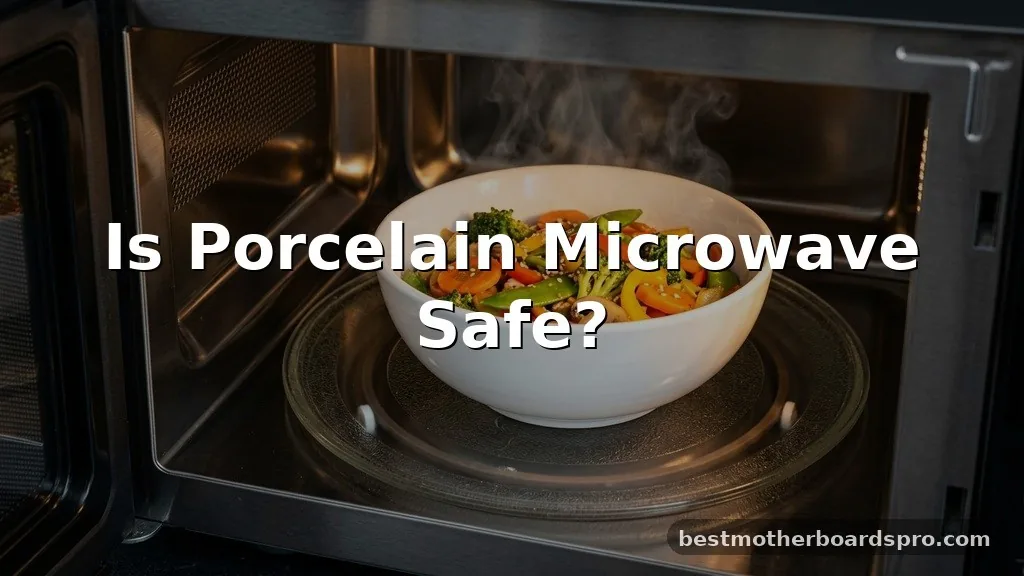
Determining whether your favorite dish is safe for the microwave often feels like a guessing game. Many people assume that because a piece is durable, it handles high heat without issue, but the reality is more nuanced. When you ask if porcelain is microwave safe, the answer depends heavily on the composition of the glaze and any decorative elements applied during manufacturing.
Using the wrong items can lead to cracked dishes, damaged appliances, or even dangerous sparks. Understanding these variables ensures you can heat your leftovers with confidence while preserving the longevity of your kitchenware.
The Science Behind Microwave Safety
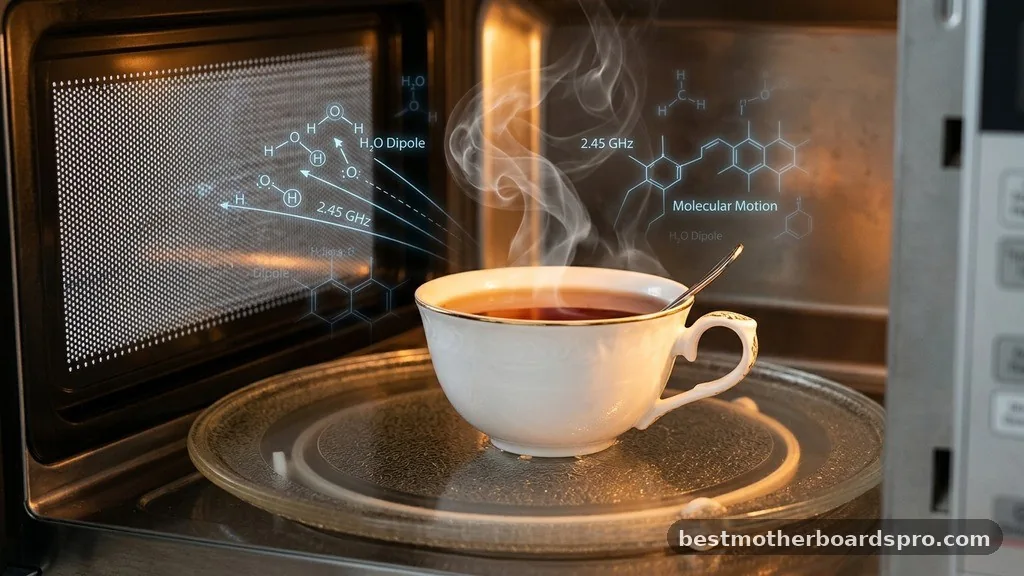
Microwaves function by emitting electromagnetic waves that cause water molecules in food to vibrate, generating heat through friction. A material is considered microwave-safe if it allows these waves to pass through it without absorbing excessive energy or reacting to the electromagnetic field. Porcelain, as a type of ceramic, is generally dense and non-porous, which makes it an excellent candidate for this task.
However, the safety of your porcelain dinnerware is rarely about the clay body itself. It is usually about the finish.
If the glaze is intact, it creates a protective barrier that prevents moisture from seeping into the structure. Once moisture enters, the microwave energy heats that trapped water, causing internal pressure that leads to cracking or shattering.
Identifying Metallic Elements
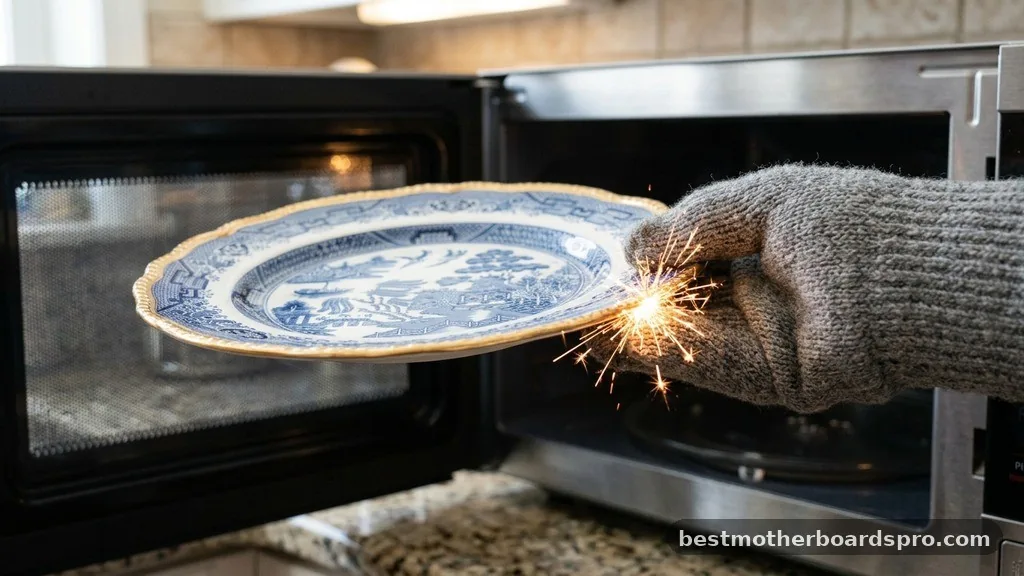
The most significant risk when using porcelain in a microwave is the presence of metallic accents. Many fine china sets or decorative plates feature rims or patterns painted with gold, platinum, or other metallic lyes. These materials are highly conductive.
When microwave energy hits these metal surfaces, it creates an electrical arc. This manifests as visible sparks, often called arcing, which can quickly ruin your dish and potentially damage the microwave’s magnetron.
Before you put a piece in for microwave use, inspect it closely. If you see even a thin metallic line or a shimmering pattern, it is almost certainly not safe for the appliance.
Comparing Common Kitchen Materials
To better understand why porcelain behaves the way it does, it helps to compare it to other common containers found in your cabinets. The following table highlights the general safety characteristics of standard kitchen materials.
| Material | Microwave Safety | Key Consideration |
|---|---|---|
| Porcelain | Generally Safe | Check for metallic rims or patterns. |
| Glass | Safe | Avoid leaded crystal or cracked glass. |
| Stoneware | Often Safe | Can get very hot; check for non-porous glaze. |
| Plastic | Variable | Look for the “microwave-safe” label specifically. |
Why Some Porcelain Gets Excessively Hot
You might have noticed that sometimes your porcelain plate feels searingly hot while the food remains lukewarm. This happens because of the mineral content in the clay or the specific chemical composition of the glaze. Some glazes contain metallic oxides that absorb microwave energy more efficiently than the food you are heating.
When this occurs, the dish itself becomes a heat source. While this isn’t necessarily dangerous if the item is high-quality, it can make handling the plates or bowls difficult. If you find your porcelain consistently overheats, it is best to limit its time in the machine or use it only for short reheating intervals rather than extended cooking sessions.
Best Practices for Testing Your Dinnerware
If you are unsure whether your porcelain is truly safe, you can perform a simple, controlled test. This method helps you determine if the piece is absorbing energy that it should be reflecting.
- Fill a microwave-safe cup with one water measurement—about one cup is sufficient.
- Place the cup inside the microwave right next to the porcelain item you want to test.
- Heat both on high power for exactly one minute.
- Carefully touch the porcelain item after the timer stops.
If the porcelain feels cool or only slightly warm, it is likely safe for regular use. If the dish feels significantly hot to the touch, it is absorbing too much microwave energy and should be kept out of the appliance to prevent thermal shock.
Common Myths and Misconceptions
There are many persistent myths regarding safety in the kitchen. One common belief is that all “fine china” is fragile and therefore cannot withstand the heat of a microwave. While fine china is indeed delicate, its resistance to heat is determined by its firing temperature during production, not just its wall thickness.
Another misconception is that colors used in ceramic glazes are inherently dangerous. While historical glazes contained lead, modern, commercially produced porcelain dinnerware is strictly regulated. The primary concern remains the physical reaction of the material to the microwave field, not chemical leaching, provided the glaze is not chipped or cracked.
Addressing Topical Gaps in Microwave Usage
Many users wonder if vintage porcelain carries different risks compared to modern pieces. Vintage items often have older glazes that may contain trace amounts of heavy metals, which can be unstable under high-heat conditions. Additionally, the manufacturing standards of the past did not always account for the specific frequencies used in modern microwaves.
Another gap involves the use of porcelain lids or covers. While the dish itself might be safe, the lid might have different thermal properties.
Always check both parts of a set. If you are using a porcelain lid to cover food, ensure it has a small vent or is slightly ajar to allow steam to escape, as pressurized steam can cause porcelain to crack just as easily as an electrical arc.
FAQ
Is it safe to use porcelain with gold or silver rims in the microwave?
No, you should never microwave porcelain that features metallic gold or platinum accents. These metallic elements are highly conductive and will cause electrical arcing, which can create sparks, damage your microwave’s interior, and potentially shatter the dish itself during the heating process.
What happens if I microwave a piece of porcelain that is cracked?
Microwaving cracked porcelain is dangerous because moisture can seep into the porous clay body through the fracture. When the microwave heats that trapped water, it creates internal steam pressure that can cause the dish to explode or shatter violently inside your appliance.
Does heating porcelain in the microwave affect its durability?
Repeatedly heating porcelain in the microwave can contribute to thermal fatigue, especially if the dish is of lower quality. While high-quality, dense porcelain is designed to handle temperature changes, constant expansion and contraction can eventually lead to hairline cracks or premature aging of the glaze.
Can I safely microwave all types of ceramic dinnerware?
Not all ceramic dinnerware is microwave-safe. While porcelain is generally a safe bet, other types of ceramics like earthenware or low-fired stoneware can be quite porous. If these items are not properly sealed with a high-quality, non-porous glaze, they may absorb water and become unsafe for microwave use.
Conclusion
Navigating the world of microwave-safe kitchenware is much simpler when you know what to look for. Porcelain is an excellent, versatile material for everyday use, provided you verify that it is free of metallic accents and maintains a healthy, intact glaze. By performing a quick test when in doubt and avoiding pieces with decorative metals, you can safely enjoy the convenience of modern cooking without compromising your favorite dinnerware.
Always prioritize the condition of your dishes, checking for chips or cracks before they go inside. If you treat your porcelain with this level of care, it will remain a staple of your kitchen for years to come. Feel free to inspect your collection today and set aside any pieces that don’t meet these safety standards.