
Determining whether your favorite kitchenware can withstand high heat is essential for daily meal preparation. Many home cooks often wonder if they can safely heat their leftovers in a bowl without risking a kitchen disaster. While most modern kitchen items are designed with convenience in mind, the question of whether ceramic bowls are microwave safe depends heavily on their composition, glazing, and age.
Using the wrong material can lead to cracked dishes, ruined food, or even hazardous sparking. By understanding a few simple indicators, you can confidently determine which pieces in your cupboard are ready for the microwave and which should stay on the shelf during your next heating session.
The Science Behind Microwave-Safe Ceramics
Microwaves function by emitting electromagnetic waves that cause water molecules in food to vibrate, generating friction and heat. Ideally, a container should be microwave-transparent, meaning the waves pass through it to reach the food.
Most ceramic items, such as stoneware and porcelain, are naturally suited for this process because they don’t contain metal. However, the safety of the vessel depends on the absence of conductive materials.
When you heat a bowl, the ceramic material itself shouldn’t absorb significant energy. If the material contains metallic oxides or lead-based glazes, it may absorb that energy instead, causing the bowl to become dangerously hot to the touch while the food remains cold.
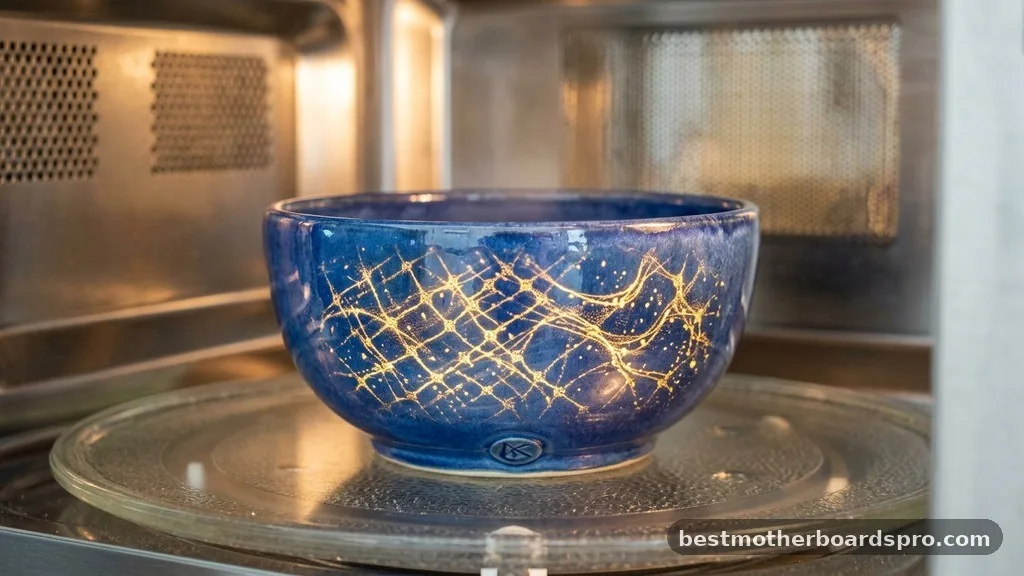
Furthermore, any decorative elements containing precious metals—like gold or silver rims—will reflect microwaves, creating electrical arcs. These arcs can damage your appliance and potentially cause a fire.
Identifying Safe vs. Unsafe Bowls
Manufacturers typically provide guidance on the bottom of their products, but labels can fade over time. If you are uncertain about your bowl, you can perform a quick, simple test.
Place the empty bowl in the microwave alongside a small cup of water. Heat both on high for exactly one minute.
If the bowl stays cool while the water gets hot, it is likely safe for use. If the bowl itself becomes hot to the touch, it is absorbing microwave energy and should not be used for heating food. Any bowl that sparks, makes a crackling sound, or smells like burning during this test must be removed immediately, as it likely contains metallic components or micro-fissures that could shatter under heat.
| Feature | Microwave Safe | Risks |
|---|---|---|
| Glazed Stoneware | Generally safe | Possible lead in older glazes |
| Metallic Trim | Never | Sparking, fire hazard |
| Porcelain | Usually safe | Can crack if thermal shock occurs |
| Handmade Pottery | Varies | Uneven thickness, air pockets |
Common Types of Ceramic Kitchenware
Different types of ceramics behave differently in a microwave environment. Understanding the specific material of your soup bowls or cereal bowls helps in assessing their durability.
- Stoneware: This is a dense, fired clay that is naturally robust and heat-resistant. Most modern stoneware is perfectly fine for the microwave.
- Porcelain: Known for its delicate design, porcelain is fired at higher temperatures. It is generally safe, though thin-walled pieces may be prone to thermal shock.
- Earthenware: Often porous, this material is less durable. If the glaze is cracked, water can seep into the clay, which might cause the bowl to explode when that water turns to steam.
- Hand-painted pottery: The danger here isn’t the clay, but the paint. Older paints or glazes can contain heavy metals that leach into your food when heated.
Avoiding Thermal Shock
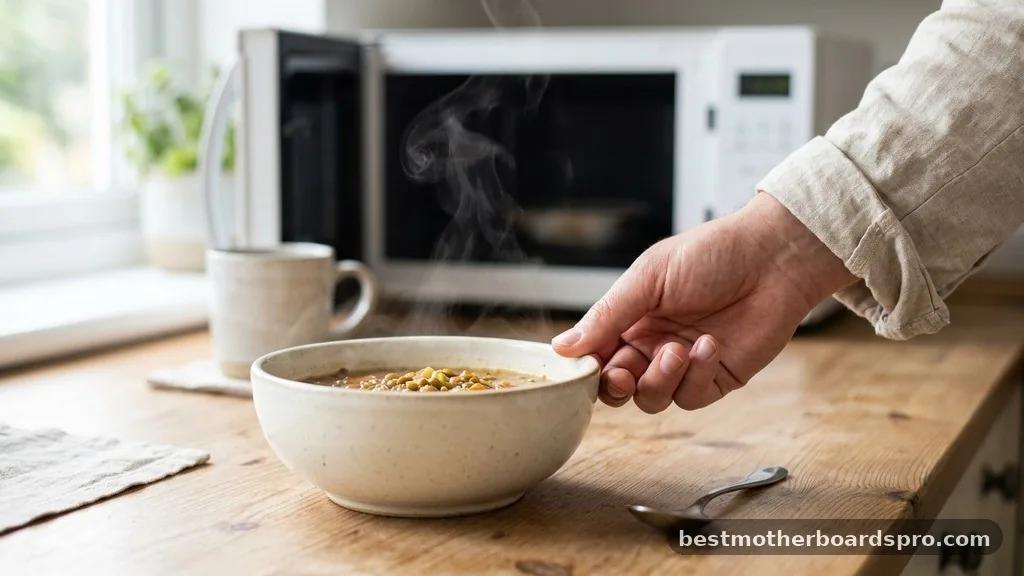
Even if a bowl is technically microwave safe, it isn’t invincible. Thermal shock occurs when a rapid change in temperature causes the material to expand or contract too quickly, leading to cracks. This is common when you take a cold bowl directly from the refrigerator and place it into a high-powered microwave.
To protect your favorite dishes, allow them to reach room temperature before heating. Avoid taking a bowl that has been in a hot oven and plunging it into cold water or the freezer.
Consistency is key to longevity. By treating your ceramic collection with care, you ensure that your pasta or soup bowls remain in your rotation for years to come.
Addressing Topical Gaps: Why Some Bowls Fail
A frequent point of confusion is why some high-quality ceramic bowls fail while cheaper ones succeed. Often, this comes down to the manufacturing process.
A perfectly uniform bowl distributes heat evenly, whereas a bowl with air pockets or inconsistent thickness will create “hot spots.” These spots absorb more energy, leading to localized stress on the ceramic structure.
Additionally, the age of the item matters significantly. Ceramic technology has evolved; older pieces—especially vintage items—were often produced with glazes that were not meant to withstand microwave-level radiation.
If you are using heirloom pieces, it is safer to use them for serving rather than cooking. Always prioritize modern, kitchen-tested items for your daily microwave needs to avoid potential leaching or structural failure.
Common Questions Regarding Ceramic Microwave Safety
Can you use any ceramic bowl in a microwave?
Not every ceramic bowl is microwave safe. While basic clay-based items often work, you must avoid any bowl with metallic accents, gold trim, or porous, unglazed surfaces. Always check the manufacturer’s mark or perform the water-cup test to verify if the item absorbs heat during the cycle.
Is handmade pottery safe to heat?
Handmade pottery can be unpredictable. Because it is often crafted with varying thicknesses and may contain non-commercial glazes, it carries a higher risk of cracking or containing metallic impurities. Unless the potter specifically labels the piece as microwave safe, it is best to avoid using it for heating.
Why does my bowl get hot but the food stays cold?
If your bowl becomes hot while the food inside remains cold, the ceramic material is absorbing the microwave energy directly. This indicates that the bowl contains materials like lead, metallic oxides, or excessive moisture trapped in the clay, making it unsuitable for microwave use.
How do I know if a bowl has metallic paint?
Metallic paint is often visible as a shiny, reflective rim or intricate decorative patterns. If a bowl has gold, silver, or copper-colored details, it almost certainly contains metal. These should never be placed in a microwave, as they will cause arcing and can permanently damage your appliance.
Maintaining Your Ceramic Collection
When you confirm that your bowls are indeed microwave safe, you can enjoy the convenience of reheating meals without worry. Keep in mind that durability is not just about heat; it is about how you maintain your items. Using a dishwasher safe product is often a good indicator that the glaze is high-quality and well-bonded.
If you notice your bowls starting to show fine cracks in the glaze—often called “crazing”—it is time to retire them from microwave use. Even if they haven’t broken yet, those tiny fissures can harbor bacteria and trap water, which makes them unreliable and unhygienic for high-heat applications. Stick to smooth, intact pieces to keep your kitchen running smoothly.
When you’re ready to upgrade your kitchenware, look for sets that explicitly state their heat-resistance ratings. This simple step ensures that your next bowl of soup or pasta is prepared safely, efficiently, and without any unnecessary stress.