
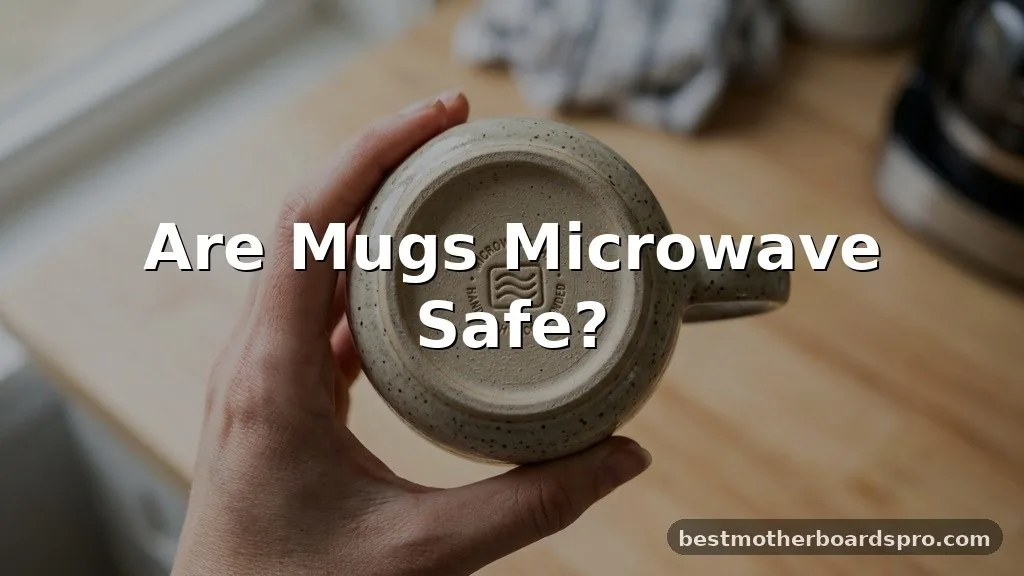
Knowing whether your favorite coffee mug is safe for the microwave can save you from a shattered mess or a ruined beverage. We often grab the nearest cup to reheat a morning brew, but not every vessel handles the rapid thermal energy of a kitchen appliance the same way.
While most modern ceramic mugs are designed for daily use, hidden risks like metallic paint or hairline fractures can turn a simple task into a safety hazard. By understanding the composition of your kitchenware and recognizing the tell-tale signs of potential danger, you’ll be able to confidently determine if your mugs are microwave safe before hitting that start button.
Checking for Official Microwave Safe Markings
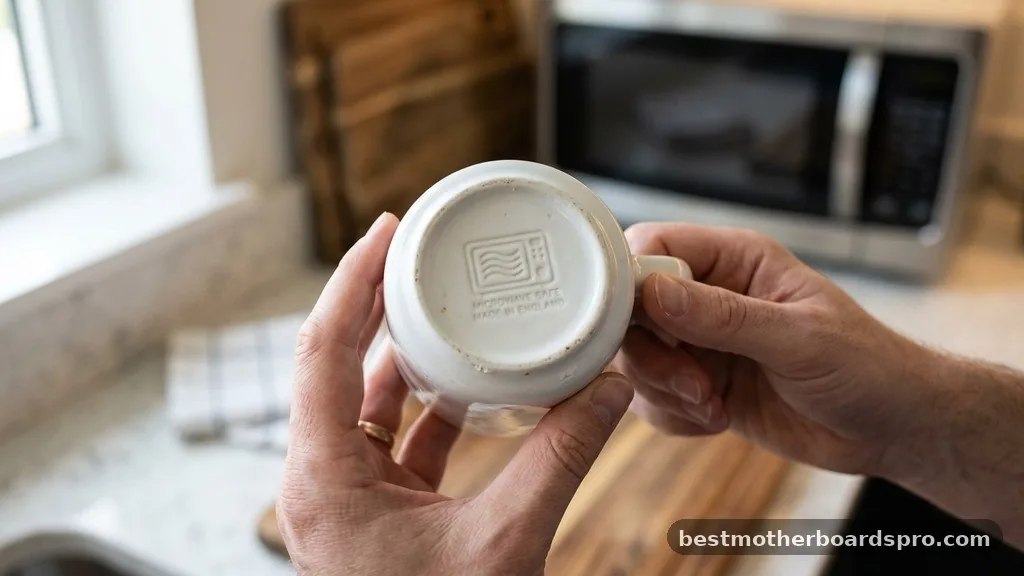
The most reliable way to confirm if a container is suitable for heating is to look for the manufacturer’s mark. Most reputable brands stamp the bottom of their products with specific symbols.
You should look for a square icon containing wavy lines or a small image of a microwave oven. If you see this, the item has undergone testing to ensure it won’t leach chemicals or crack under standard operating temperatures.
If your favorite cup lacks a stamp, don’t panic. Many high-quality pieces, especially older or artisanal pottery, might not have official labels despite being perfectly functional.
In these instances, you have to rely on visual inspection and material knowledge. If the base feels unglazed or porous, it might absorb water during washing, which can lead to cracking when that trapped moisture rapidly expands during the heating process.
Materials That Pose a Risk
Not all materials react well to high-frequency electromagnetic waves. Metals are the most obvious culprits, but they aren’t always easy to spot.
Some ceramic mugs feature decorative gold or silver rims, which can spark and cause permanent damage to your appliance. Even if you don’t see bright, shiny metallic paint, some pigments in decorative glazes contain metallic oxides that can overheat or flake off into your drink.
Plastic mugs also require caution. Even those labeled as “microwave-safe” can degrade over time, especially if they are old or scratched.
When plastic breaks down, it may leach harmful compounds into your tea or coffee. If a plastic cup feels thin, warps easily in the dishwasher, or has visible scratches, it is time to retire it from microwave use.
| Material Type | Microwave Suitability | Notes |
|---|---|---|
| Standard Ceramic | Generally Safe | Ensure no metallic paint or chips. |
| Porcelain | Usually Safe | Check for gold/silver trim. |
| Stoneware | Variable | Can be porous; test for heat absorption. |
| Metal (Steel/Copper) | Never Safe | Causes arcing and potential fire. |
| Plastic | Use Caution | Only if marked BPA-free and microwave-safe. |
Identifying Hidden Damage
Even if a mug is made of safe materials, structural integrity matters. A small hairline fracture might look like a superficial scratch, but it represents a weak point in the ceramic. When you subject a mug to extreme heat, the air inside these cracks expands, which can cause the cup to shatter while inside your microwave.
Always run your finger along the rim and the handle before heating. If you feel a rough edge or a deep groove, the item is compromised.
Furthermore, check the handle. If it’s attached with a weak adhesive or if there’s a gap where the handle meets the body, moisture could be trapped inside the structural cavity, leading to a sudden pop or break during the heating cycle.
The Simple Water Test
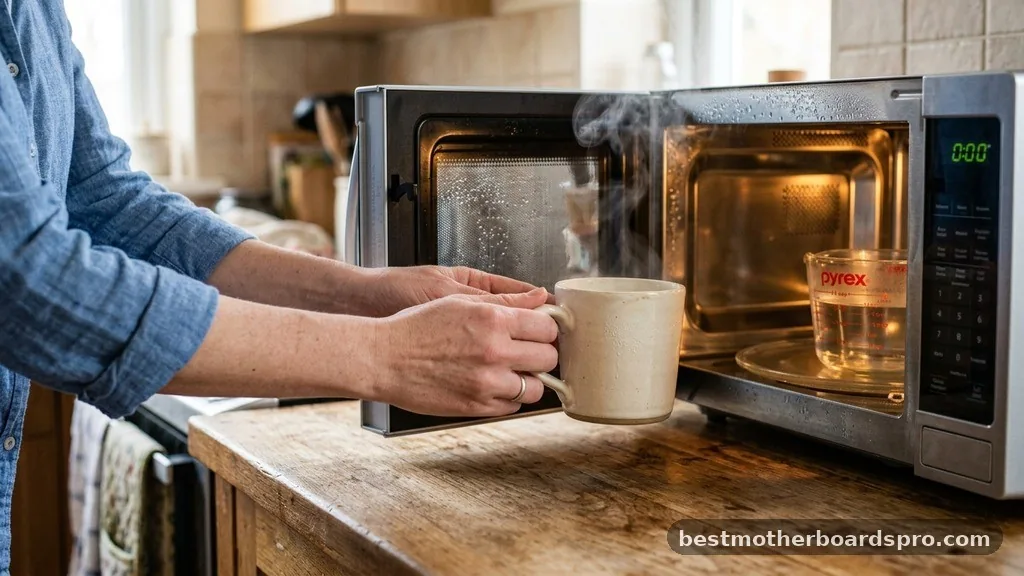
If you are still unsure if your cup is safe, you can perform a quick, controlled experiment. This method helps determine if the material itself is absorbing energy rather than just the liquid inside.
- Fill a glass measuring cup with one cup of cold water.
- Place your questionable mug empty inside the microwave right next to the measuring cup.
- Microwave both on high for exactly one minute.
- Carefully touch the mug.
If the mug is cold or just slightly warm from the ambient heat of the water, it is likely safe to use. If the mug itself is hot to the touch, it is absorbing the microwave energy, which means it is not suitable for regular use.
Why Handles Get Hot
Have you ever pulled a mug out of the microwave only to find the liquid is lukewarm while the handle is scorching? This often happens because of the material’s density or the presence of metallic inclusions in the ceramic glaze. When the handle gets significantly hotter than the rest of the cup, it suggests the material is not microwave-friendly.
Furthermore, poor design can cause this issue. If the handle is too thin, it may absorb heat faster than the body of the mug.
While this doesn’t necessarily mean the mug will explode, it makes the experience of drinking your tea or coffee quite unpleasant. If you consistently find yourself needing a towel to hold your mug after a quick reheat, consider switching to a different vessel.
Addressing Topical Gaps
A common misconception is that “microwave-safe” means the item will stay cool. In reality, heat transfer is inevitable.
Even a perfectly safe ceramic mug will get hot because the hot liquid inside transfers thermal energy to the walls of the cup. Distinguishing between the material absorbing microwave energy (which is bad) and the material absorbing heat from the liquid (which is normal) is a crucial skill for any home barista.
Another gap in common knowledge involves the impact of dishwasher use on microwave safety. Frequent dishwasher cycles can cause micro-abrasions on the surface of your mugs.
Over time, these tiny scratches can accumulate, making the ceramic more susceptible to thermal shock. If you have a favorite heirloom mug, hand-washing it is the best way to preserve its longevity and ensure it remains safe for those occasional microwave trips.
FAQ Section
How do I know if my mug is microwave safe?
Check the bottom for a microwave-safe symbol, which looks like a square with wavy lines. If there is no mark, perform the water test by heating the empty mug for one minute alongside a cup of water; the mug should remain relatively cool to the touch.
Which mugs are never microwave safe?
Any mug containing metal is unsafe. This includes stainless steel travel mugs, copper-bottomed cups, and ceramic mugs featuring decorative metallic trim like gold or silver leaf. These materials cause arcing, which can damage your appliance’s magnetron or even start a fire inside the microwave.
Is it okay to microwave a mug?
Yes, it is generally perfectly safe to microwave standard ceramic or porcelain mugs. However, you should inspect them for cracks or chips first. If the mug feels unusually hot after a short heating cycle, it is likely absorbing microwave energy and should be retired from such use.
Can I microwave a mug with a lid?
Only if the lid is explicitly labeled as microwave-safe. Many lids are made of plastics that can melt or release chemicals when exposed to high heat. Always remove the lid before heating unless you are certain it is designed to withstand the high temperatures generated by your appliance.
Final Thoughts
Ensuring your drinkware is suitable for your appliances is a small but important part of kitchen safety. By checking for official markings, avoiding metallic decorations, and keeping an eye out for structural damage like cracks or chips, you can enjoy your hot beverages without worry. Most ceramic mugs are built to handle the heat, but a little vigilance goes a long way in preventing accidents.
If you are ever in doubt about the composition of a particular piece, simply opt for a glass or clearly marked microwave-safe alternative. Taking these simple precautions ensures that your morning routine remains smooth, safe, and stress-free every single day.