
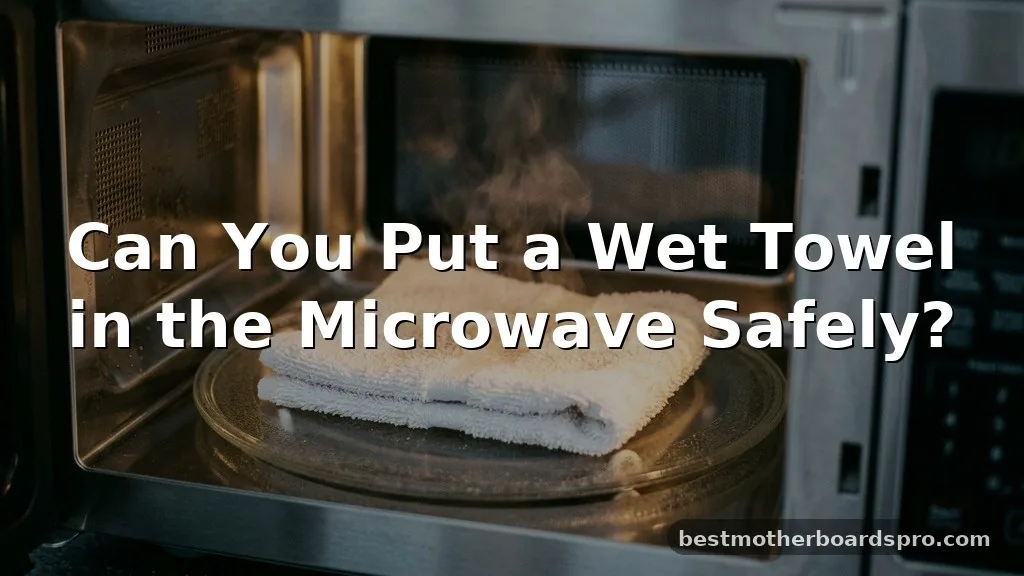
Determining whether you can put a wet towel in the microwave is a common household question that often arises when someone wants to create a warm compress or quickly dry a small piece of fabric. While many people successfully use this method to generate heat, there are critical safety precautions to consider to avoid fire hazards or burns.
Understanding the physics of how microwaves interact with water-soaked fibers is essential for anyone attempting this at home. This article examines the safety protocols, the risks of overheating, and the best practices for using your appliance to warm fabric without damaging your belongings or risking a kitchen fire.
The Science of Heating Fabric in a Microwave
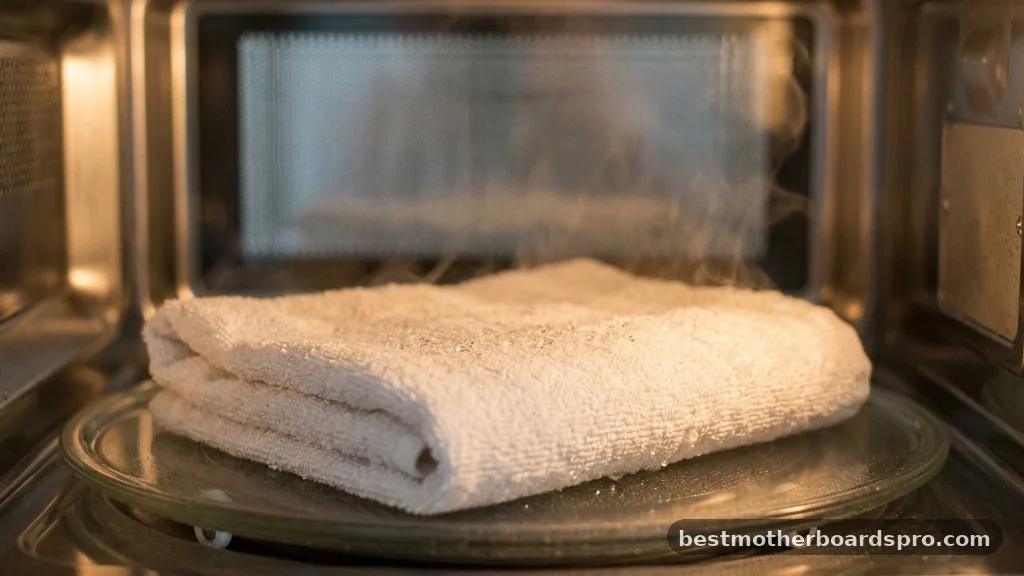
Microwaves work by emitting electromagnetic waves that cause water molecules to vibrate rapidly, generating heat through friction. When you place a wet towel inside, these molecules absorb the energy, causing the moisture to turn into steam. Because towels are absorbent, they are efficient at holding onto this heat.
However, the process is not as simple as just pushing a button. If the fabric becomes too dry during the heating process, the remaining moisture evaporates entirely. Once that happens, the towel can quickly reach temperatures high enough to scorch or ignite.
Understanding Material Composition
Not all fabrics react the same way to microwave radiation. Natural fibers like cotton are generally safer, provided they are sufficiently damp. Synthetic materials, such as polyester or microfiber, can melt or degrade when exposed to high heat.
You should always check the label of your towel before placing it in the appliance. Avoid any fabric that contains metallic threads or decorative stitching with sequins, as these will spark and potentially damage the interior of the machine.
Safety Precautions and Best Practices
If you decide to proceed with heating a damp cloth, you must prioritize caution to prevent accidents. The most common mistake is heating the item for too long, which turns a helpful warming technique into a dangerous fire hazard. Always monitor the appliance while it is running and never leave it unattended.
- Ensure the towel is thoroughly wet, not just damp, to prevent localized hot spots.
- Wring out excess water so the fabric is moist but not dripping, which protects the microwave floor.
- Use a microwave-safe plate or bowl as a base to catch any potential drips.
- Start with very short time intervals, such as 30 seconds, to gauge the heat level.
- Handle the item with caution, as it will be significantly hotter than it appears.
Comparing Methods for Warming Towels
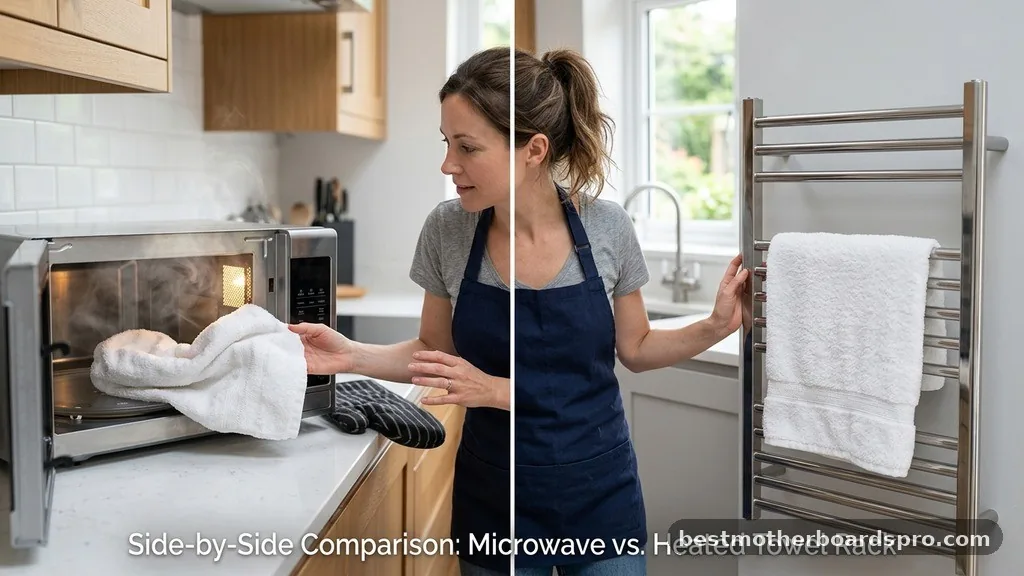
Different approaches to warming fabric come with varying levels of risk and effectiveness. While the microwave is fast, other methods might be safer for specific materials or longer-term heat retention.
| Method | Speed | Risk Level | Best Use |
|---|---|---|---|
| Microwave | Very Fast | Moderate (Fire Risk) | Quick compresses, immediate use |
| Electric Towel Warmer | Slow | Low | Luxury comfort, consistent warmth |
| Oven (Low Temp) | Slow | Low | Warming multiple large towels |
| Hot Water Soak | Moderate | Very Low | Safety-first approach for sensitive skin |
Managing Risks of Overheating
The primary danger when you put a wet towel in the microwave involves the transition from damp to dry. As the water evaporates, the towel loses its heat sink. Without water to absorb the energy, the fibers begin to absorb the microwave radiation directly.
This leads to rapid charring. If you smell a burning odor, stop the microwave immediately and unplug it if necessary. Never attempt to remove a smoking towel with your bare hands, as the steam and the fabric itself will be dangerously hot.
Identifying Danger Signs
If the center of the towel feels significantly hotter than the edges, you have uneven heating. This often happens if the towel was not folded uniformly or if the moisture distribution was inconsistent. If you notice smoke or a dark, burnt spot, discard the towel immediately. It is better to lose a washcloth than to risk a kitchen fire or a serious burn.
Topical Gaps: Addressing Common Concerns
Many users wonder if they can safely heat a towel for a facial treatment or a muscle ache. When using a microwave towel for a compress, ensure the fabric is clean and free of any household chemicals or cleaning agents. Chemicals trapped in the fabric can release toxic fumes when heated.
Furthermore, you should consider the internal cleanliness of your appliance. If there is grease or food debris on the microwave floor, the heat from the towel could cause these remnants to smoke.
Always wipe down your microwave before using it for anything other than food preparation. If you use the microwave to warm a cloth for a baby or for sensitive skin, test the temperature on your own forearm first to ensure it is not too hot.
FAQ Section
Is it safe to leave the microwave unattended while heating a towel?
No, you should never leave the appliance unattended. Because towels can dry out and catch fire in a matter of seconds, active supervision is the only way to prevent a hazardous situation. Always stay in the room and be ready to stop the cycle if you see smoke.
How long should I heat a wet towel?
Start with 30-second bursts. Most towels will be adequately warm after 45 to 60 seconds. If the towel is not warm enough, flip or shake it to distribute the heat, then add another 15 seconds. Never exceed 90 seconds total without checking the moisture content.
Can I microwave a microfiber towel?
It is generally not recommended. Microfiber is a synthetic material that can melt or release harmful gases when exposed to high heat. Stick to 100% cotton towels for this purpose, as they handle the thermal stress of steam much better than plastic-based synthetic fabrics.
What should I do if the towel starts to smoke?
If you see smoke, turn off the microwave immediately. Do not open the door right away, as the influx of oxygen can cause a flare-up. Let the smoke dissipate inside the closed unit for a minute, then carefully remove the item using oven mitts once it has cooled down.
Final Thoughts on Safe Usage
Heating a wet towel in the microwave is a convenient trick when you need a quick warm compress or a soothing cloth for a spa-like experience at home. By selecting natural fibers, ensuring the fabric is properly dampened, and keeping your heating intervals short, you can manage the process effectively. Always prioritize your safety by keeping a close watch on the appliance and stopping the cycle the moment you feel the fabric becoming too hot.
While it is certainly possible to warm a towel this way, treat the process with the same level of caution you would apply to any other kitchen task involving high temperatures. If you follow these guidelines, you can safely enjoy the benefits of a warm, comforting towel whenever you need it.