

The microwave oven is a staple in almost every modern kitchen, yet few people realize its origins trace back to a serendipitous accident during the final years of World War II. While many associate the invention with complex laboratory research, the reality is far more human and grounded in curiosity. Understanding who invented the microwave provides a fascinating glimpse into how wartime technology shifted toward domestic convenience.
By exploring how Percy Spencer stumbled upon the heating properties of radar waves, you will gain a deeper appreciation for the appliance that forever changed how we prepare food. This history reveals how a single observation turned a military project into a global household necessity.
The Accidental Discovery by Percy Spencer
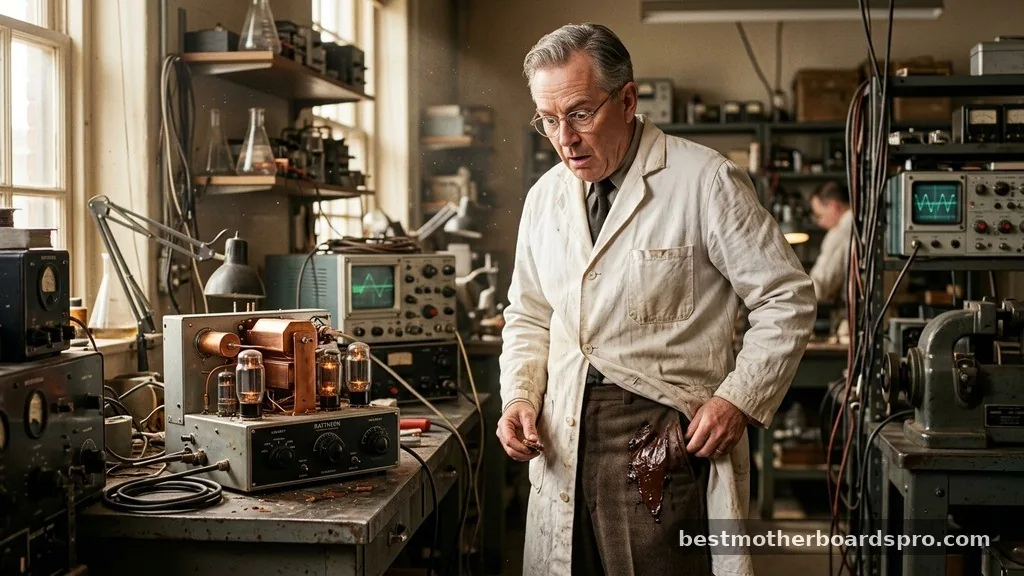
The story of the microwave begins with Percy Spencer, a self-taught engineer working for Raytheon. During the 1940s, the company was heavily involved in producing magnetron tubes for radar systems, which were essential for the Allied efforts in World War II. Spencer was not a typical scientist; he was an orphan who left school at a young age to work in a paper mill, yet he possessed an innate, genius-level understanding of electronics and physics.
One day in 1945, while standing in front of an active radar set, Spencer noticed something strange. A candy bar in his pocket had melted into a sticky mess. Many people might have simply brushed it off as a coincidence, but Spencer was uniquely curious.
He suspected that the high-frequency microwaves emitted by the equipment had caused the reaction. To test his theory, he placed popcorn kernels near the magnetron. As expected, they popped across the room.
He then tried an egg, which famously exploded in the face of a colleague. These simple, messy experiments confirmed that he had discovered a new way to interact with food molecules using electromagnetic energy.
From Radar Technology to Kitchen Countertop
Once Spencer realized the potential for his discovery, he worked with his team at Raytheon to refine the technology. The goal was to harness the power of the magnetron to heat food safely and efficiently. By 1947, the first commercial microwave oven hit the market, though it was a far cry from the sleek models we see today.
This original machine, known as the Radarange, was massive. It stood nearly six feet tall, weighed about 750 pounds, and cost thousands of dollars.
Because of its size and price, it was primarily purchased by large restaurants, cruise ships, and luxury hotels rather than everyday families. Below is a comparison of how the early technology differs from the modern household standard.
| Feature | 1947 Radarange | Modern Microwave |
|---|---|---|
| Weight | ~750 lbs | 20-40 lbs |
| Height | Nearly 6 feet | 12-15 inches |
| Primary User | Commercial kitchens | Home consumers |
| Cooling System | Water-cooled | Air-cooled |
Bridging the Gap: How the Technology Works
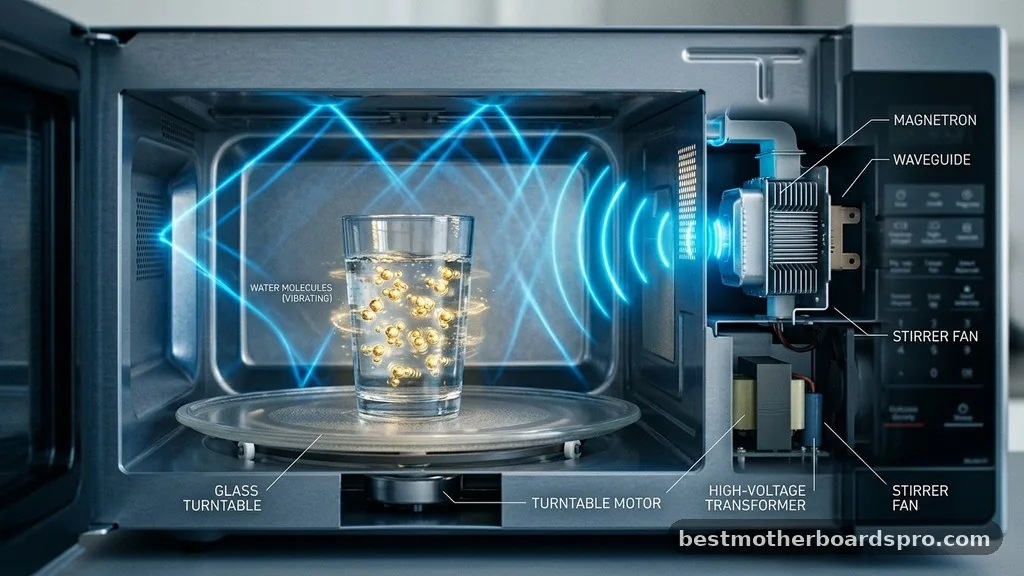
To understand the invention, one must grasp the physics behind the magnetron. At its core, the microwave oven works by bombarding food with electromagnetic waves.
These waves cause polar molecules—primarily water—to rotate rapidly. This rapid rotation creates friction, which is converted into heat that warms the food from the inside out.
While early skeptics questioned the safety of the device, the process is fundamentally different from ionizing radiation, such as X-rays. Because the waves are non-ionizing, they do not change the chemical structure of the food. Percy Spencer recognized this efficiency early on, but it took years for the public to move past the “radar” stigma associated with the device.
- The magnetron generates electromagnetic waves within the oven cavity.
- These waves bounce off the metal walls and penetrate the food.
- Water molecules in the food vibrate millions of times per second.
- The resulting friction produces heat, cooking the food rapidly.
- A rotating turntable ensures that the waves are distributed evenly.
Addressing Common Misconceptions
When discussing who invented the microwave, several myths often surface. Some people believe the invention was a top-secret government project meant to create a weapon.
In reality, it was a byproduct of the American military’s push for better radio and radar detection capabilities. Spencer was simply in the right place at the right time.
Another misconception is that the microwave was immediately popular. It took nearly two decades for the technology to shrink enough to fit into a home kitchen.
The 1967 introduction of the countertop Radarange by Amana, a subsidiary of Raytheon, was the true turning point. By then, the technology had matured, and the price point became accessible to the middle class.
The Legacy of Raytheon and Wartime Innovation
The transition from military hardware to domestic appliance is a classic example of “dual-use” technology. Raytheon held the patents, but the cultural impact was felt worldwide. Because the Navy and other branches of the armed forces needed reliable radar to track enemy aircraft, they poured massive resources into magnetron research. Spencer’s genius was in seeing a domestic application where others only saw military utility.
It is rare to find an invention that bridges the gap between the battlefield and the breakfast table so directly. Every time you reheat a cup of coffee or defrost a meal, you are using a refined version of the same technology that helped the Allies gain an advantage during the war. Spencer himself remained modest about his contribution, eventually holding over 300 patents, but the microwave remained his most famous legacy.
Frequently Asked Questions
Was Percy Spencer the sole person responsible for the microwave?
While Percy Spencer is credited with the discovery, he worked within the Raytheon corporate environment. His team of engineers and technicians helped refine the prototype and transition it into a manufacturable product, but the initial breakthrough of using radar waves to heat food was entirely his own observation.
How did the first microwave get its name?
The name “Radarange” was a combination of “radar” and “range,” implying a range that used radar technology. It was a marketing term used by Raytheon to connect the new invention to the sophisticated electronics that were already becoming well-known to the public following the conclusion of the war.
Why did the early microwave ovens cost so much?
The early models were extremely expensive because they relied on heavy-duty, water-cooled vacuum tubes and massive transformers. These components were hand-built for industrial or commercial use, and the miniaturization technology required to produce affordable household units did not yet exist in the late 1940s.
Is it true that the first microwave was accidentally invented?
Yes, it is entirely true. Percy Spencer did not set out to create a kitchen appliance.
He was working on radar components when he realized that the waves were heating the candy bar in his pocket. He then verified the effect with popcorn and eggs, confirming the heating phenomenon.
Conclusion
The history of the microwave is a testament to the power of curiosity and the unexpected ways military research can improve daily life. From a melting candy bar in the pocket of a brilliant engineer to the compact appliances in our homes today, the journey has been long and transformative. Percy Spencer’s ability to see potential in a mundane mishap allowed him to pioneer a technology that revolutionized the culinary habits of the modern world.
By understanding the origins of the microwave, we gain insight into how innovation often happens at the intersection of observation and opportunity. Whether you use it for convenience or culinary speed, the next time you hit the start button, remember the accidental discovery that made it all possible.