

Figuring out exactly how long do you put a potato in the microwave can feel like a guessing game if you don’t know the physics behind it. Most people end up with a spud that is either rock-hard in the middle or completely shriveled from overcooking.
The secret isn’t just about the timer; it is about the size of the vegetable, your appliance’s wattage, and how you prepare the skin before it enters the chamber. By mastering a few simple techniques, you will consistently achieve a fluffy, tender interior that rivals anything pulled from a traditional oven, all in a fraction of the time.
Understanding Microwave Cooking Times for Potatoes
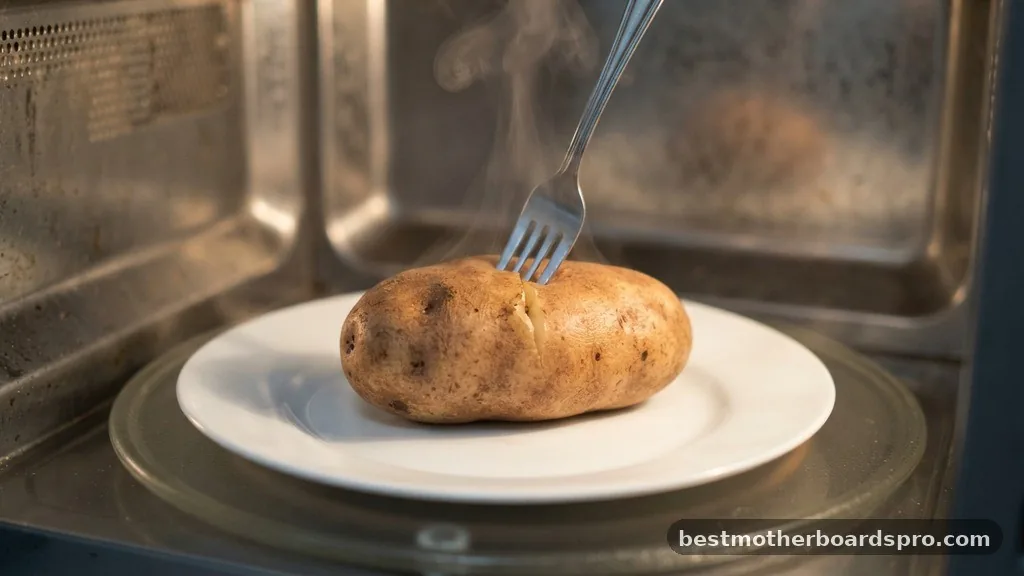
When you consider how long do you put a potato in the microwave, you must first acknowledge that wattage plays a massive role. A high-powered 1200-watt microwave will cook a potato significantly faster than an older 700-watt model.
For a medium-sized russet potato, the average cooking time is typically between five and seven minutes. You should always start with five minutes, then check for doneness before adding more time.
The thickness of the potato is the primary variable. A large, starchy potato needs more heat to penetrate the center than a small, waxy variety.
If you are cooking more than one at a time, the total duration increases. Two potatoes will take longer than one because they share the energy output of the microwave.
Preparation Steps for Even Cooking
Before you even think about the timer, you need to prepare the potato correctly to ensure it cooks through without exploding. Steam buildup is the biggest enemy of a microwave-baked potato. If you don’t provide an escape route for that steam, the pressure inside the skin can cause it to burst or create uneven, dense spots.
Take a sharp fork and pierce the potato skin several times on all sides. Aim for about 6 to 8 deep pricks.
This simple act allows steam to escape, keeping the texture light rather than gummy. Some people prefer to rub the skin with a tiny bit of olive oil and a sprinkle of salt, which helps the skin soften and adds a savory note to the final dish.
The Importance of Testing for Doneness
The only way to know if you have hit the mark is by using a physical test. Never rely solely on the digital display.
Once your initial time interval is up, open the door and carefully press the sides of the potato. If it yields easily under gentle pressure, it is ready.
If you feel resistance in the center, you need to continue microwave cycles in 30-to-60-second increments. It is much easier to add thirty seconds than it is to fix a potato that has turned into a dried-out, rubbery mess. Using a fork to pierce the center is the most reliable way to gauge if the interior is soft and fully cooked.
Cooking Multiple Potatoes at Once
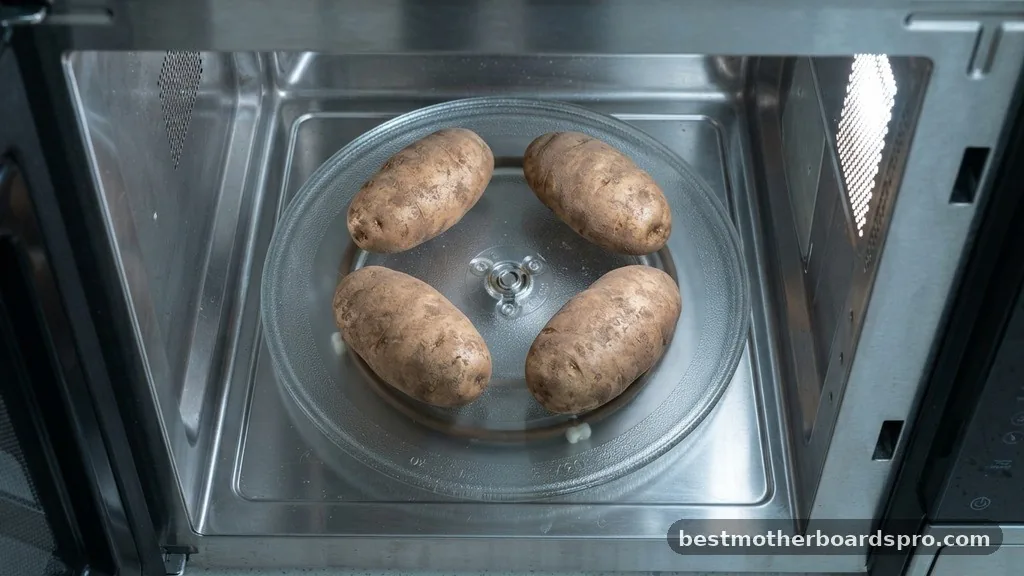
When you are preparing a meal for the whole family, you might be tempted to cram several potatoes into the machine at once. This is entirely possible, but you must adjust your expectations regarding time. More mass requires more energy and time to reach the desired internal temperature.
Guidelines for Batch Cooking
- Place potatoes in a circle on the microwave tray, leaving the center empty to allow for even energy distribution.
- Increase your initial time estimate by about 2-3 minutes for every additional potato added to the load.
- Rotate the potatoes halfway through the cooking process to avoid cold spots.
- Always verify each potato individually, as they may vary slightly in size and moisture content.
Comparing Cooking Methods
Many home cooks wonder how microwave results stack up against traditional methods. While a conventional oven provides a crispier skin, the microwave is unparalleled for speed and efficiency. The table below outlines how these methods differ in terms of time and texture.
| Method | Estimated Time | Texture Result | Best Use Case |
|---|---|---|---|
| Microwave | 5-10 Minutes | Steamed, soft skin | Quick weeknight dinners |
| Conventional Oven | 45-60 Minutes | Crispy skin, fluffy | Holiday meals, guests |
| Hybrid (Combo) | 15-20 Minutes | Crispy skin, fast | Best of both worlds |
Addressing Common Cooking Gaps
One common mistake is forgetting to let the potato rest. When you pull it out, the interior is still steaming and the heat continues to distribute evenly for another minute or two. If you cut into it immediately, you lose that trapped steam, which can make the inside feel slightly dehydrated.
Another gap in knowledge is the “microwave-to-oven” hack. If you want the speed of the microwave but the crunch of an oven-baked dish, microwave the potato for 4 minutes first.
Then, transfer it to a preheated 400-degree oven for 15 minutes. This hybrid method ensures the middle is perfectly cooked while the skin gets that desirable, golden-brown crunch.
FAQ Section
Can I microwave a potato without wrapping it in a paper towel?
Yes, you can absolutely cook a potato directly on the microwave tray or a microwave-safe dish. Using a paper towel helps absorb excess moisture, but it isn’t strictly necessary. If you choose to go without, just ensure the potato is clean and dry before you start the cycle.
Is it safe to microwave a potato for ten minutes straight?
It is generally not recommended to set a ten-minute timer at once. Microwaves can create hot spots, and if the potato is on the smaller side, it could burn or become extremely tough. It is much safer to cook in five-minute bursts and check the texture in between.
What should I do if the potato is still hard after five minutes?
If the center remains firm, simply continue the microwave process in 60-second intervals. Ensure you flip the potato over during these additional minutes to promote even heat distribution. Keep testing with a fork until the utensil slides into the center of the potato with zero resistance.
How do I make the skin soft rather than chewy?
To prevent the skin from becoming tough or chewy, wrap the pierced potato in a damp paper towel before cooking. The moisture from the towel creates a gentle steaming environment, which keeps the skin pliable and prevents the exterior from dehydrating too quickly during the high-heat cooking cycle.
Final Thoughts on Microwave Cooking
Mastering how long do you put a potato in the microwave is a simple skill that pays off every time you need a fast, healthy side dish. By focusing on consistent piercing, utilizing short cooking intervals, and allowing for a brief resting period, you ensure the best possible texture. Don’t be afraid to experiment with the hybrid microwave-to-oven method if you find yourself craving a crispier skin.
Whether you are topping your spud with butter, sour cream, or fresh chives, the microwave provides the perfect base for a delicious meal. Start with the basics, adjust for your specific appliance, and you will never struggle with an undercooked potato again.