
Many people wonder if they can microwave water when they need a quick cup of tea or instant coffee. It is a common household convenience, yet it carries a specific risk that most users overlook entirely.
While the process is generally straightforward, understanding the physics behind how microwaves interact with liquid is essential to avoid potential injury. You’ll find that when you know how to handle the appliance correctly, heating water becomes a perfectly safe and efficient part of your daily routine.
The Science of Heating Water in a Microwave
When you place a container in the microwave, the appliance generates electromagnetic waves that cause water molecules to vibrate rapidly. This friction creates heat, which is the primary mechanism for raising the temperature of the liquid. Unlike a stovetop, which heats the container from the bottom up, a microwave heats the water throughout the entire volume simultaneously.
Because of this unique heating method, you can often reach the boiling point much faster than using a traditional kettle. However, this speed is exactly what leads to the most common safety issues. If the water is heated for too long in a smooth-surfaced container, it may not show the typical signs of boiling, such as bubbles or steam, even when it has passed the standard boiling point.
Understanding Superheated Water
The most significant risk when you microwave water is the phenomenon known as superheating. This occurs when the liquid temperature exceeds its boiling point without the actual formation of steam bubbles. For boiling to occur, the water needs a “nucleation site”—a rough surface or a particle—to act as a trigger for bubble formation.
If you use a pristine, glass, or ceramic cup with a very smooth interior, there are no nucleation sites for the bubbles to cling to. The water becomes unstable and superheated.
As soon as you introduce an external item, like a spoon, a tea bag, or even a sudden movement, the pressure is released instantaneously. This can cause the water to erupt violently, leading to severe burns.
How to Prevent Eruptions
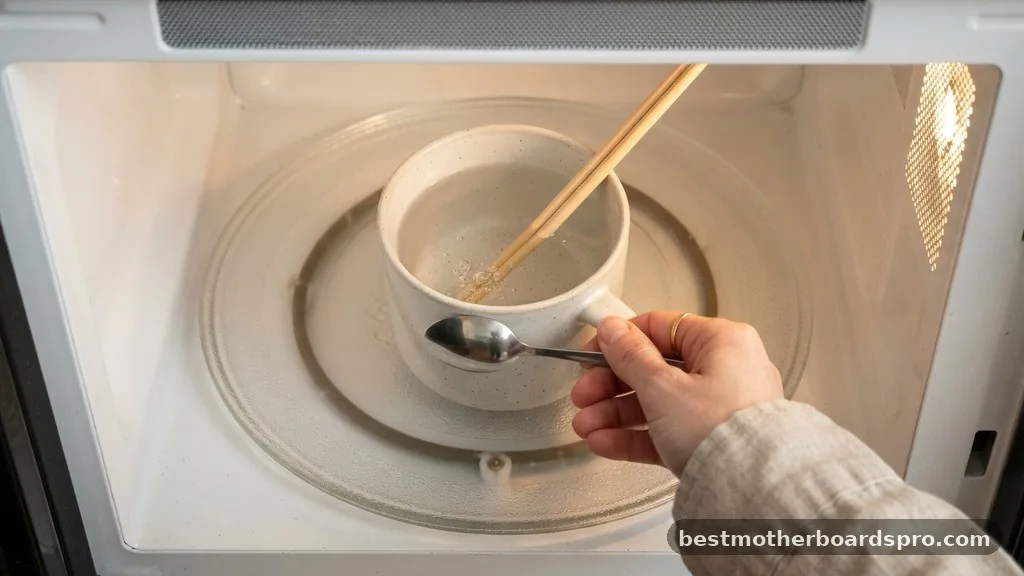
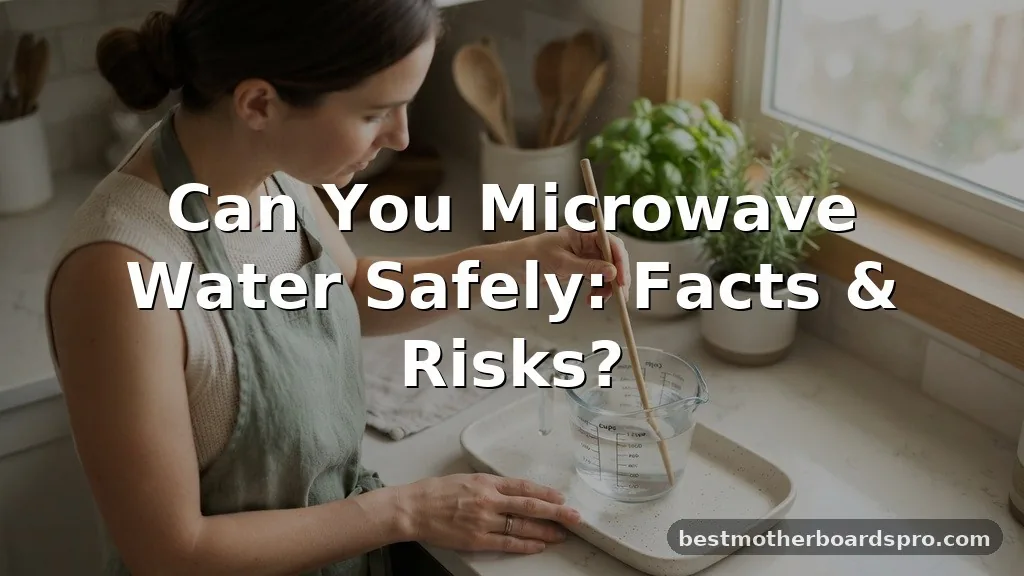
To keep your kitchen routine safe, you should always give the water a way to form bubbles. A simple trick involves placing a non-metallic object in the container before heating.
- Use a wooden chopstick or a wooden stirrer to provide a nucleation site.
- Ensure the container is microwave-safe and free of cracks.
- Avoid heating the water for excessively long periods without checking it.
- Let the cup sit inside the microwave for thirty seconds after the timer stops before removing it.
- Gently tap the side of the container with a spoon before lifting it to check for stability.
Comparing Heating Methods
Choosing the right tool for the job depends on your needs for speed, safety, and temperature control. While microwaves are incredibly fast, they do not always provide the consistent, rolling boil required for certain types of delicate loose-leaf teas.
| Feature | Microwave | Stovetop Kettle |
|---|---|---|
| Speed | Very Fast | Moderate |
| Safety | Risk of Superheating | Risk of Steam Burns |
| Control | Harder to Gauge | Easier to Monitor |
| Efficiency | High for small amounts | High for large amounts |
Does Microwaving Change Water Quality?
A common myth suggests that microwaving water alters its chemical composition or makes it “unhealthy” to drink. From a scientific perspective, this is inaccurate.
Microwave radiation is non-ionizing, meaning it does not change the molecular structure of the water itself. It simply excites the molecules to create thermal energy.
When you heat water in this way, you are essentially just speeding up the kinetic movement of the molecules. Whether you use a pot on the stove or a microwave, the end result is simply hot water.
As long as the container you use is food-grade and microwave-safe, you won’t be leaching harmful chemicals into your beverage. Stick to glass or ceramic mugs that are explicitly labeled as safe for microwave use to avoid any plastic degradation.
Addressing Topical Gaps: Why Microwave Water Safety Matters
Many users ask if they can microwave water by itself without any additives. While it is technically possible, it is the most dangerous scenario because there is nothing in the water to break the surface tension or provide a starting point for bubbles. If you must heat plain water, always add a small, microwave-safe wooden item to the cup.
Another point of confusion involves the “two-minute rule.” Some believe that you can only microwave water for two minutes to avoid issues. In reality, the time depends entirely on the wattage of your microwave and the amount of liquid.
A cup of water might boil in ninety seconds in a high-wattage unit, while it might take three minutes in a smaller, older model. Always watch the container rather than relying solely on a fixed timer.
Managing Temperature for Different Drinks
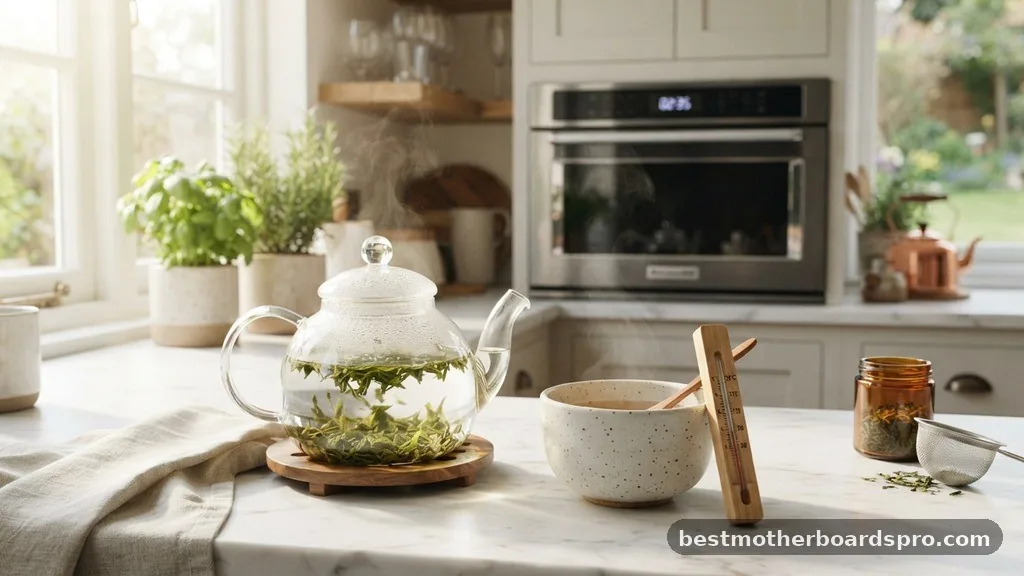
Not every beverage requires a rolling boil. In fact, pouring boiling water over certain types of tea can make them taste bitter. Using the microwave allows you to customize the heat level more precisely if you know your appliance’s intervals.
The Role of Container Material
The container you choose plays a massive role in how the water heats. Metal containers are strictly off-limits as they reflect the microwaves and cause arcing, which can damage the machine.
Plastic containers can melt or warp if the water becomes too hot. Heavy-duty ceramic or borosilicate glass are the best options for this task because they withstand thermal shock well and are generally smooth enough to clean easily, yet they allow for the necessary nucleation if you use a wooden stirring tool.
FAQ
Is it safe to microwave water for tea?
Yes, it is perfectly safe to microwave water for tea as long as you take precautions. To prevent superheating, place a wooden object, like a chopstick or a wooden stirrer, inside the cup. This provides a nucleation site that allows bubbles to form safely while the water heats up.
Can you microwave water by itself?
You can, but it is the most dangerous way to do it. Without tea leaves, coffee grounds, or a wooden stick to disrupt the surface, the water can become superheated. This means it can exceed the boiling point without bubbling, potentially exploding when you move the cup.
Is microwaving water the same as boiling it?
Microwaving water achieves the same temperature as boiling it on a stove, but the process of bubble formation differs. On a stove, bubbles form at the bottom of the pot. In a microwave, bubbles form throughout the liquid, which is why adding a nucleation object is so important.
How long should I heat water in the microwave?
The time varies based on your microwave’s wattage and the volume of water. Typically, one cup takes between one and two minutes. It is best to heat it in short, controlled bursts, checking the water temperature frequently until you know exactly how long your specific appliance requires.
Final Thoughts on Microwave Safety
Heating water in a microwave is a convenient, everyday task that millions of people perform without incident. By acknowledging the risk of superheating and taking the simple step of adding a wooden stirrer to the cup, you can effectively mitigate any danger. Whether you are preparing a quick cup of coffee or a soothing tea, the process is reliable when you follow these basic safety guidelines.
Remembering that you can microwave water effectively and safely is all about respecting the physics of the appliance and avoiding the trap of overheating plain, smooth-surfaced containers. Keep your habits consistent, use the right materials, and you will enjoy your hot beverages without any unnecessary risks to your kitchen or yourself.