
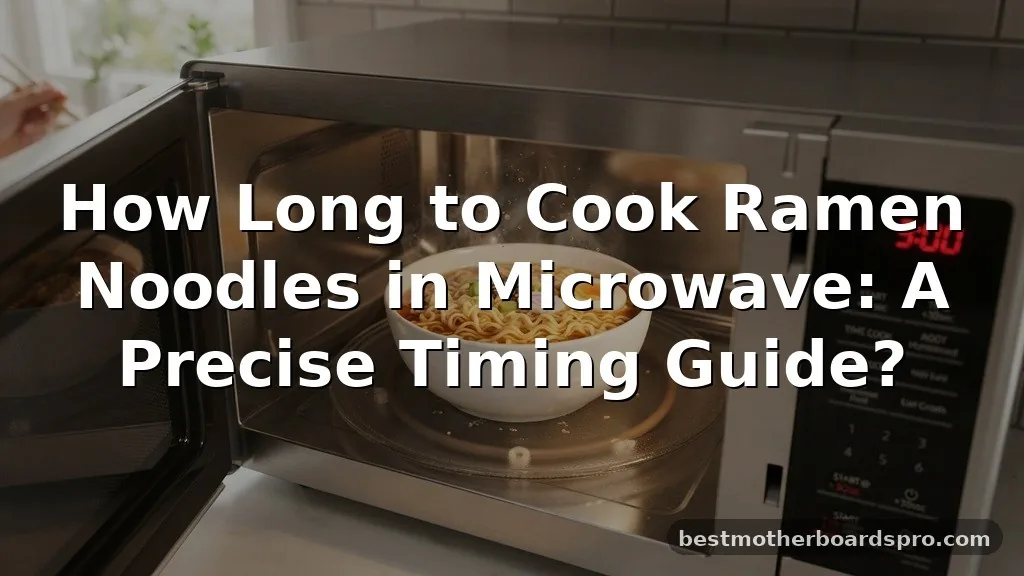
Figuring out how long to cook ramen noodles in the microwave is a simple skill that saves time while ensuring you get the perfect texture every single time. While many people just guess, the reality is that precision matters when you’re dealing with different microwave wattages and noodle brands.
Most instant noodles require only a few minutes to rehydrate and soften, yet getting that ideal bite often feels like a gamble. By understanding the relationship between water temperature, container depth, and power settings, you can stop dealing with mushy or undercooked strands and enjoy a bowl that tastes like it came straight from the stovetop.
Determining the Right Cooking Time
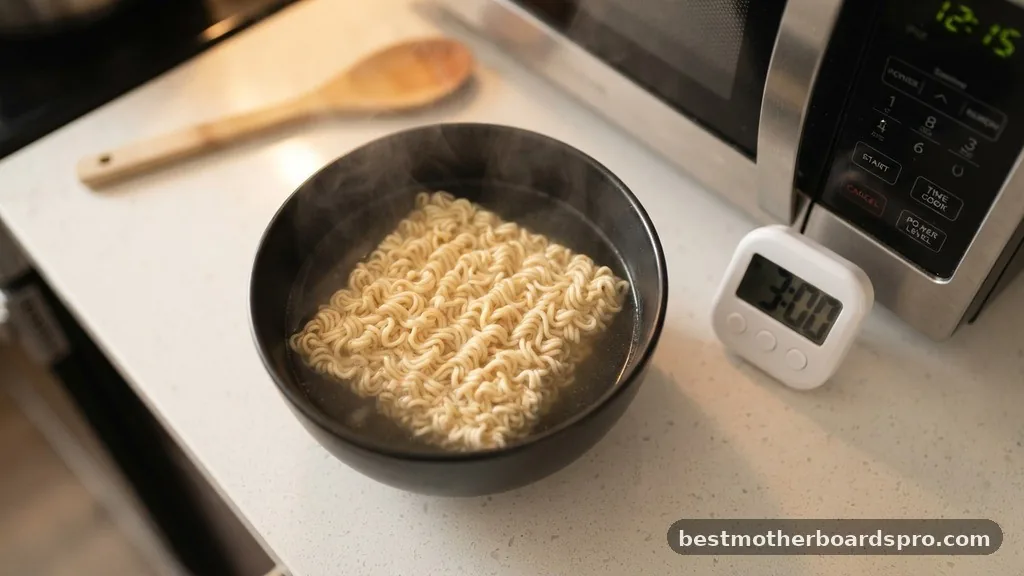
When asking how long to cook ramen noodles in the microwave, the standard answer is usually three to five minutes. However, this depends heavily on your specific appliance.
Most standard household microwaves operate between 700 and 1,200 watts. If you have a high-wattage unit, the water will reach a boil faster, meaning your noodles will hit that perfect al dente state sooner.
For most brands like Maruchan or similar instant varieties, you should start by heating your water for two minutes until it reaches a rolling boil. Once the water is bubbling, add the dry block. If you are using a thicker variety like Shin Ramyun, you will need to add an extra minute to the total cooking time because these noodles are denser and require more energy to soften properly.
The Importance of Microwave Wattage
Your microwave wattage dictates the speed of heat transfer. If your machine is on the lower end, around 700 watts, you should expect to add 60 to 90 seconds to the recommended package instructions. Conversely, if you have a powerful 1,200-watt model, sticking to the lower end of the time spectrum is essential to prevent the noodles from turning into a soggy, overcooked mess.
Safety and Container Selection
Using the right vessel is just as important as the timing itself. Never microwave instant noodles in the original Styrofoam cup unless the label explicitly states it is microwave-safe.
Many cheap plastic containers leach chemicals when heated, which is a major food safety concern. Always transfer your dry block to a deep, microwave-safe bowl.
A deep bowl is crucial because of the foam overflow that occurs during the starch release process. As the noodles hydrate, they release starches into the water, which creates a thick, bubbly foam. If your bowl is too shallow, that foam will spill over onto your microwave turntable, creating a significant mess that is difficult to clean.
| Noodle Type | Estimated Cook Time (Minutes) | Water Level Requirement |
|---|---|---|
| Standard Instant (Maruchan) | 3 – 4 | Submerge completely |
| Thick/Spicy (Shin Ramyun) | 5 – 6 | High volume (extra 1/2 cup) |
| Dried/Air-fried noodles | 4 – 5 | Follow package strictly |
Achieving the Perfect Noodle Texture
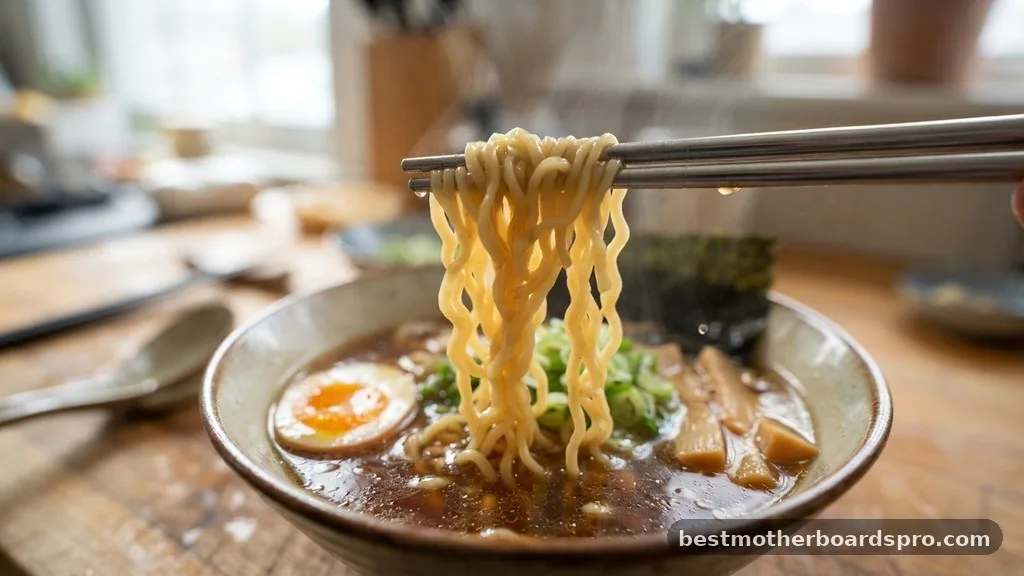
Achieving that elusive al dente texture in a microwave is entirely possible if you master the concept of carryover cooking. You do not need to cook the noodles until they are perfectly soft while the microwave is running. In fact, if you do, they will likely become mushy by the time you sit down to eat.
Stop the microwave when the noodles are still slightly firm. The residual heat in the boiling water will continue to cook them during the one-minute resting time you should allow before eating. This technique ensures the noodles retain their chew rather than breaking down into a paste.
- Use boiling water from a kettle to jumpstart the process.
- Add the seasoning packet only after the noodles have finished cooking to maintain flavor intensity.
- Stir the noodles halfway through the cycle to ensure even heat distribution.
- Cover the bowl with a microwave-safe plate to trap steam and accelerate the softening process.
Addressing Common Cooking Gaps
One of the most frequent questions involves cooking multiple packets at once. When you double the volume of noodles, you must increase the water-to-noodle ratio to ensure everything is submerged. Simply doubling the time is not enough; you often need to increase the time by about 50% rather than 100% to avoid overcooking the outer layers while the core remains hard.
Another gap in knowledge concerns the addition of raw ingredients. If you want to add an egg or frozen vegetables, do it before you start the microwave. Vegetables require the full cooking duration to soften, and an egg can be poached in the hot water if you crack it in carefully during the final two minutes of the process.
FAQ
Can I safely microwave instant noodles in a plastic container?
You should only use plastic containers that are clearly marked as BPA-free and microwave-safe. Standard, thin plastic takeout containers or the original Styrofoam packaging can melt or release harmful chemicals when exposed to the high temperatures required to boil water, posing a significant food safety risk.
Why do my noodles become mushy when I microwave them?
Noodles often turn mushy because of overcooking or failure to account for carryover cooking. If you leave the noodles in the hot water for too long after the timer stops, they continue to absorb liquid and lose their structure. Always drain or eat them immediately after resting.
How can I prevent foam from overflowing in the microwave?
Foam overflow is caused by the rapid release of starch. To prevent this, use a bowl that is significantly larger than the volume of your noodles and water. Additionally, you can add a small drop of oil to the water, which helps break the surface tension of the bubbles.
Does the seasoning packet affect the cooking time?
The seasoning packet typically contains salt and dehydrated ingredients that do not significantly alter the boiling point of the water. However, adding the seasoning at the beginning can sometimes lead to uneven flavor distribution. It is generally better to stir the seasoning in once the cooking is finished.
Final Thoughts on Microwave Ramen
Mastering how long to cook ramen noodles in the microwave is about balancing your appliance’s power with the density of the noodles you choose. By opting for a deep, microwave-safe bowl, monitoring the water levels to prevent overflow, and respecting the resting phase, you can transform a simple snack into a satisfying meal. Remember that most instant varieties are quite forgiving, but a little attention to detail regarding the resting time is what separates a soggy bowl from one with the perfect, chewy bite.
Experiment with your specific microwave once to find your “sweet spot,” and you will never struggle with undercooked or overcooked noodles again. Grab your favorite bowl, keep an eye on the clock, and enjoy your perfectly prepared meal.