
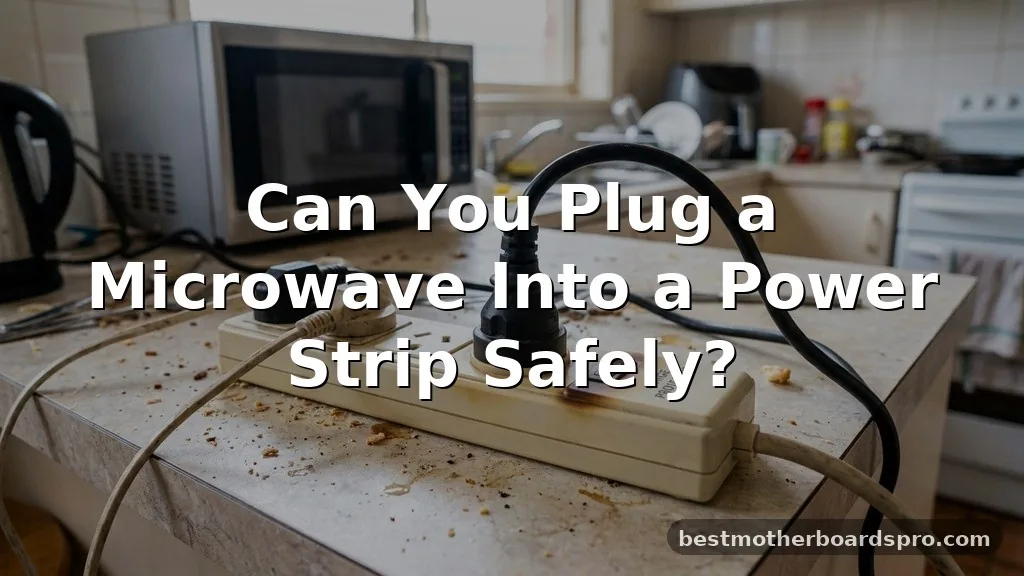
Deciding whether you can plug a microwave into a power strip often comes down to understanding how much electricity your kitchen appliances actually draw. Many homeowners assume that because a strip has multiple outlets, it can safely handle any device they throw at it. However, high-wattage machines like microwaves place a significant load on the electrical circuit.
Connecting them to a power strip frequently leads to tripped breakers or, in worse scenarios, a fire hazard. Knowing the technical limitations of your home’s wiring and the specific requirements of your appliance will help you avoid unnecessary risks while keeping your kitchen setup running smoothly.
The Electrical Reality of High-Wattage Appliances
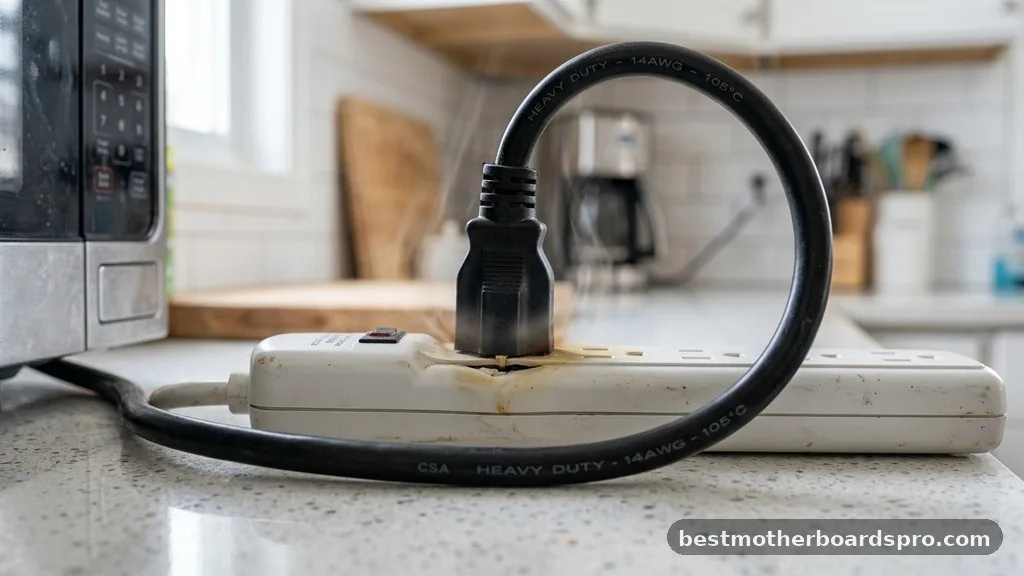
Microwaves are categorized as high-draw appliances, which means they require a consistent and significant flow of electricity to function. Unlike a smartphone charger or a lamp, a microwave often pulls between 600 and 1,500 watts during operation.
Most standard power strips are designed for low-power electronics like computers, monitors, or printers. When you force a high-amperage device through a power strip, you are essentially pushing a massive amount of current through thin, internal wiring.
This mismatch creates a bottleneck. As the power strip struggles to handle the high current, the internal components begin to heat up. If the strip lacks a robust circuit breaker, the plastic housing can melt, or the internal wires may short-circuit.
Manufacturers explicitly design these strips for desk accessories, not for heat-generating appliances that cycle on and off with high intensity. The safest practice is always to plug your microwave directly into a wall outlet, which is wired to handle the specific electrical demands of heavy-duty kitchen hardware.
Understanding Amps and Circuit Capacity
To grasp why this is dangerous, you need to look at the relationship between amps and your home’s electrical circuit. A standard household wall outlet is usually on a 15-amp or 20-amp circuit.
When you plug a microwave into a power strip, you are adding another layer of resistance between the power source and the load. If you have other items plugged into that same strip, the combined amperage can easily exceed the rating of both the strip and the wall outlet.
How Electrical Loads Impact Safety
The following table outlines how different appliances compare in their power requirements. You will notice that heating elements significantly shift the demand on your home’s electrical system.
| Appliance Type | Typical Wattage | Power Strip Suitability |
|---|---|---|
| Desktop Computer | 200W – 400W | Safe |
| Smartphone Charger | 5W – 20W | Safe |
| Microwave Oven | 700W – 1500W | Unsafe |
| Toaster Oven | 800W – 1700W | Unsafe |
| Coffee Maker | 600W – 1200W | Unsafe |
When you exceed these limits, the circuit breaker in your electrical panel is designed to trip to prevent a fire. While this is a helpful safety feature, it is a sign that you are pushing your system too hard. Relying on a power strip as a permanent solution for a microwave is an invitation for recurring power failures and potential damage to your appliance’s internal circuitry.
Why Extension Cords and Power Strips Fail
Many people turn to an extension cord or a power strip because their microwave’s power cable is too short to reach a wall outlet. While this seems like a simple fix, it introduces several failure points.
First, the length of the cord itself creates voltage drop, which can cause the microwave to run inefficiently. Second, the connection point between the microwave plug and the power strip is often loose.
Over time, this loose connection creates “arcing,” where electricity jumps across a tiny gap. This generates intense heat, which can discolor the plastic or even cause a fire. If you absolutely must use an extension cord, you need a heavy-duty model specifically rated for high-wattage appliances.
These cords are thicker, more durable, and designed to carry the current without overheating. However, they should only be used as a temporary solution, not a long-term fix for poor kitchen layout.
Common Risks of Overloading Circuits
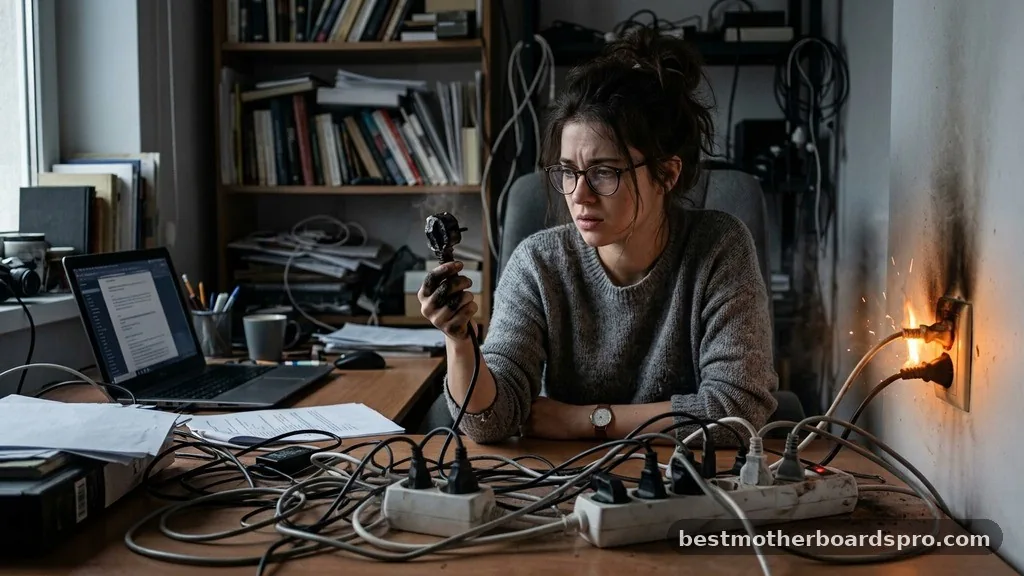
Using a power strip for high-drain devices isn’t just about the strip failing; it’s about the stress placed on your entire electrical system. When you plug a microwave into a strip that is already powering a coffee maker or a toaster, you are creating a recipe for disaster.
- Overheating wires: Internal copper wiring in cheap power strips is often too thin to handle the heavy current load.
- Tripped breakers: The sudden surge of power when the microwave magnetron starts can overwhelm a shared circuit.
- Fire hazards: Excessive heat buildup can ignite nearby fabrics or paper, leading to structural fires.
- Device damage: Fluctuating power levels can degrade the sensitive electronic components inside your microwave, shortening its lifespan.
If you find yourself constantly resetting the breaker, it is a clear indicator that your current setup is not sustainable. You may need an electrician to install a dedicated circuit for your kitchen appliances to ensure that each high-draw machine has its own reliable power source.
Identifying the Right Setup for Your Kitchen
A safe kitchen environment relies on proper electrical distribution. Start by inspecting your wall outlets. Are they grounded?
Do they look burnt or discolored? If you are using an old, outdated outlet, adding a power strip to the mix only makes the situation more volatile.
If you are currently using a power strip for your microwave, unplug it immediately. Check the back of your microwave for a label that lists the wattage or amperage. If it draws more than 10 amps, it should definitely have its own dedicated outlet.
If your kitchen lacks enough outlets, consider using a heavy-duty appliance cord that is rated for the specific wattage of your machine, but treat it with the same caution you would a permanent installation. Never run these cords under rugs or behind cabinets where heat can build up and go unnoticed.
Addressing Common Misconceptions
There is a persistent myth that as long as a power strip has a surge protector, it is safe to use with any device. This is incorrect.
Surge protection is designed to stop voltage spikes from damaging electronics, but it does not increase the current-carrying capacity of the strip. A surge-protected power strip is still limited by the same physical constraints as a standard strip.
Another misconception is that smaller microwaves are safe to plug into power strips because they use less power. While a 700-watt microwave uses less electricity than a 1500-watt model, it is still a high-draw appliance that generates heat.
Most manufacturers include warnings in their user manuals specifically advising against the use of extension cords or power strips. Ignoring these instructions can void your warranty and, more importantly, put your home at risk.
FAQ
Is it ever safe to use an extension cord with a microwave?
It is generally not recommended. If you must use one, it must be a heavy-duty cord specifically rated for high-wattage appliances, usually 12 or 14 gauge. Even then, it should only be a temporary measure. Always ensure the cord is not buried under furniture or rugs.
What happens if I ignore the warnings and use a power strip?
You risk melting the plastic casing of the power strip, damaging your microwave’s electronics, or causing an electrical fire. At the very least, you will likely experience frequent tripped circuit breakers, which can eventually damage your home’s electrical panel and lead to costly repairs.
Can I plug a microwave into a surge protector?
No, a surge protector does not change the power-handling capacity of the strip. Even if the device claims to protect against spikes, it cannot handle the sustained, high-amperage draw of a microwave. Always plug the microwave directly into a grounded wall outlet to ensure safe operation.
How do I know if my microwave is drawing too much power?
Check the label on the back or bottom of the unit. If it lists a wattage higher than 1000W or an amperage over 10 amps, it requires a dedicated circuit. If your lights flicker when the microwave runs, you are overloading your current circuit and need to address it.
Maintaining Electrical Safety in Your Home
Prioritizing safety when managing your household appliances is the best way to prevent accidents and protect your equipment. While the convenience of adding extra outlets via a power strip is tempting, it is rarely worth the risk when dealing with high-wattage items. Ensuring that your microwave has a direct connection to a wall outlet keeps your home’s wiring cool and your appliance running efficiently.
If you are struggling with limited outlet space, the best long-term strategy is to have a professional electrician install additional outlets. This investment not only eliminates the need for dangerous workarounds but also increases the overall value and safety of your property.
By treating your kitchen’s electrical needs with the respect they deserve, you ensure a reliable, functional space for years to come. If you have questions about your specific setup, consulting with a licensed electrician is always the safest path forward.