
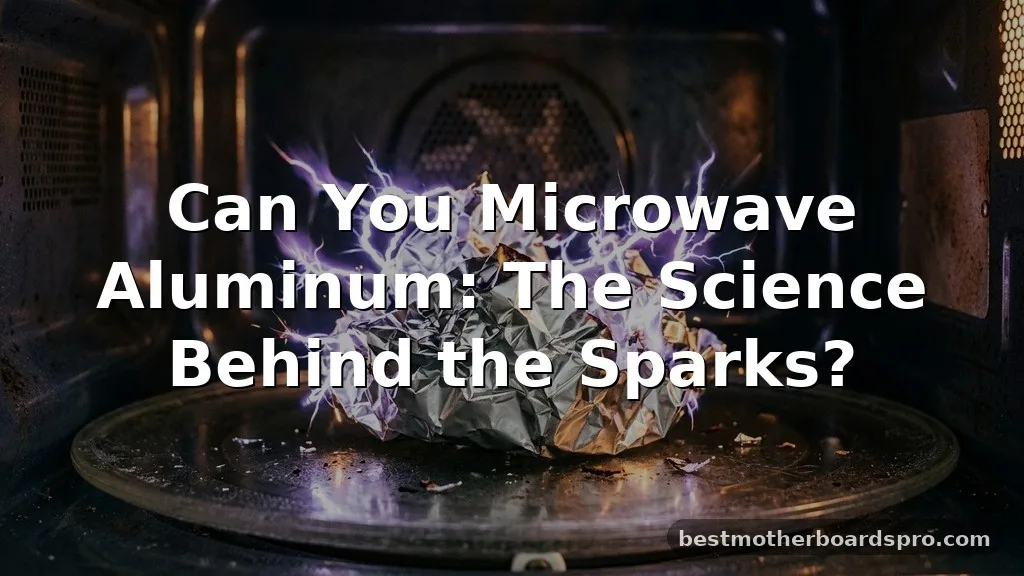
Many people have heard the stern warnings about never putting metal inside a kitchen appliance, leading them to wonder if they really can you microwave aluminum without causing a disaster. The truth is that while metal behaves differently in a microwave than glass or ceramic, the outcome depends entirely on the shape, thickness, and placement of the material.
Understanding the physics of how your machine generates heat is key to keeping your kitchen safe. By learning the mechanics behind why certain items spark while others remain inert, you can make informed decisions about reheating your leftovers without risking a fire hazard.
The Physics of Microwaves and Metal
At the core of your microwave, a component called the magnetron converts electricity into microwave radiation. These electromagnetic waves bounce around the interior chamber, vibrating water molecules in your food to create heat.
When these waves encounter a conductive metal like aluminum, the behavior changes significantly. Instead of passing through the material, the electrons on the surface of the metal respond to the oscillating electromagnetic field.
Because metal is conductive, these waves induce a flow of electrons across the surface, known as eddy currents. If the metal is smooth and thick, these currents simply flow harmlessly.
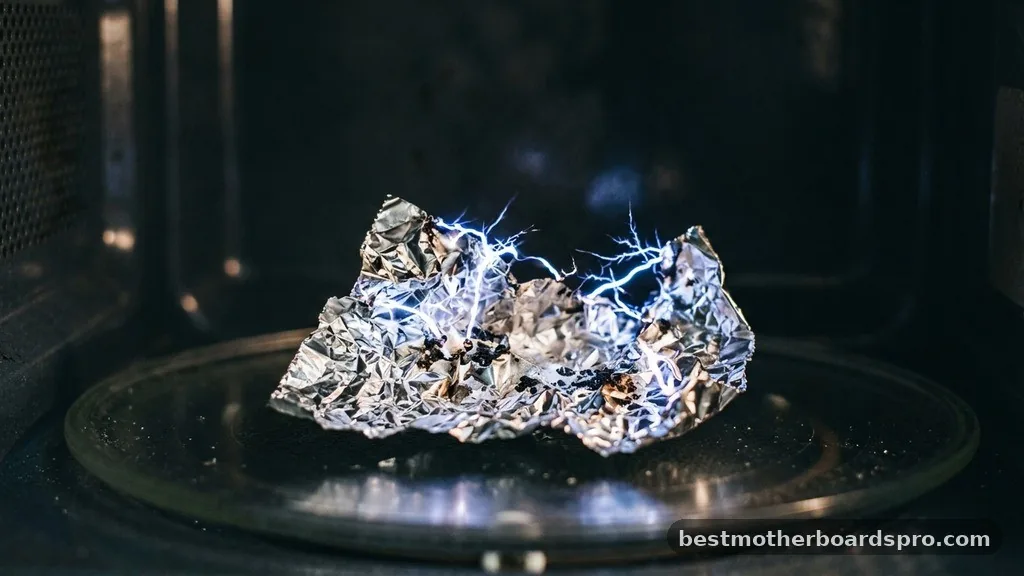
However, if the metal has sharp corners and edges, or if it is crumpled into thin sheets, the charge can build up to a point where the air around the object suffers a dielectric breakdown. This is what leads to arcing, which is the visible sparking that occurs when electricity jumps through the air between points of high potential difference.
Why Aluminum Foil Causes Problems
Most people associate the danger of metallic objects with aluminum foil. This material is incredibly thin, which means it cannot dissipate the induced electrical energy effectively.
When you place a crumpled ball of foil in the microwave, the sharp folds and crinkled surface create thousands of microscopic gaps. These gaps act as tiny bridges for electrical discharge, causing the air to ionize and produce the bright, popping sparks that startle most home cooks.
The Role of Surface Area and Geometry
The geometry of the aluminum item dictates its safety. A flat, smooth sheet of aluminum might not spark if it is placed carefully, but it will reflect the microwave radiation away from your food.
This reflection prevents the food from cooking evenly and can potentially damage the magnetron by reflecting energy back into the source. Furthermore, if the foil is near the walls of the oven, the energy concentration can lead to intense heat that melts the plastic components of the microwave or scorches the interior finish.
| Material Type | Interaction with Microwaves | Safety Status |
|---|---|---|
| Smooth, Thick Aluminum | Reflects waves, minor heating | Avoid if possible |
| Crumpled Aluminum Foil | Rapid arcing and sparking | Dangerous/Fire Hazard |
| Aluminum Takeout Containers | Variable based on depth/shape | Usually unsafe |
Common Misconceptions About Takeout Containers
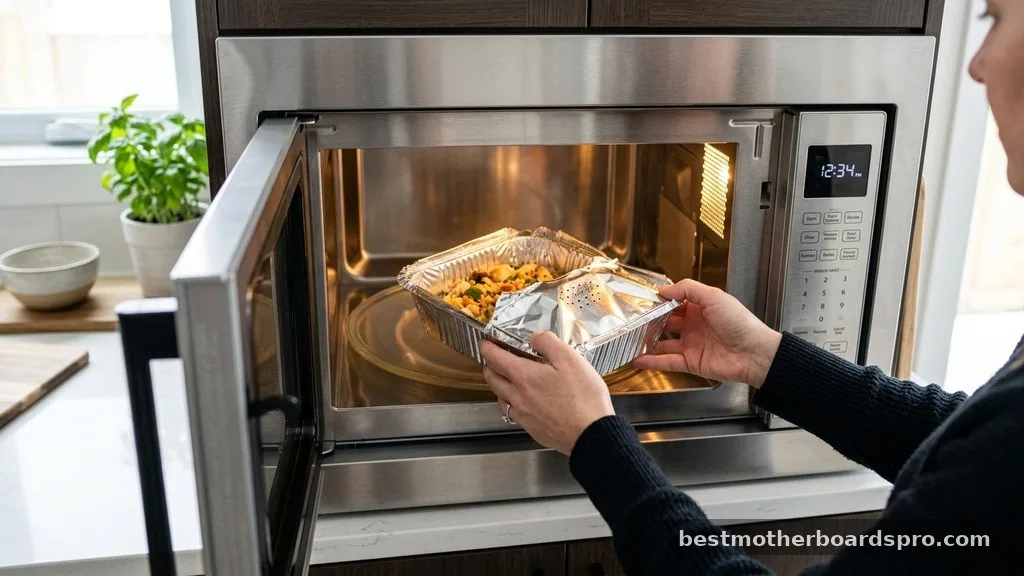
You might have noticed that some modern takeout containers made of thin aluminum are labeled as “microwave safe.” This is often a point of confusion for consumers.
These containers are designed to be shallow, which reduces the buildup of eddy currents compared to deep, narrow vessels. Manufacturers argue that if the container is not covered and is placed in the center of the tray, the risk of arcing is minimized.
However, many experts in household appliance safety advise against this practice regardless of the labeling. The risk of a fire hazard remains present if the container touches the side walls of the oven or if the food inside is not distributed evenly. It is almost always safer to transfer your meal to a microwave-safe ceramic or glass dish before heating.
The Faraday Cage Effect Explained
You may have heard that a microwave is essentially a Faraday cage, which is a structure that blocks external electromagnetic fields. While the metal mesh on your microwave door does indeed act as a Faraday cage to keep the non-ionizing radiation inside, placing metal inside the cage is a different scenario. When you put aluminum inside the chamber, you are essentially introducing a second, smaller conductive structure that disrupts the intended path of the waves.
- Sharp corners on metal packaging concentrate electrical charge.
- Thin materials like foil lack the thermal conductivity to dissipate heat.
- Proximity to the microwave walls increases the likelihood of arcing.
- Reflected waves can cause the magnetron to overheat over time.
Topical Gaps: What Most People Get Wrong
Many articles focus exclusively on the sparks, but they often ignore the long-term impact on the appliance. Even if you don’t see a dramatic light show, using metal items can wear out the magnetron prematurely.
When the energy isn’t absorbed by the food, it has to go somewhere. It either reflects back at the source or is absorbed by the oven’s internal components, leading to a loss of efficiency.
Another overlooked point is the difference between various types of metal. While aluminum is a common culprit, other metals like stainless steel behave differently due to their thickness.
While a thick stainless steel spoon might be fine for a short period, it is still not recommended because the electromagnetic field interaction is unpredictable. Always prioritize materials like borosilicate glass or microwave-safe plastics that allow the energy to penetrate the food directly.
FAQ
Is it ever safe to put aluminum in the microwave?
While some manufacturers of thin aluminum containers claim they are safe if placed correctly, it is generally discouraged. The risk of arcing and damaging your appliance is high. It is always safer to transfer your food to a microwave-safe bowl to avoid any potential fire hazards.
What should I do if I see sparks in my microwave?
If you see sparks, stop the microwave immediately by pressing the cancel button or opening the door. Remove the metal object once the unit is off. Inspect the interior for any scorch marks on the walls or the waveguide cover, as these can cause future arcing.
Does aluminum foil damage the microwave permanently?
Short-term exposure to a small piece of foil might not destroy the unit, but it can cause permanent damage to the magnetron or the interior enamel. Repeated arcing can pit the metal walls of the oven, which creates permanent hotspots that will continue to cause issues.
Can I microwave aluminum if it is covered by food?
Covering the metal with food does not stop the interaction with the electromagnetic waves. The metal will still conduct electricity and generate heat, which can cook the food unevenly or cause the container to spark once the food shifts or dries out during the heating process.
Conclusion
Navigating the rules of kitchen safety doesn’t have to be complicated, and the answer to whether you can you microwave aluminum is best summarized by a simple “avoid it.” While physics allows for specific scenarios where thin metal might not spark, the potential for damage to your microwave or the risk of a fire far outweighs any convenience. Stick to glass, ceramic, or labeled microwave-safe containers to ensure your meals heat evenly and your appliance stays in top condition.
By choosing the right materials, you protect your home and extend the life of your kitchen technology. If you have questions about specific materials in your kitchen, check the manufacturer’s guidelines for your model to stay on the safe side.