

Many people find themselves staring at a hardened, stubborn jar of golden syrup, wondering whether they can microwave honey to restore its smooth, pourable texture. While it is technically possible to use a microwave to soften your honey, doing so incorrectly can ruin the delicate balance of enzymes and antioxidants that make the product valuable.
Understanding the thermal limits of this natural sweetener is essential for anyone who enjoys keeping it in their pantry. By learning the right approach, you can effectively decrystallize your supply without compromising the quality or flavor profile you expect from a high-quality bee-sourced product.
The Science of Crystallization
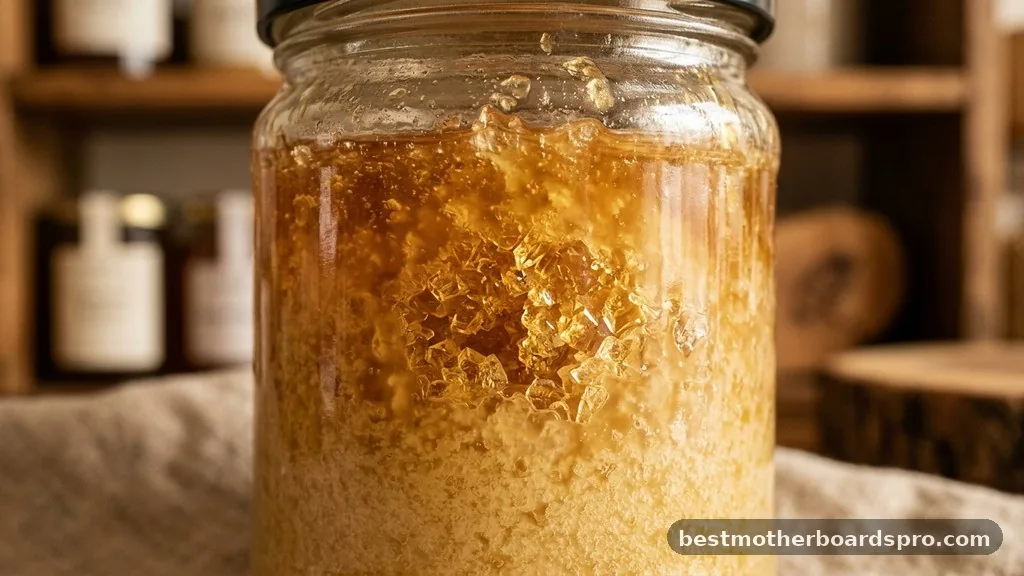
Crystallization is a natural process, not a sign of spoilage. When the glucose content in your jar exceeds the water content, the sugars begin to separate and form stable crystals. This change in physical state happens more rapidly in raw, unfiltered varieties because they contain natural pollen grains that act as nucleation points.
While the texture changes, the chemical composition remains largely the same. Most people prefer the liquid state for drizzling over toast or stirring into tea, which is why figuring out how to safely liquefy it becomes a common kitchen concern.
Risks of Excessive Heat
When you microwave honey, you introduce intense, uneven heat that can quickly push the temperature beyond the point of safety. Honey contains heat-sensitive enzymes like diastase and invertase, which are responsible for its natural health benefits.
If you overheat the substance, these proteins denature, effectively killing off the very properties that many people seek when buying raw or local varieties. Furthermore, excessive heat can cause the sugars to caramelize, leading to a bitter, burnt taste that permanently alters the flavor profile of the batch.
Safe Methods for Microwaving Honey
If you decide that using the microwave is your only option, precision is your best friend. You must work in short, controlled bursts to prevent the sugars from reaching a boiling point. The goal is to gently loosen the structure rather than cooking the liquid.
- Remove the lid entirely from the jar to prevent pressure buildup.
- Use a microwave-safe glass container rather than plastic, as plastic can leach chemicals when heated.
- Set your appliance to a low power setting, ideally 50% or lower.
- Heat the jar in 10 to 15-second intervals, stirring thoroughly between each cycle.
- Stop the process as soon as the crystals have dissolved, even if a few small clumps remain.
Comparing Methods for Softening Honey
Choosing the right technique depends on how much time you have and the type of container your product is stored in. While the microwave is fast, other methods are significantly more gentle on the final product.
| Method | Speed | Risk Level |
|---|---|---|
| Microwave | Very Fast | High (Risk of overheating) |
| Warm Water Bath | Moderate | Low (Very gentle) |
| Sunlight | Very Slow | Minimal |
Why Glass Containers are Preferred

The vessel you use matters just as much as the heat source. Many store-bought jars are made of plastic, which is generally not designed to withstand the rapid temperature fluctuations found inside a microwave. As the contents heat up, the plastic can soften or warp, potentially releasing unwanted compounds into your food.
Glass is an inert material that handles heat more reliably. If you frequently need to soften your stock, transferring it to a thick-walled glass jar before heating is a smart, proactive step for food safety.
Addressing Topical Gaps
A common question involves whether microwave energy destroys nutrients differently than stovetop heating. The reality is that heat is heat; whether it comes from a coil or electromagnetic waves, the danger lies in the temperature reached. The main difference is that microwaves heat unevenly, creating “hot spots” that can scorch the liquid in one corner while leaving the rest of the jar cool.
This is why constant stirring is mandatory. Additionally, there is a misconception that honey needs to be boiling to become liquid. In reality, you only need to reach about 100 to 110 degrees Fahrenheit to return it to a liquid state, which is well below the boiling point.
The Gentle Alternative: Water Bathing
If you want to ensure your honey stays in its most natural state, a warm water bath is the gold standard. Place your sealed jar into a bowl or pot of warm tap water—not boiling water. Allow it to sit for 15 to 20 minutes, refreshing the water if it cools down too quickly.
This method provides an even, ambient heat that cannot exceed the temperature of the water itself, making it impossible to overheat or burn your product. It takes longer than a microwave, but the consistency and quality of the final result are superior.
Maintaining Quality Over Time
Proper storage is the best way to prevent the need for frequent reheating. Keep your jars in a cool, dark cupboard away from the stove or windows. Fluctuating temperatures are the primary driver of crystallization, so avoid placing your honey in areas that get direct sunlight or experience heat spikes.
If you find yourself needing to soften it every single time you want a spoonful, you might be keeping it in a location that is simply too cold. A shelf at a stable room temperature is ideal for keeping the texture consistent and ready for use.
FAQ
Is it safe to heat honey in a plastic container?
It is generally discouraged to microwave plastic containers. Plastic can soften, warp, or leach chemicals when exposed to heat. For the best results and to ensure food safety, transfer your honey into a microwave-safe glass jar before applying any heat to the product.
Does microwaving honey destroy its enzymes?
Yes, if the honey reaches high temperatures, it will destroy heat-sensitive enzymes and antioxidants. Microwaves can create uneven hot spots that quickly exceed the safe threshold. To preserve the natural health benefits, always use low power settings and stir frequently to maintain a gentle, consistent temperature.
How can I tell if my honey is ruined?
If you have overheated your honey, it will often turn a darker shade and develop a distinct, slightly burnt or smoky aroma. The texture may become thin and watery rather than viscous. If it tastes bitter or scorched, the original flavor profile has likely been compromised.
Is there a way to prevent crystallization entirely?
You cannot permanently prevent crystallization in raw, high-quality honey because it is a natural process. However, storing your jar in a stable, room-temperature environment away from direct light and moisture will slow the process down significantly, keeping it in a liquid state for a much longer time.
Conclusion
Deciding whether you can microwave honey often comes down to balancing convenience with quality. While the microwave offers a quick fix for crystallized jars, it requires extreme caution to avoid damaging the delicate enzymes and flavor. By using low power settings and frequent stirring, you can soften your honey without ruining it.
If you have the time, a warm water bath remains the most reliable way to restore your honey to its smooth, golden state without any risk of overheating. Whether you choose the speed of a microwave or the gentle approach of water, being mindful of the temperature will ensure you continue to enjoy the best possible flavor in every drop.