
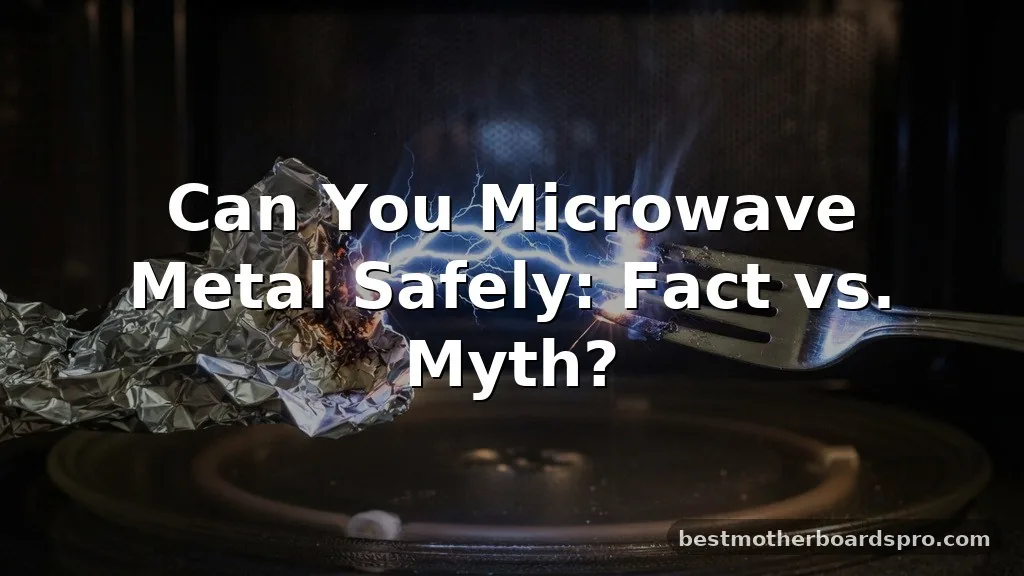
Wondering whether you can microwave metal is a common concern that often leads to hesitation in the kitchen. While most of us have heard dire warnings about sparks and fires, the reality is more nuanced than a simple “yes” or “no.” Understanding how electromagnetic waves interact with conductive materials is the key to preventing accidents.
When you learn the physics behind why certain items cause issues while others remain harmless, you’ll gain the confidence to handle your cookware properly. This article breaks down the science of microwave metal interactions, helping you distinguish between dangerous scenarios and perfectly safe daily practices.
The Physics of Microwaves and Conductive Materials
Microwaves function by emitting electromagnetic radiation that causes polar molecules, primarily water, to vibrate rapidly. This friction generates the heat required to warm your food.
When these waves encounter a conductive material like metal, the behavior changes significantly. Instead of passing through, the energy interacts with the free electrons in the metal, causing them to move.
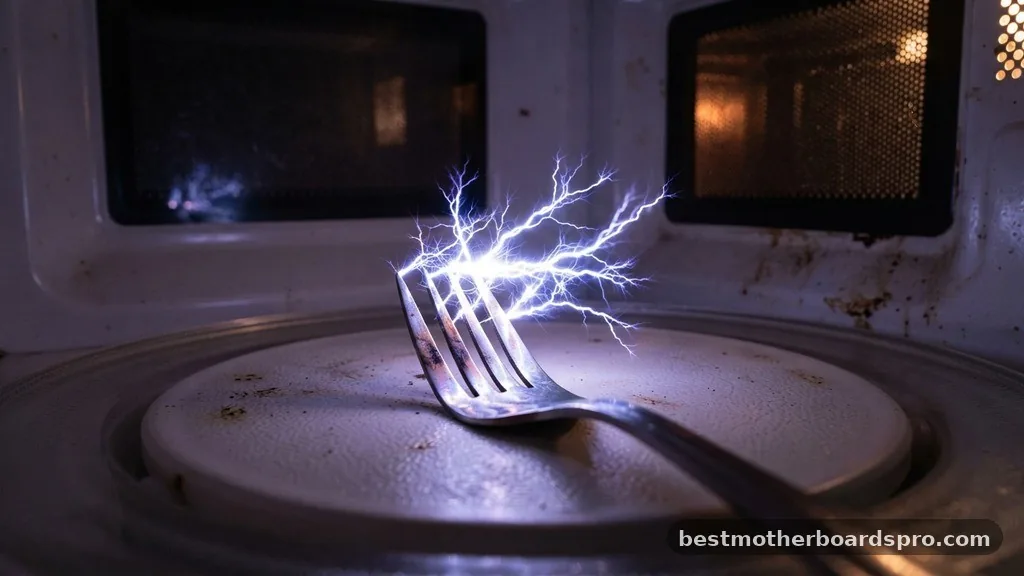
If the metal object is smooth, solid, and shaped correctly, the electrons redistribute themselves without causing major issues. However, if the metal has sharp edges, points, or thin filaments, the electrons crowd together at these spots.
This concentration of charge can exceed the dielectric strength of the air, creating a discharge—commonly known as arcing or sparks. This is the primary reason why putting a crumpled piece of aluminum foil in the machine is a bad idea, while a thick, smooth spoon might not cause any trouble at all.
Why Sharp Edges and Points Matter
The danger of arcing is almost always tied to the geometry of the object. Think of electricity like water flowing through a pipe; if you suddenly restrict the pipe or create a sharp turn, pressure builds up. In the case of metal, sharp edges act as lightning rods for the electrical current.
Understanding Arcing
- Sharp points: Metal tines on forks or jagged edges on a torn piece of foil create high-intensity electrical fields.
- Air gaps: When two pieces of metal are close but not touching, the current jumps across the gap, causing visible, dangerous sparks.
- Thin materials: Very thin metal, like the gold trim on fine china or the edge of a cheap container lid, can overheat rapidly, causing it to peel or burn.
Comparing Microwave-Safe and Non-Safe Materials
Not all items labeled as metal react the same way. It is important to know which materials are generally stable and which should stay far away from your appliance.
| Material Type | Microwave Behavior | Safety Status |
|---|---|---|
| Smooth Stainless Steel | Reflects waves; heats slowly | Usually safe if thick |
| Crinkled Aluminum Foil | Causes intense arcing | Highly dangerous |
| Gold or Silver Trim | Heats unevenly; ruins finish | Not recommended |
| Cast Iron | Highly reflective; blocks heating | Inefficient/Potential damage |
Addressing Common Myths and Misconceptions

Many people believe that any contact with metal will instantly destroy their microwave. While the potential for damage to the magnetron—the part that produces the waves—is real, it typically only happens if the energy is reflected back into the machine without being absorbed by food. If you have a bowl of soup with a spoon inside, the soup absorbs the vast majority of the energy.
The real risk occurs when you microwave empty containers or items with sharp, protruding edges. If the machine runs without sufficient food load to absorb the energy, the microwaves bounce off the metal walls and back into the magnetron, potentially causing it to overheat and fail. Always ensure there is enough moisture-rich food present to soak up the energy.
Topical Gaps: What You Might Not Know
A frequent question involves the use of metal racks that come with many modern microwave ovens. These racks are specifically engineered to be safe.
They are usually designed with rounded edges and are held in place by plastic or ceramic insulators to prevent contact with the metal walls of the oven. If your manufacturer included a rack, you can use it, provided you follow their specific instructions.
Another gap in common knowledge is the issue of “metalized” packaging. Many snack bags and instant food containers contain a thin layer of aluminum.
While this is often fine for short durations, it can become extremely hot very quickly. You should always check the manufacturer’s packaging instructions before assuming a container is safe for the microwave, regardless of what it looks like.
Practical Guidelines for Kitchen Safety
To keep your kitchen safe, follow these simple rules when deciding whether to use metal containers or utensils.
- Avoid thin, crinkled foils: Never use thin aluminum foil, as it is a major fire hazard.
- Check for damage: If a metal bowl has dents or sharp, jagged edges, keep it out of the microwave.
- Monitor the contents: Ensure the food you are heating covers the bottom of the vessel to absorb excess energy.
- Observe the machine: If you see any flickering or hear popping sounds, stop the process immediately.
FAQ Section
Is it ever safe to put a metal spoon in the microwave?
Yes, placing a smooth, rounded metal spoon into a bowl of liquid is generally safe. The liquid absorbs the microwave energy, preventing the electrons from building up a charge on the spoon. However, ensure the spoon does not touch the sides of the microwave walls.
Can I use stainless steel bowls in the microwave?
You can use thick, smooth stainless steel containers, but they are inefficient. Because metal reflects microwaves, the food inside will only heat from the top down. It is much better to use microwave-safe glass or ceramic, which allows the waves to penetrate through the food evenly.
Why do some microwave containers have metal lids?
Some lids include a metal rim for structural integrity. If the metal is smooth and integrated correctly by the manufacturer, it is usually safe. If the lid shows signs of corrosion, peeling, or has sharp, exposed edges, you should stop using it to avoid potential arcing.
What happens if I accidentally microwave metal?
If you see sparks, turn the microwave off immediately. Do not open the door until the arcing stops.
Inspect the interior for any scorch marks on the walls. If the machine seems to function normally afterward, it likely sustained no permanent damage from a short, momentary exposure.
Conclusion
Navigating the rules of microwave usage doesn’t have to be a source of constant anxiety. By understanding that the danger lies in sharp, thin edges and the lack of food to absorb energy, you can make informed decisions in your kitchen. While the general rule remains to prioritize glass, ceramic, or BPA-free plastics, knowing when you can microwave metal helps you avoid unnecessary panic when a spoon accidentally ends up in your bowl.
Always prioritize the manufacturer’s guidelines for your specific appliance to ensure long-term safety. If you ever feel unsure about an item’s safety, it is always best to play it safe and transfer your food to a microwave-safe container before heating.