

Deciding whether you can microwave a specific item often comes down to understanding how electromagnetic waves interact with different materials. While these appliances are staples in modern kitchens for their speed and convenience, they aren’t universal tools for every dish or container. Many people inadvertently risk sparks, chemical leaching, or uneven cooking because they aren’t sure which materials hold up under high-frequency energy.
Learning the physics behind your appliance helps you avoid kitchen disasters and keeps your meals healthy. By identifying the right containers and understanding how heat distributes through your food, you can maximize your appliance’s potential without compromising safety.
Understanding Microwave Physics and Material Safety
The primary function of a microwave is to emit electromagnetic waves that cause water molecules in food to vibrate rapidly. This vibration generates friction, which creates the heat that cooks your meal. Because this process relies on specific molecular interactions, not every material is built to withstand the environment inside the chamber.
When you put an item inside, you must consider whether the material is transparent to microwaves, meaning the waves pass through it without being absorbed. If a material absorbs the energy, it heats up, which can lead to melting, combustion, or the release of harmful substances. This is why choosing the right vessel is just as important as the food you are preparing.
Identifying Microwave-Safe Materials
Most manufacturers mark their products with a clear label, but if you are ever in doubt, there are ways to verify if a container is suitable for use. Glass, ceramic, and certain types of paper are generally considered safe because they allow microwaves to pass through them efficiently.
Glass and Ceramic

Glass and ceramic are the gold standards for reheating. They do not react with the electromagnetic field, meaning they won’t melt or release chemicals into your dinner. However, you should avoid glass that contains metal accents, such as gold or silver rims, as these will cause arcing.
Plastic and Polymers
Not all plastics are created equal. You should only use containers explicitly labeled as microwave-safe. Even then, avoid heating fatty or sugary foods in plastic, as these substances can reach temperatures that exceed the melting point of the container, potentially causing it to warp or leach chemicals into your meal.
| Material Type | Microwave Suitability | Key Consideration |
|---|---|---|
| Glass (Borosilicate) | Excellent | Ensure no metallic paint or trim. |
| Ceramic | High | Check for hairline cracks that could trap moisture. |
| Plastic (Labeled) | Conditional | Avoid high-fat foods that cause hot spots. |
| Stainless Steel | Dangerous | Reflects waves, causing sparks and damage. |
Why Metal is a Major Hazard
You should never put metal in your microwave. When electromagnetic waves hit a metal surface, they induce an electrical current.
If the metal is thin, like aluminum foil or the edges of a fork, the current builds up rapidly and discharges as a spark. This phenomenon, known as arcing, can permanently damage the magnetron—the heart of your appliance—and potentially start a fire.
Even containers that look like they might be safe can hide metal components. Some insulated coffee mugs or decorative bowls have hidden metallic linings. If you see sparks, immediately turn the unit off and remove the item once the chamber is cool.
The Truth About Paper and Bags
Paper products are generally safe, provided they are plain and clean. You can use parchment paper or plain white paper towels to cover dishes and prevent splattering.
However, stay away from brown paper bags, recycled paper, or anything with wax or plastic coatings. These can ignite or release fumes when exposed to sustained heat.
Regarding bags, only use those explicitly designed for the appliance. Many Ziploc-style bags are made of polyethylene, which can melt if it comes into direct contact with high-fat foods. If you are unsure, transfer your contents to a glass bowl before heating.
Addressing Common Kitchen Myths
There is a lot of misinformation regarding what you can and cannot do with your appliance. Clearing up these misconceptions will help you use your kitchen tools with more confidence.
- Styrofoam is not safe: Most foam containers will melt or release toxic chemicals when heated, even if they aren’t labeled as such.
- Hard-boiled eggs: Never attempt to boil an egg in its shell; the internal steam pressure will cause the egg to explode.
- Empty running: Running the machine empty is dangerous because there is no food to absorb the energy, which can cause the magnetron to overheat and fail.
- Water superheating: If you heat water in a very smooth, clean cup, it can become superheated past its boiling point without bubbling, then erupt violently when touched.
Ensuring Even Heat Distribution
One of the biggest complaints about microwaving is the “cold spot” phenomenon. Because the waves bounce around the chamber, they create standing waves of high and low intensity. To ensure your food cooks properly, consider these techniques:
Stirring and Rotating
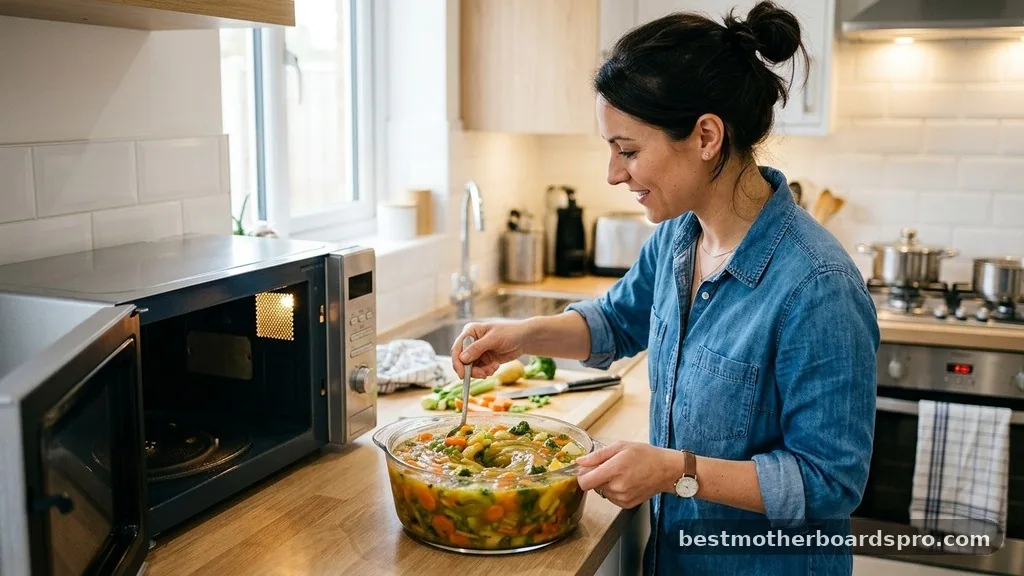
If you are heating a liquid or a loose mixture, stop the cycle halfway through to stir the contents. This moves the cooler parts from the bottom and edges into the center, ensuring a more uniform temperature. If your appliance doesn’t have a rotating turntable, manually rotate the dish 180 degrees during the process.
Arrangement Matters
Place thicker pieces of food toward the outside of the dish and thinner parts toward the center. Since the edges of the container receive more energy, this arrangement helps the denser parts of the meal cook at the same rate as the faster-cooking components.
Topical Gaps: What You Might Not Know
Many users ask if the appliance can kill bacteria like salmonella. While microwaves do generate heat, they often do so unevenly.
If you are cooking raw meat, the interior might reach a safe temperature while the edges remain cool enough for bacteria to survive. Always use a food thermometer to check that the internal temperature reaches the recommended safety threshold.
Another gap involves the “microwave-safe” label itself. This label is often self-certified by the manufacturer, meaning it hasn’t necessarily undergone rigorous independent testing. Relying on your own judgment—using glass or ceramic whenever possible—is a safer approach than blindly trusting a plastic container’s label.
FAQ
Can I safely reheat food in a plastic container?
You should only use containers specifically labeled as microwave-safe. Even then, avoid heating foods with high fat or sugar content, as these can reach temperatures that degrade the plastic, potentially causing it to warp or leach chemical compounds into your dinner.
Is it ever okay to put metal in the microwave?
Generally, no. Thin metal, like foil or silverware, causes arcing, which results in sparks and can destroy the appliance’s magnetron. While some advanced, modern convection-microwave hybrids allow specific metal racks, you should strictly follow the manufacturer’s manual to avoid a fire hazard.
Why does my food have cold spots after heating?
Cold spots occur because microwaves create an uneven field of energy within the chamber. To combat this, stir your food halfway through the cooking cycle and ensure thicker items are placed toward the outer edge of the plate, where the energy concentration is typically higher.
What materials should I strictly avoid?
Avoid styrofoam, aluminum foil, metal-trimmed dishes, and any paper products with wax or plastic coatings. These materials can melt, catch fire, or release toxic chemicals when exposed to high-frequency waves. Always check the base of your dishes for a microwave-safe icon before you start.
Optimizing Your Kitchen Workflow
Mastering the art of using your microwave requires a mix of common sense and attention to material properties. By sticking to glass and ceramic whenever possible and avoiding the dangers of metal, you ensure that your appliance remains a useful tool rather than a safety risk. Remember that while speed is a major benefit, the uneven nature of the heating process means that stirring and resting time are just as important as the initial cook time.
Keeping these habits in mind will lead to better-tasting meals and a longer lifespan for your kitchen equipment. If you remain cautious about the materials you put inside, you’ll find that your microwave is an incredibly versatile partner for your daily cooking needs.