
When you find yourself staring at a rock-hard block of frozen poultry with dinner only an hour away, knowing how to defrost chicken in microwave settings becomes a genuine lifesaver. While many home cooks prefer slow-thawing in the refrigerator, life often demands a faster approach.
By leveraging the specific power settings on your appliance, you can transition your protein from frozen to ready-to-cook in a matter of minutes. This process requires precision to ensure the meat remains safe for consumption and maintains a texture that won’t ruin your final recipe.
Understanding the Microwave Defrost Process
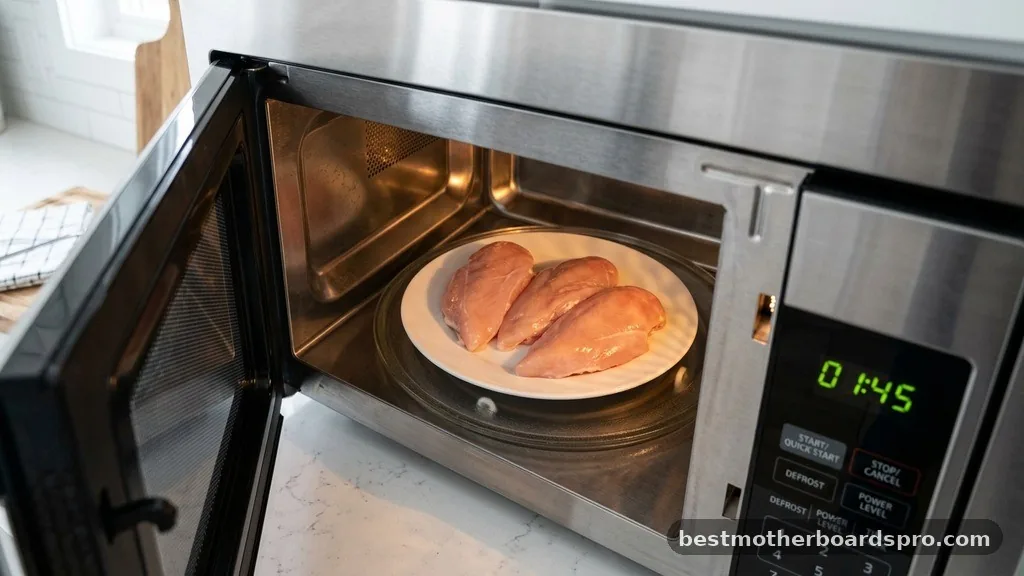
The primary challenge when using a microwave to thaw meat is the nature of the appliance itself. Microwaves work by exciting water molecules, which creates heat.
Because chicken is dense and contains uneven parts, the outer edges often begin to cook before the center has even started to thaw. Mastering the technique involves fighting this uneven heating through frequent monitoring and low power settings.
The USDA provides clear guidelines regarding food safety, noting that once meat is thawed in a microwave, it must be cooked immediately. You cannot thaw it and then place it back in the refrigerator or freezer. Because the surface temperature of the chicken may rise above safe levels during the process, bacteria could begin to multiply if the item is not moved straight to a hot pan, oven, or grill.
Essential Steps for Successful Thawing
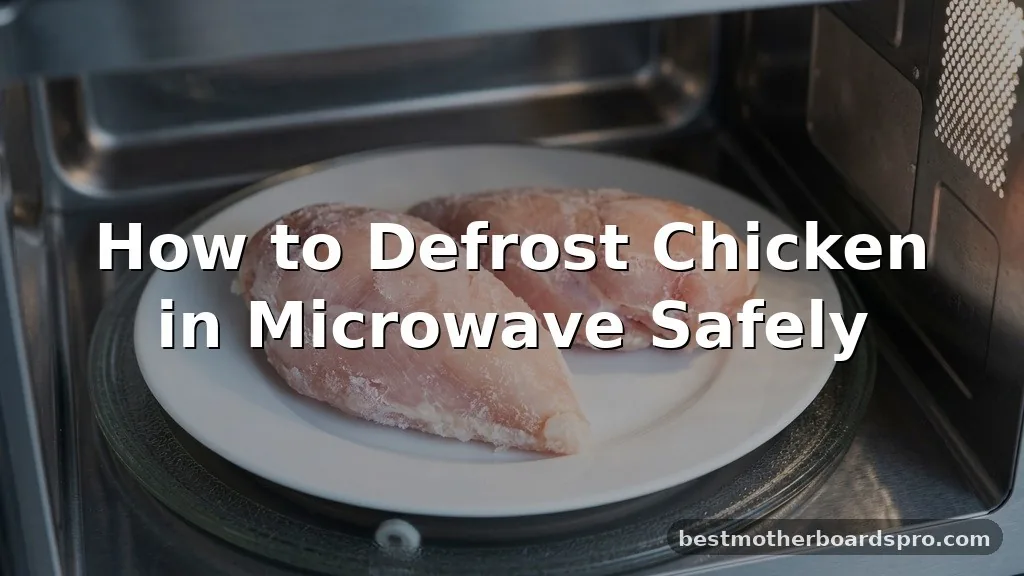
To achieve the best results, you must remove all original store packaging before beginning. Plastic wrap and foam trays are not designed for microwave heat and can melt or leach chemicals into your meal. Always place the chicken on a microwave-safe plate or dish that can catch any juices released during the process.
Follow this systematic approach to ensure safety and quality:
- Remove the frozen chicken from its original packaging and discard any absorbent pads.
- Place the pieces in a single layer on a microwave-safe dish to promote even distribution of energy.
- Select the defrost function on your microwave, or manually set the power level to 20% or 30%.
- Enter an initial time estimate based on the weight of the chicken, usually starting with two-minute intervals.
- Pause the microwave frequently to flip or rotate the chicken, ensuring no single spot receives too much heat.
- Separate pieces as they begin to thaw to prevent the outer edges from turning rubbery or fully cooked.
Comparing Thawing Methods
Choosing the right approach depends on how much time you have available. While the microwave is undeniably the fastest, it isn’t always the best for large, whole birds.
| Method | Time Required | Safety Considerations |
|---|---|---|
| Microwave | 10-20 minutes | Must cook immediately after |
| Cold Water | 1-3 hours | Water must be changed every 30 mins |
| Refrigerator | 12-24 hours | Safest, most consistent results |
Addressing Common Topical Gaps
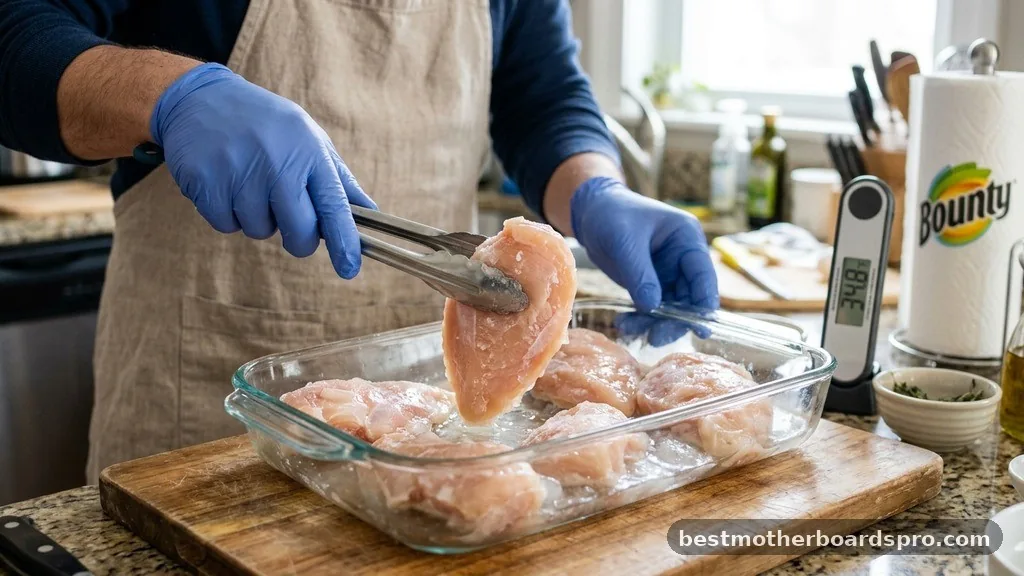
One frequently overlooked aspect of this process is the “cooking” effect. Many people find their chicken develops a tough, greyish exterior after a trip through the microwave. This happens when the power setting is too high.
If your microwave doesn’t have a dedicated “defrost” button, you must manually adjust the power level. Think of the goal as “gentle warming” rather than “rapid heating.”
Another common mistake involves the size of the cut. Trying to defrost a whole chicken in the microwave is rarely successful; the skin will likely cook and become rubbery while the cavity remains frozen.
It is far more effective to use this method for individual breasts, thighs, or wings. If you have a large batch, prioritize thawing only what you need for the immediate meal.
Managing Temperature and Timing
The exact time required depends on the weight and the specific wattage of your machine. A 1200-watt microwave will work significantly faster than an 800-watt model.
Always start with less time than you think you need. You can always add another minute, but you cannot undo the damage of partially cooked, dry meat.
If you notice the edges of the chicken turning white or opaque, stop the machine immediately. This is a clear signal that the temperature is climbing into the cooking range.
Let the chicken sit for a minute or two; the internal heat will continue to distribute itself during this rest period. If you are still seeing ice crystals, resume at a lower power setting for shorter bursts.
Safety Protocols for Poultry
Handling raw poultry requires strict adherence to hygiene standards. After you finish the defrosting process, immediately clean the microwave interior if any juices have splattered.
Use hot, soapy water to sanitize the plate used, and wash your hands thoroughly after touching the raw meat. Keeping your workspace clean prevents the spread of pathogens like Salmonella, which can thrive if food is left at room temperature for too long.
Remember that the microwave is a tool for convenience, not perfection. If you are planning a recipe that requires delicate, tender meat—like a sous-vide dish or a quick pan-sear—the microwave might compromise the texture slightly. However, for stews, stir-fries, or breaded cutlets, the minor impact on texture is usually unnoticeable once the chicken is fully incorporated into the dish.
Frequently Asked Questions
Is it safe to leave chicken out after microwave defrosting?
No, you should never leave chicken out after it has been defrosted in a microwave. The process often raises the surface temperature of the meat into the “danger zone” where bacteria grow rapidly. Always cook the chicken immediately after the thawing cycle is complete to ensure food safety.
How can I tell when the chicken is fully defrosted?
You will know the chicken is ready when it is pliable and there are no icy patches remaining, especially in the thickest parts of the meat. If you press the center of the breast or thigh, it should feel soft rather than hard or crystalline to the touch.
Why does my chicken sometimes start cooking during the defrost cycle?
This occurs because microwaves heat unevenly, often targeting the outer edges first. To prevent this, always use a lower power setting—ideally 20% to 30%—and pause the cycle every few minutes to flip and rotate the pieces. This redistributes the heat and encourages more uniform thawing throughout.
Can I refreeze chicken once it has been microwaved?
You should not refreeze chicken that has been defrosted in a microwave. The rapid temperature changes and potential for partial cooking during the process make it unsafe to store. Only defrost the specific amount of chicken you intend to cook and consume during your immediate meal preparation.
Final Thoughts on Rapid Thawing
Successfully using your microwave to handle frozen poultry is a skill that saves dinner on busy nights. By prioritizing low power levels, frequent rotations, and immediate cooking, you maintain both safety and quality. While refrigerator thawing remains the gold standard for texture, knowing how to defrost chicken in microwave settings gives you the flexibility to work around even the tightest schedules.
Just remember to keep your appliance clean and your focus sharp during those few minutes of operation. Once you master the rhythm of checking and flipping, you will find that frozen chicken is no longer an obstacle, but a convenient starting point for a variety of delicious, home-cooked meals.