
When you find yourself staring at a rock-hard slab of beef with dinner only an hour away, the idea of learning how to defrost steak in microwave settings becomes incredibly appealing. While purists often argue that slow thawing is the only way to maintain quality, life doesn’t always afford us the luxury of planning twenty-four hours in advance.
You can safely bring a frozen cut back to room temperature using your kitchen appliance, provided you follow specific precautions to avoid turning the edges gray or rubbery. By managing your power levels and timing, you can effectively salvage your meal without compromising the integrity of the muscle fibers.
Understanding the Science of Microwave Thawing
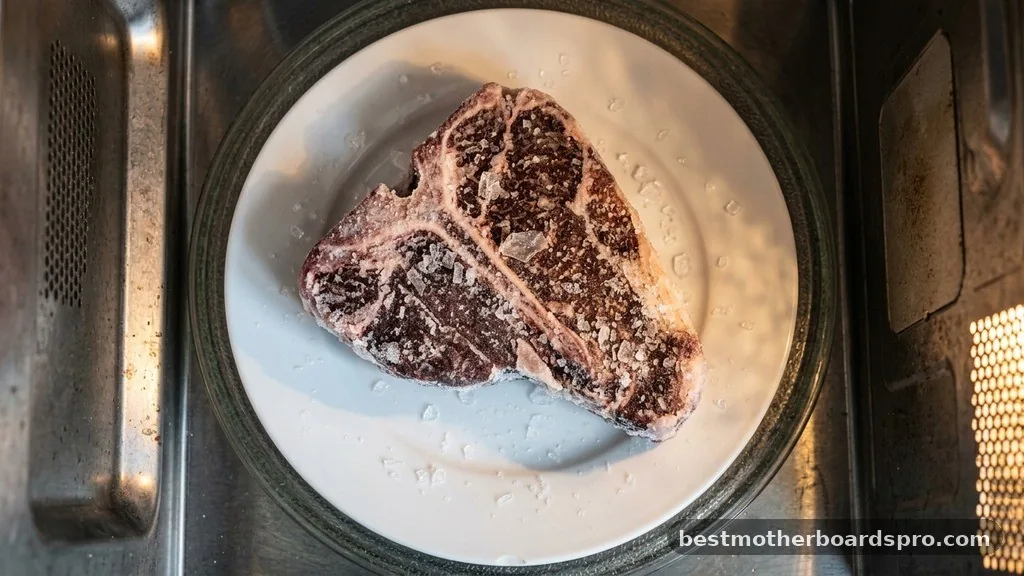
Microwaves work by agitating water molecules within the food, creating friction that generates heat. When you defrost meat, the goal is to provide just enough energy to transition the ice crystals back into liquid water without reaching the temperature threshold where proteins begin to denature.
If you use full power, the outer layers of your steak will start to cook while the center remains frozen. This results in an uneven texture that is often dry and tough once it hits the grill or pan.
To achieve success, you must treat the process as a delicate balance. The goal is to distribute heat slowly.
By utilizing low power settings, you allow the heat to conduct inward through the meat rather than blasting the surface with intense energy. This method prevents the “hot spots” that lead to premature cooking.
Steps for Safe Microwave Thawing
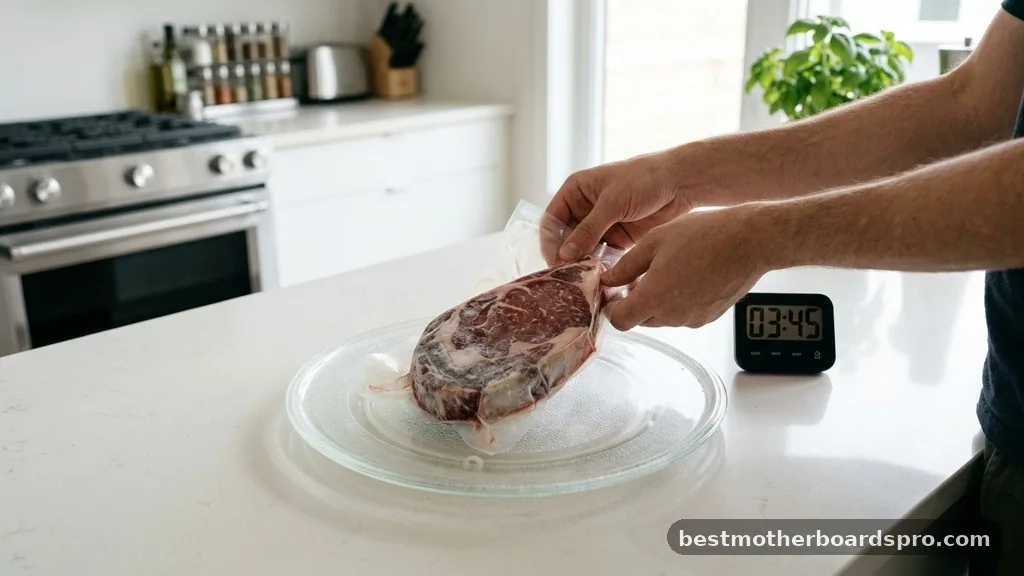
Before you begin, remove the steak from its original store packaging. Styrofoam trays and thin plastic wraps are not designed to withstand microwave heat and can melt or release chemicals into your food. Place the meat on a microwave-safe plate, ideally one with a slight rim to catch any juices that might release during the process.
- Remove the steak from all commercial packaging and plastic wrap.
- Place the meat on a microwave-safe plate or dish.
- Set your microwave to 20% to 30% power, often labeled as the defrost setting.
- Heat the steak in short, 30-second to 60-second intervals.
- Flip the steak and rotate it frequently to ensure even heat distribution.
- Stop when the meat is pliable but still icy; do not wait until it is fully limp.
Comparing Thawing Methods
Choosing the right technique depends on how much time you have available. While the microwave is the fastest option, it requires constant supervision to prevent accidental cooking. Other methods offer different benefits regarding texture and moisture retention.
| Method | Time Required | Best For |
|---|---|---|
| Refrigerator | 12–24 hours | Maximum quality and safety |
| Cold Water | 1–3 hours | Faster than fridge, better than microwave |
| Microwave | 5–10 minutes | Last-minute emergencies |
Addressing Common Topical Gaps and Concerns
Many home cooks worry about the safety of using a microwave for meat. The primary concern is the temperature danger zone, where bacteria multiply rapidly.
Because microwave thawing can create warm patches, it is critical that you cook the meat immediately after it has been thawed. Never let a partially thawed steak sit on the counter or return it to the refrigerator, as the uneven temperature creates an ideal environment for microbial growth.
Another common issue is the “cooked edge” phenomenon. If your steak starts turning gray or brown during the process, your power setting is likely too high.
Immediately stop the microwave, flip the meat, and reduce the power level. If your microwave doesn’t have adjustable power, you might be out of luck for this specific method, as full-power blasts will almost certainly ruin the texture of a high-quality cut.
Tips for Better Results
If you want the best possible outcome, consider the thickness of the steak. Thinner cuts, such as flank steak or skirt steak, thaw much faster than thick ribeyes or filets.
If you are thawing multiple steaks, do not stack them. Arrange them in a single layer with space between them to allow for even airflow and energy absorption.
Once the steak reaches a point where it is no longer frozen solid, take it out. Leaving it in for even an extra minute can result in a rubbery, overcooked exterior.
If you have five or ten minutes of buffer time, let the steak sit on the counter after microwaving. This resting period allows the internal temperature to equalize, which leads to a more consistent sear when you finally move it to the grill.
Common Mistakes to Avoid
The most frequent error is impatience. Many people try to rush the process by increasing the power, thinking it will save time. In reality, this usually results in a steak that is cooked on the outside and frozen on the inside, leading to a disastrous main course.
Another mistake is forgetting to turn the meat. Without flipping, the side facing the bottom of the microwave will absorb heat differently than the side facing the top, leading to uneven thawing.
Always verify that your plate is truly microwave-safe. Some ceramic or glass dishes can become extremely hot, which adds secondary heat to the bottom of the steak, potentially cooking it faster than you intended. Using a paper towel on the plate can help absorb excess moisture and prevent the steak from sitting in its own juices, which can sometimes lead to an unpleasant boiled texture.
Maintaining Meat Quality After Thawing
Once you have successfully thawed your steak, you need to prepare it for cooking immediately. Pat the surface of the meat dry with paper towels.
Excess surface moisture is the enemy of a good sear; if the steak is damp, it will steam rather than brown. If you are planning to grill, this step is non-negotiable for achieving a delicious crust.
Season the meat right before it hits the heat. While some chefs recommend salting early, if you have just used the microwave, the texture is already slightly compromised. Keeping the seasoning simple—coarse salt and cracked black pepper—will allow the natural flavor of the beef to shine through despite the accelerated thawing process.
FAQ
Is it safe to defrost steak in the microwave?
Yes, it is safe to defrost steak in the microwave provided you cook the meat immediately afterward. Because the process can create uneven temperatures, you must not leave the meat sitting out or store it for later, as this increases the risk of bacterial growth.
How do I prevent the steak from cooking while thawing?
The secret is using a low power setting, typically 20% to 30%, and working in short, frequent intervals. By flipping and rotating the steak every thirty to sixty seconds, you ensure the heat spreads evenly throughout the muscle fibers instead of concentrating on the edges.
Can I use the microwave if I don’t have a defrost button?
If your microwave lacks a specific defrost function, you can still achieve the same result by manually adjusting the power level. Most modern microwaves allow you to set the power percentage. If yours does not, your microwave is likely too intense for thawing meat.
What should I do if the edges of the steak turn gray?
Gray edges indicate the meat is beginning to cook. Stop the microwave immediately, flip the steak, and let it rest for a minute. If you must continue, ensure you use a lower power setting or shorter intervals to prevent further cooking of the outer layers.
Final Thoughts on Thawing Techniques
Mastering how to defrost steak in microwave settings is a practical skill for any home cook facing a time crunch. While it isn’t the method you would choose for a prime cut of dry-aged beef, it is a reliable solution for weeknight dinners. By keeping your power levels low, monitoring the process closely, and heading straight to the grill once the ice is gone, you can serve a satisfying meal even when you forget to pull the meat from the freezer early.
Remember that the best results come from patience; even in a microwave, slow and steady remains the golden rule for quality. If you find yourself in a pinch, trust the process, keep a close eye on the meat, and enjoy your dinner.