
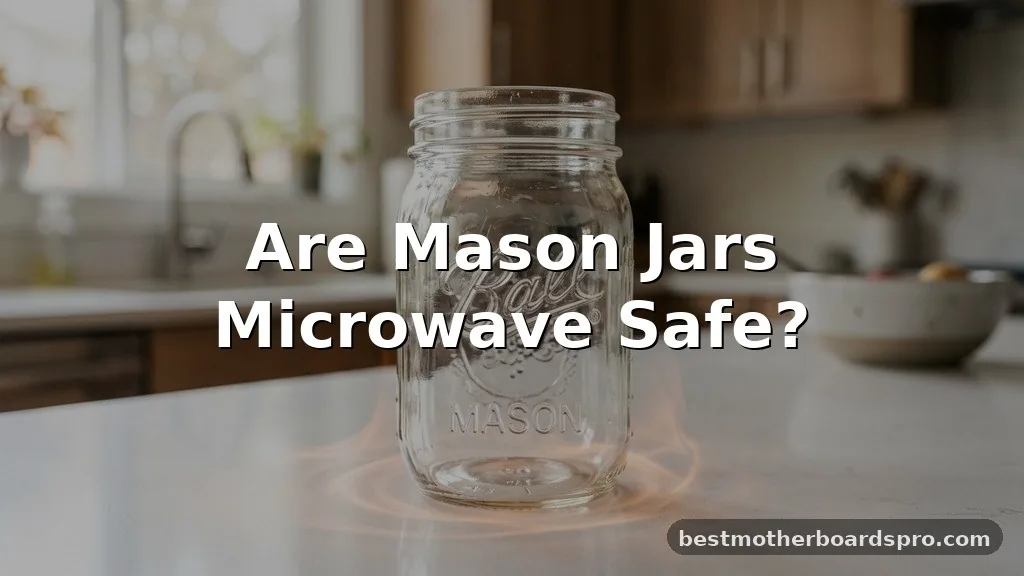
Determining whether your kitchen glassware can handle high-heat appliances is a common concern for home cooks. Many people wonder if mason jars are microwave safe before tossing a cold salad or soup into the machine for a quick warm-up. While these iconic glass containers are incredibly versatile for storage and meal prep, they aren’t inherently designed for rapid temperature fluctuations.
Understanding the material composition of your jars is the first step toward preventing a kitchen mishap. By learning the physical limits of standard glass, you can confidently use your favorite storage vessels without the risk of shattering or thermal shock.
Understanding Glass Composition and Thermal Shock
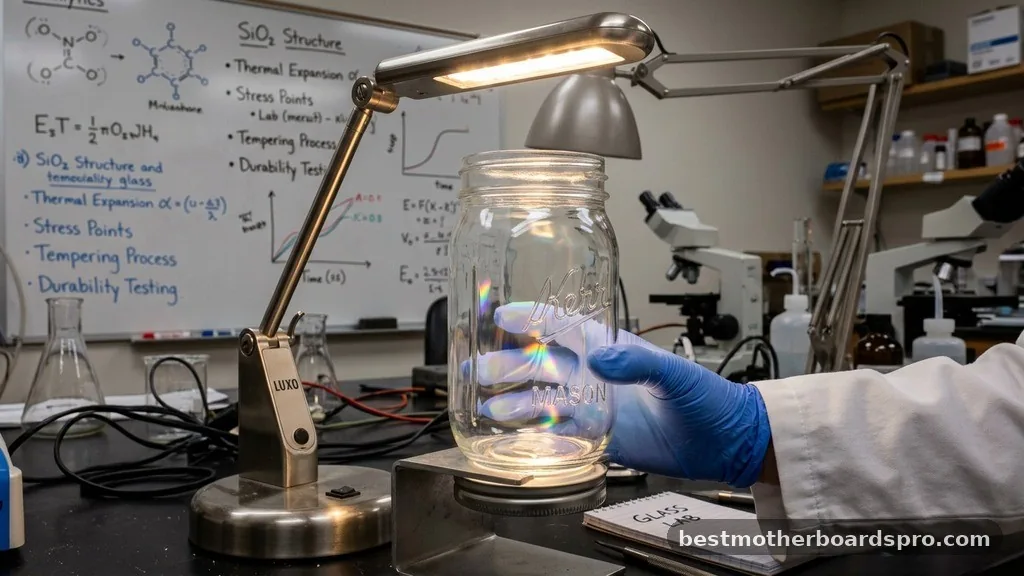
At their core, standard mason jars are made from soda-lime glass. This material is excellent for canning and room-temperature storage, but it isn’t tempered like professional-grade laboratory glassware or specialized heat-resistant bakeware. When you ask if mason jars are microwave safe, the answer depends heavily on how quickly you apply heat.
Thermal shock occurs when glass expands or contracts unevenly due to sudden temperature changes. If you pull a cold jar straight from the refrigerator and place it into a high-powered microwave, the exterior may heat up faster than the interior core.
This stress can cause the glass to crack or, in extreme cases, shatter. To minimize this risk, always allow your jars to reach room temperature before heating.
The Role of Lids and Seals in Microwave Safety
The jar itself is only half the equation when considering microwave safety. Most mason jars come with two-piece metal lids, which are notorious for causing sparks when exposed to microwave radiation. Metal reflects microwaves, creating electrical arcs that can damage your appliance or pose a fire hazard.
You should always remove the metal lid and the screw band before putting your jar inside the microwave. If you need to cover your food to prevent splatters, reach for a paper towel or a microwave-safe silicone cover instead. Never leave the metal components attached, even for a few seconds, as the thin metal edges are particularly prone to sparking.
- Remove all metal lids and screw bands before heating.
- Use a microwave-safe paper towel or silicone topper to prevent messy splatters.
- Ensure the jar is at room temperature to avoid sudden thermal shock.
- Avoid using jars with visible chips, cracks, or deep scratches.
- Heat food in short intervals rather than one long, continuous blast.
Identifying Microwave Safe Glassware
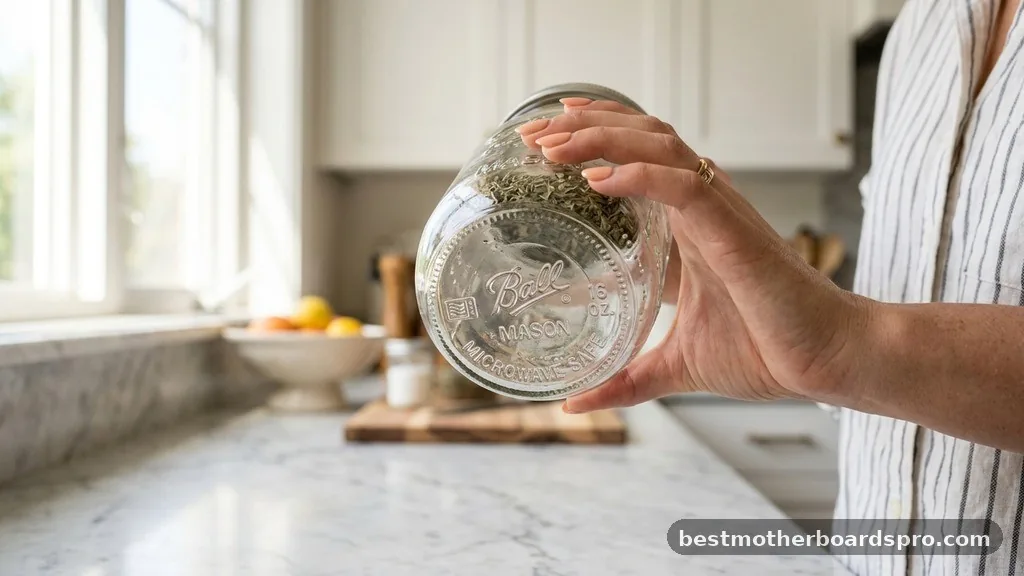
Not all glass jars are created equal. While many people assume all glass is heat-resistant, there are distinct differences between standard canning jars and heat-tempered borosilicate glass. If you frequently need to heat food, investing in specialized containers might be a safer long-term choice.
| Feature | Standard Mason Jar | Borosilicate Glassware |
|---|---|---|
| Thermal Resistance | Low (Prone to shock) | High (Resistant) |
| Primary Use | Canning/Storage | Baking/Heating |
| Microwave Safety | Conditional | Excellent |
| Durability | High for impact | High for heat |
When you look at the bottom of various glass jars, you might see symbols indicating their suitability for different environments. However, most traditional mason jars do not carry a specific microwave-safe symbol because they are manufactured primarily for food preservation, not reheating. When in doubt, check the manufacturer’s website for your specific product line.
Common Risks and How to Avoid Them
Even if you follow the best practices, there are hidden risks to using glass jars for heating. One major issue is the lack of uniformity in how food heats. Because glass conducts heat differently than ceramic or plastic, liquids inside a jar can develop hot spots.
If you are heating a thick soup or a dense meal, the center might remain cold while the edges become dangerously hot. This uneven heating can lead to a sudden release of steam once you stir the contents, potentially causing burns. Always stir your food halfway through the heating process to distribute the warmth evenly throughout the jar.
Handling Hot Glass Safely
Glass retains heat for a surprisingly long time. After you have successfully warmed your food, the jar will likely be much hotter than the contents inside. Use a thick towel or silicone oven mitts to remove the jar from the microwave.
Placing a hot glass container directly onto a cold countertop or a wet surface can also induce thermal shock, causing the bottom of the jar to break. Always use a dry trivet or a wooden cutting board as a buffer.
Addressing Frequently Asked Questions
Can I put a mason jar in the microwave to heat up soup?
Yes, you can heat soup in a mason jar, provided you remove the metal lid first. Ensure the jar is at room temperature before starting, and heat the contents in short, 30-second bursts, stirring between each interval to prevent uneven hot spots and potential thermal shock.
What happens if I accidentally leave the metal lid on?
Leaving a metal lid on a mason jar inside the microwave is dangerous because metal reflects microwave energy. This reflection causes electrical arcing, which can spark, damage the microwave’s magnetron, or even cause a fire. Always remove all metal components before turning on the appliance.
Are wide mouth jars safer than regular jars?
Neither mouth style is inherently safer regarding thermal shock, but wide mouth jars are easier to stir and clean. The ease of access makes it simpler to distribute heat evenly throughout the food, which helps reduce the risk of localized overheating and potential glass stress.
How can I tell if my jar has suffered heat damage?
Inspect your jar under good lighting for any fine, spiderweb-like cracks or deep scratches. If you notice any structural imperfections, discard the jar immediately. A weakened glass wall is much more likely to shatter during future heating cycles, which poses a significant safety risk to you.
Best Practices for Long-Term Glass Care
To get the most out of your collection, treat your jars with care. While they are dishwasher safe, the high-heat drying cycles of modern machines can sometimes stress the glass over time, especially if the jars have already been subjected to microwave heating. If you want to keep your glass pristine, consider hand-washing them.
For those who rely on meal prep, keep in mind that glass mason jars are perfect for cold storage, like overnight oats or fresh salads. If you plan to heat your meals, consider transferring the contents to a microwave-safe ceramic bowl.
This simple habit keeps your jars looking clear and free of thermal fatigue, ensuring they last for years of canning and food storage projects. Remember, while you can technically use these jars in a pinch, treating them with caution will always be the best policy for kitchen safety.