
Many people take the convenience of a modern kitchen for granted, yet the journey from heavy laboratory equipment to a countertop staple is a fascinating story of accidental discovery. If you have ever wondered when the first microwave come out and how it transformed from a military tool into a household necessity, you are looking at a pivotal moment in twentieth-century technology.
Understanding this timeline reveals how the intersection of post-war industrial capacity and domestic ambition changed the way we prepare food forever. This deep dive uncovers the origins, the massive scale of early models, and the steady progression that finally brought high-frequency heating into the average home.
The Accidental Discovery of Microwave Technology
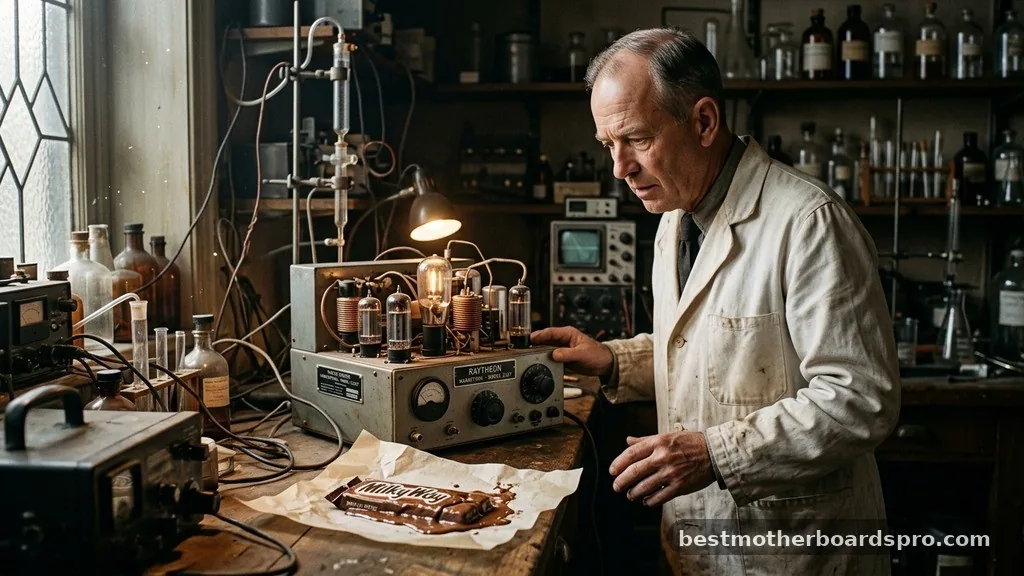
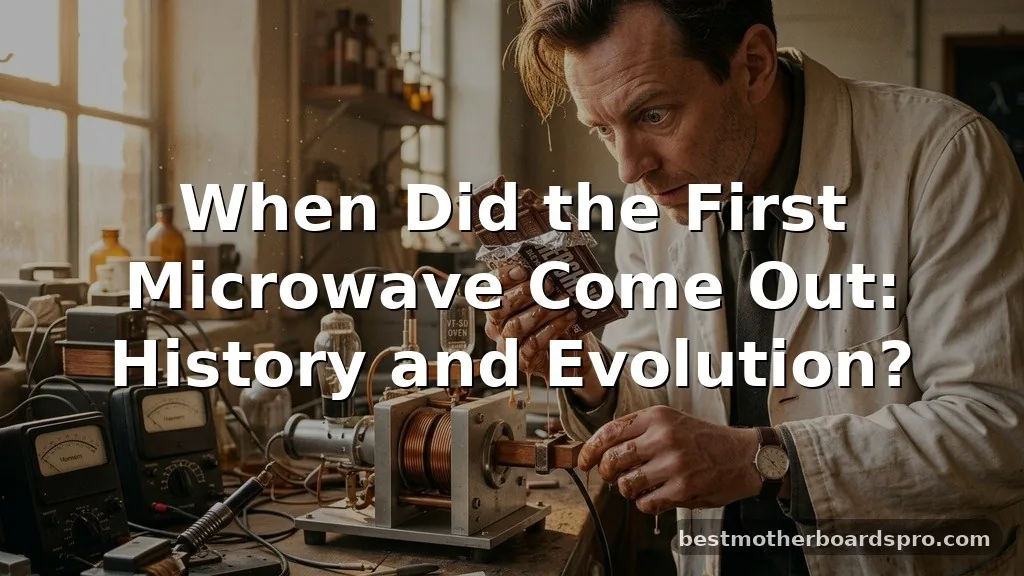
The story of the microwave oven does not begin in a kitchen, but rather in a radar research lab during the final years of the Second World War. In 1945, Percy Spencer, an engineer working for the Raytheon Corporation, was standing near an active magnetron—the vacuum tube that generates the microwaves used in radar systems. He noticed something peculiar: a chocolate bar in his pocket had begun to melt.
Spencer, a man of immense curiosity, immediately recognized that the electromagnetic energy was responsible for the rapid heating of the candy. He proceeded to test other items, such as popcorn kernels, which popped effectively, and an egg, which famously exploded in a colleague’s face during a test. These crude experiments confirmed that controlled microwave energy could be harnessed for heating food far faster than traditional convection or conductive methods.
The First Commercial Microwave: The Radarange

After refining his discovery, Raytheon filed a patent in 1945, but the public had to wait a while before they could see a consumer unit. The first microwave come out as a commercial product in 1947, branded as the Radarange. This initial model was nothing like the sleek, compact appliances found in kitchens today.
It stood nearly six feet tall, weighed over 750 pounds, and required a water-cooling system to keep the magnetron from overheating. Because of its massive size and complex installation requirements, it was primarily marketed toward restaurants, ships, and large industrial kitchens rather than private homes. The price tag for this early marvel was roughly $5,000, which would equate to tens of thousands of dollars in today’s currency, effectively limiting its reach to high-end commercial operations.
| Feature | 1947 Radarange | Modern Microwave |
|---|---|---|
| Height | Approx. 6 feet | 12–15 inches |
| Weight | 750+ lbs | 20–40 lbs |
| Cooling System | Water-cooled | Air-cooled |
| Primary Use | Commercial/Industrial | Domestic/Residential |
Technological Hurdles and Early Adoption
The transition from a massive, water-cooled machine to a desktop appliance took nearly two decades of engineering refinement. During the 1950s, the technology remained largely confined to professional settings because of the cost and the sheer size of the magnetron. Engineers had to figure out how to make these components smaller and more efficient without sacrificing the power needed to cook food thoroughly.
- Air-cooled magnetrons replaced heavy water-cooled systems, drastically reducing size.
- Improved shielding technology ensured that microwaves remained contained within the cooking chamber.
- Standardized electrical components allowed for easier integration into household power grids.
- Designers moved away from industrial steel aesthetics toward more kitchen-friendly finishes.
By the early 1960s, manufacturers began to see the potential for a home version of the microwave oven. In 1967, Amana, a division of Raytheon, introduced the first countertop model that was practical for the average family.
It was smaller, significantly more affordable, and did not require special plumbing or heavy-duty wiring. This marked the true birth of the microwave as a household appliance that could sit comfortably on a counter rather than occupying an entire utility room.
The Cultural Shift in Cooking Habits

Once the countertop models arrived, the popularity of the microwave exploded. Throughout the 1970s and 1980s, the appliance became a symbol of modern convenience, perfectly aligning with the increasing pace of post-war life. As more women entered the workforce, the ability to heat a meal in minutes rather than hours became a massive selling point for suburban families.
However, the transition wasn’t immediate for everyone. Many consumers were initially skeptical of “radar cooking.”
There were lingering fears regarding radiation, despite the fact that microwave energy is non-ionizing and fundamentally different from the harmful radiation people associated with nuclear power. Marketing campaigns were essential during this time to demystify the technology and prove that the food produced by these machines was safe and nutritious.
Addressing the Topical Gaps in Microwave History
A common misconception is that microwaves were an instant hit, but the history is marked by a slow crawl toward affordability. Many people often ask if microwaves were common in the early 1980s.
By 1980, the price of these units had dropped significantly, making them a common sight in American kitchens. While they were not in every single home, they were becoming a standard feature in new kitchen designs and apartment complexes.
Another gap concerns the specific impact of the Navy and military research. While the magnetron was a military secret, the rapid advancement of this technology was a direct result of the urgent need for better radar during the war.
Once the conflict ended, companies like Raytheon were left with immense intellectual property and manufacturing capacity, forcing them to find civilian applications for their wartime developments. This military-to-civilian pipeline is why the timeline from 1945 to 1947 was so compressed; the technology was essentially ready, waiting only for a business case to justify mass production.
Frequently Asked Questions
Did the first microwave come out for home use immediately after the war?
No, the first units were strictly for commercial use. It took until 1967 for a genuinely compact, countertop model to reach the public market. Before that, the machines were too heavy, expensive, and complex for the average homeowner to install or operate in a residential kitchen.
Were microwaves widely available in the early 1980s?
Yes, by the early 1980s, microwaves had become a common kitchen appliance. Prices had decreased significantly from their original luxury status, and major manufacturers were producing reliable, user-friendly models that appealed to a wide range of consumers, cementing their place as a staple of the modern home.
Why was the first microwave called the Radarange?
The name was a combination of “radar” and “range,” reflecting the fact that the technology was derived from radar magnetrons. Raytheon wanted to emphasize the origin of the heating method while positioning the machine as a functional cooking range that could fit into a commercial kitchen environment.
How did the early microwave impact food safety?
Early users were often concerned about the safety of “radar cooking,” leading to extensive public education campaigns. These campaigns focused on the fact that microwaves do not make food radioactive; they merely vibrate water molecules to create heat, ensuring the process is safe when the unit is used properly.
Conclusion
Looking back at when the first microwave come out, it is clear that the invention was a product of necessity meeting accidental genius. From Percy Spencer’s melting chocolate bar to the massive, water-cooled Radarange, the evolution of this technology highlights the rapid pace of innovation in the twentieth century. It turned a military-grade radar component into a tool that defined the modern domestic experience, allowing families to save time and streamline their cooking routines.
As you consider the history of your own kitchen appliances, it is worth remembering that the convenience you enjoy today is the result of decades of engineering trial and error. Whether you are reheating leftovers or preparing a quick snack, you are utilizing a technology that once required a room-sized machine to function. If you enjoyed this journey through the history of the microwave, feel free to share your thoughts or reach out with any other questions about the evolution of home technology.