
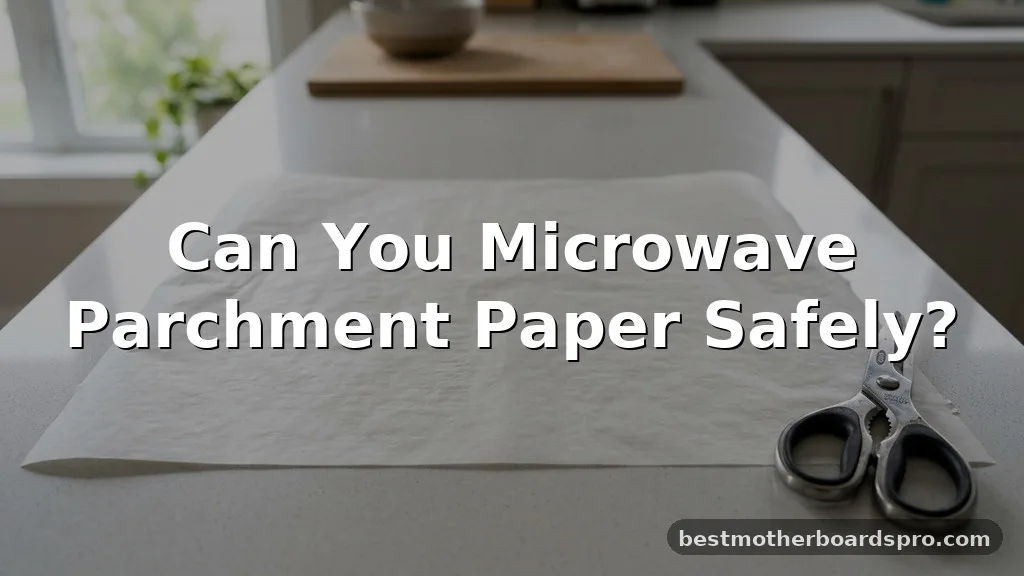
Determining whether you can microwave parchment paper is a common kitchen dilemma that often leaves home cooks hesitant when reheating leftovers or steaming quick snacks. Most people wonder if the high-frequency waves will cause the material to ignite or release harmful chemicals into their meal. Fortunately, the short answer is that parchment paper is generally safe to use in the microwave, provided you follow a few basic safety precautions.
Understanding the composition of this kitchen staple helps demystify why it stands up to heat while other materials might fail. By learning how to use it correctly, you can improve your food preparation routine without worrying about accidental fires or ruined dishes.
Understanding the Composition of Parchment Paper
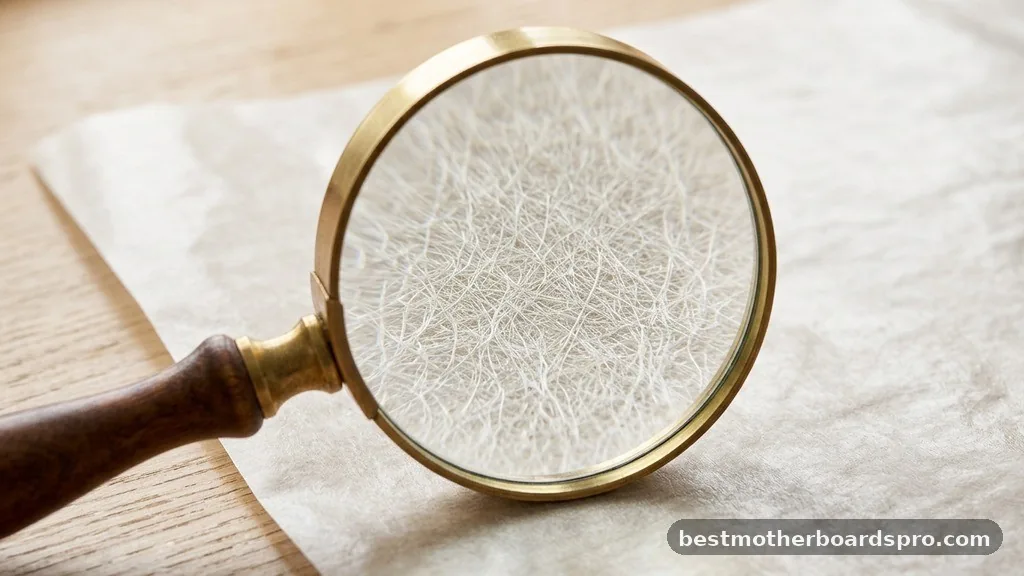
Parchment paper is a cellulose-based product that has been treated to be moisture-resistant and non-stick. Manufacturers typically coat the paper with a thin layer of silicone, which is what gives it that smooth, slick surface.
This chemical structure is what makes the material remarkably stable when exposed to the intense heat generated by a microwave. Unlike plastic wraps that might melt or wax paper that can potentially soften, high-quality parchment maintains its structural integrity under normal reheating conditions.
It is important to note that not all paper products are created equal. You should distinguish between parchment paper and other types of kitchen paper, such as wax paper or butcher paper.
While these might look similar at a glance, their coatings differ significantly. Silicone-coated parchment is designed specifically to withstand high temperatures, making it a reliable choice for the microwave.
Safety Considerations for Microwave Use
While the material itself is heat-resistant, you must still exercise caution when using it in your appliance. The primary danger isn’t necessarily the paper catching fire from the heat of the food, but rather the potential for “hot spots.” If the paper is bunched up or comes into direct contact with high-fat foods, the heat transfer can become uneven.
To stay safe, follow these guidelines:
- Ensure the paper is flat: Avoid crumpling the sheet, as folds can create pockets where heat concentrates.
- Avoid prolonged heating: Parchment is ideal for short bursts of reheating, but it is not intended for long, multi-minute cycles.
- Check for labels: Always look for packaging that explicitly states the product is microwave-safe.
- Monitor the edges: If the paper extends too far over the edge of the plate, it may touch the microwave walls or door, which is a fire hazard.
Comparing Microwave-Safe Materials
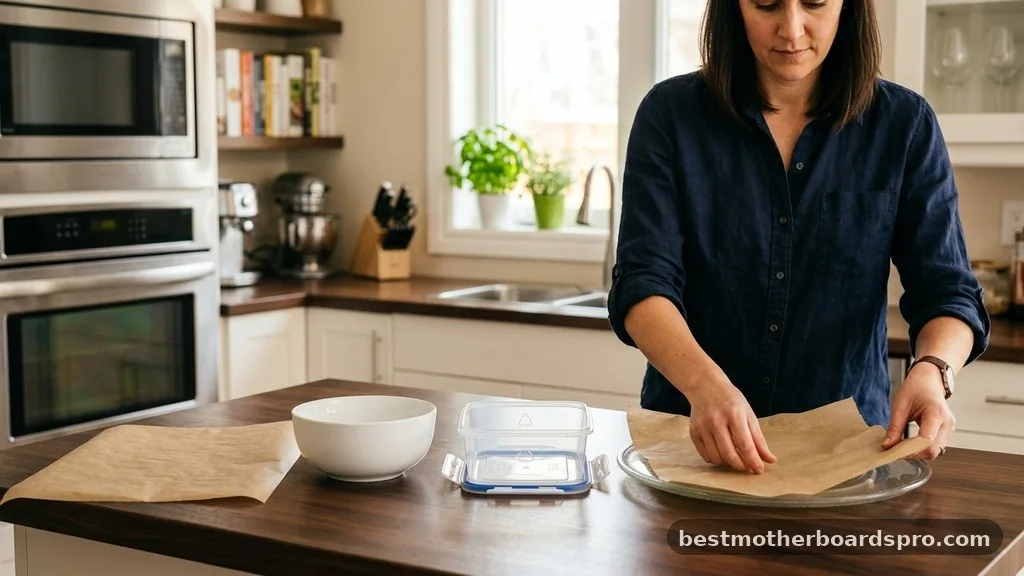
When you’re deciding on the best way to cover your food, you might find yourself choosing between several common kitchen items. Each has its own strengths and weaknesses. The table below highlights how parchment compares to other popular alternatives found in your kitchen.
| Material | Microwave Suitability | Best Use Case |
|---|---|---|
| Parchment Paper | High | Reheating, steaming, preventing splatters |
| Wax Paper | Moderate | Short-term splattering prevention |
| Plastic Wrap | Low | Must be vented; risk of melting |
| Paper Towels | High | Absorbing moisture, quick reheating |
Addressing Common Misconceptions and Gaps
A frequent point of confusion involves the difference between parchment paper and wax paper. Because they are both used for lining baking pans, people often assume they share the same properties.
However, you should avoid using wax paper for tasks involving high heat or long durations. The paraffin wax coating on wax paper can melt and migrate into your food, whereas the silicone coating on parchment remains inert.
Another gap in common knowledge relates to the “brown” versus “white” variety of parchment. Some users worry that unbleached, brown paper is less safe for the microwave than its bleached counterpart. In reality, both versions are processed to be heat-resistant.
The color difference is purely aesthetic and relates to the chlorine-free bleaching process, not the paper’s ability to withstand radiation. If you’re concerned about additives, opting for unbleached, food-grade parchment is a perfectly fine choice that performs identically to white paper.
Optimal Techniques for Reheating
If you’re wondering how to microwave a sandwich wrapped in parchment paper, you’re in luck. Using the paper as a wrap is an excellent way to keep your bread from becoming soggy. The paper allows steam to escape while trapping enough warmth to keep the filling moist.
When you’re dealing with leftovers, try laying a single sheet over the top of your bowl instead of using a heavy plastic lid. This method acts as a light cover that prevents the dreaded microwave “splatter” while still allowing for even heating. Remember to keep the heat duration reasonable; if you’re heating something for more than three minutes, check the paper periodically to ensure it isn’t darkening or becoming brittle.
FAQ
Is it safe to leave parchment paper in the microwave for long periods?
While parchment is heat-resistant, it is not designed for extended cooking cycles. It is best suited for short-term reheating tasks that take a few minutes. Leaving it in for long, continuous periods can eventually cause the paper to become brittle or potentially scorch depending on the food’s fat content.
Can I use parchment paper to reheat greasy foods?
Yes, you can, but be careful. High-fat foods like bacon or cheesy pasta can create localized hot spots that exceed the paper’s heat tolerance. If the fat touches the paper directly and gets excessively hot, it could lead to scorching, so use the paper as a cover rather than a liner.
What happens if the parchment paper touches the microwave wall?
You should avoid letting the paper touch the sides or top of the microwave. Although the paper is flame-resistant, direct contact with the heating elements or interior walls can cause localized burning. Always trim your sheet so it fits comfortably within the bounds of your microwave-safe plate or dish.
Conclusion
Using parchment paper in your microwave is a safe and effective way to manage your food while keeping your appliance clean. By choosing high-quality, silicone-coated sheets and ensuring they remain flat during the heating process, you can easily avoid the common pitfalls associated with synthetic wraps or messy microwave splatter. Whether you’re warming up a quick meal or steaming vegetables, this simple tool remains one of the most versatile items in your kitchen.
Always remember that common sense is your best guide. If your food requires a particularly long heating time, check on it frequently to ensure everything is progressing as expected.
Once you’re comfortable with the basics of using parchment paper, you’ll likely find it becoming your go-to solution for almost every microwave task. Happy cooking, and enjoy the convenience that this simple, effective method brings to your daily routine.