
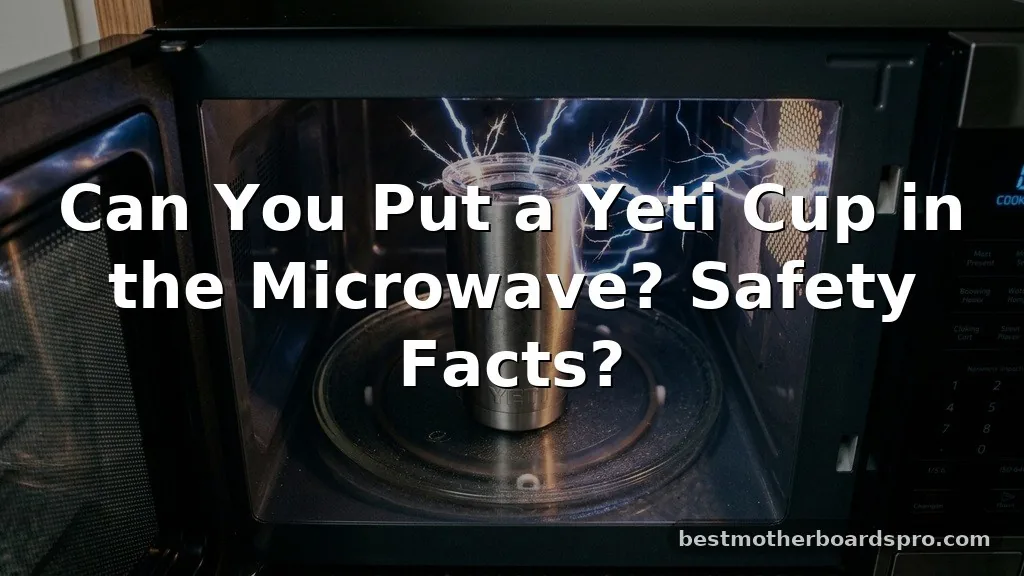
If you have ever found yourself staring at your morning coffee as it cools down, you might have wondered if it is safe to stick your favorite tumbler inside the kitchen appliance to warm it up. Many people ask if you can put a yeti cup in the microwave when they are in a rush to reheat their beverage. It is a common question, but the answer is a firm no.
Understanding why this is a bad idea will save your appliance and your drinkware from permanent damage. We are going to break down the science behind this and explain exactly why you should keep your insulated mugs far away from high-frequency electromagnetic waves.
Why Microwaving Metal is Dangerous
The primary reason you cannot put a yeti cup in the microwave comes down to the fundamental physics of how your kitchen appliance works. Yeti tumblers are constructed from heavy-duty, kitchen-grade stainless steel. While this material is legendary for its durability and its ability to keep ice frozen for days, it is completely incompatible with the environment inside a microwave.
When you turn on a microwave, it generates electromagnetic waves that are designed to excite water molecules within food or liquids, creating heat through vibration. When these waves encounter a metal surface, they don’t simply pass through or get absorbed as they would with glass or ceramic.
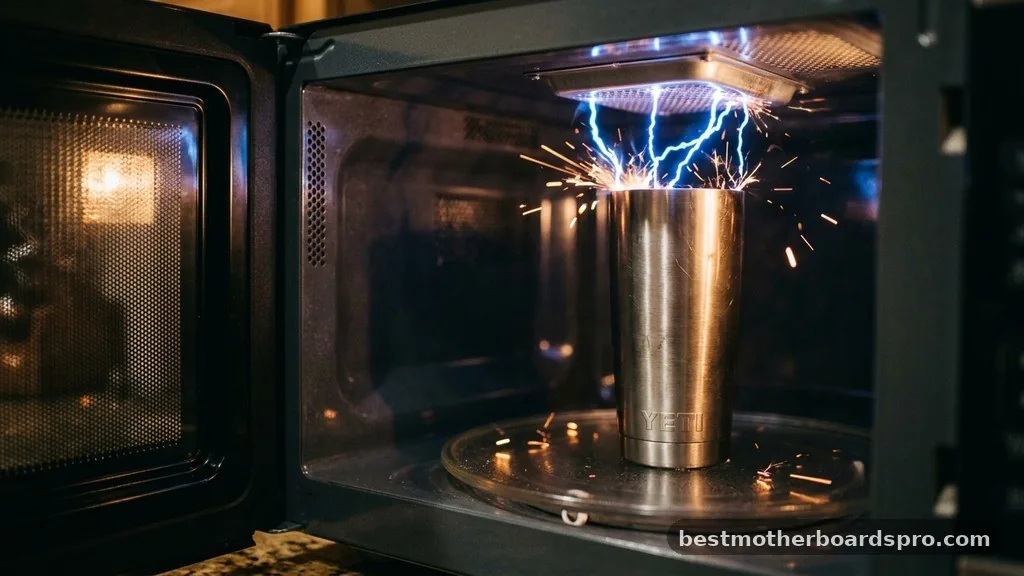
Instead, the metal reflects the waves. This reflection can cause a buildup of electrical charge on the surface of the cup, leading to arcing.
Arcing looks like tiny sparks or flashes of electricity jumping across the surface of the metal. This phenomenon is not just a light show; it is an intense concentration of energy that can cause significant damage to your microwave’s magnetron. The magnetron is the expensive component that actually powers the machine, and if it gets damaged by reflected energy, you might end up needing a total appliance replacement.
The Science of Insulation and Heat
Beyond the electrical risks, there is a practical issue regarding how the insulation inside your tumbler works. Yeti products utilize double-wall vacuum insulation to maintain the temperature of your drink. This means there is a hollow space between the inner and outer layers of steel where the air has been removed.
If you were to somehow heat the exterior of a vacuum-insulated vessel, you would be fighting against the very technology that makes the product effective. The vacuum seal is designed to prevent heat transfer. Microwaving the cup would likely not heat your beverage efficiently anyway, as the internal liquid would be shielded by the vacuum barrier.
Furthermore, the extreme heat generated during an arcing event can compromise the integrity of the vacuum seal itself. If that seal is broken, your cup will lose its insulating properties permanently. It will effectively become a standard, single-walled metal cup that no longer keeps your drinks hot or cold.
Comparing Microwave-Safe Materials
To help you distinguish between what belongs in the microwave and what stays on the counter, it is useful to compare materials. Not all containers are created equal, and knowing the difference can prevent kitchen accidents.
| Material | Microwave Safe? | Why? |
|---|---|---|
| Glass | Yes | Transparent to microwaves; doesn’t absorb energy. |
| Ceramic | Yes | Generally safe if free of metallic glazes. |
| Stainless Steel | No | Reflects energy, causes arcing, damages magnetron. |
| Plastic (BPA-Free) | Check Label | Only if explicitly marked “Microwave Safe.” |
As shown in the table above, standard kitchen metals like stainless steel are strictly prohibited. While glass and ceramic are your best bets for reheating, always ensure they are not chipped or cracked, as even those materials can fail under extreme thermal stress.
Common Risks of Ignoring Safety Guidelines

Ignoring the rule that you cannot put a yeti cup in the microwave can lead to more than just a ruined cup. The risks are substantial enough that most manufacturers include clear warnings about using metal containers in their appliances.
- Permanent damage to the microwave’s magnetron.
- Potential for electrical arcing causing fire hazards.
- Degradation of the vacuum insulation seal.
- Warping of the plastic lid or internal components.
- Uneven heating that creates a scalding hazard for the user.
When you use an appliance, you are relying on the manufacturer’s design parameters. Once you introduce an object that violates those parameters, you are essentially asking for a malfunction. The energy that the microwave intends to put into your soup or coffee has nowhere to go when it hits the stainless steel shell of a tumbler, so it bounces back into the machine.
Alternatives for Reheating Your Drink
If your goal is to have a hot drink, there are much safer and more efficient ways to achieve it without risking your expensive gear. The best approach is to transfer your liquid into a microwave-safe mug or a glass measuring cup before hitting the start button.
Once your liquid is heated to the desired temperature, you can pour it back into your insulated tumbler. This ensures that you get the benefit of the cup’s heat-retention properties without exposing the metal to the microwave’s interior.
If you are at home, using a stovetop or an electric kettle is often superior for heating water-based drinks. These methods allow for more control over the temperature and prevent the “hot spots” that microwaves often create, which can lead to burnt tongues or uneven flavor profiles in your coffee or tea.
Understanding Topical Gaps: Why People Still Try
One reason this question persists is the confusion between “thermal conductivity” and “microwave interaction.” People often see that stainless steel is a great conductor of heat and assume it must be good for heating liquids. They might think that because the cup is made of high-quality, heavy-duty material, it should be able to handle anything.
However, the safety of a container in a microwave is not about its thermal resistance; it is about its electromagnetic reactivity. Another gap in common knowledge is the difference between an insulated tumbler and a standard metal pot. While you can technically heat a metal pot on a stove, the stove provides external thermal energy.
The microwave provides internal excitation energy. These are two completely different physical processes.
Some users also mistakenly believe that if they only heat the liquid for a few seconds, the danger is minimized. This is a dangerous misconception. Arcing can happen almost instantly, even at low power settings.
The moment the microwave begins to oscillate, the metal acts as an antenna for the electromagnetic field. There is no “safe” duration for microwaving a steel tumbler.
FAQ
Is it ever safe to use a stainless steel cup in the microwave?
No, it is never safe. Stainless steel is a conductive material that reflects electromagnetic waves. This reflection creates electrical currents that cause arcing, which can permanently damage your microwave’s internal components, specifically the magnetron, and poses a significant fire risk in your kitchen.
Can I put the plastic lid of my Yeti cup in the microwave?
You should avoid this. While some plastics are microwave-safe, the lids for insulated tumblers are often made from materials that may warp or release chemicals when exposed to high heat. Even if the plastic is technically safe, it is best practice to remove it before heating any liquid.
What should I do if I accidentally microwaved my Yeti cup?
If you only ran it for a second, turn the microwave off immediately and remove the cup. Check the inside of the microwave for any black scorch marks or damage to the walls. If you see damage, stop using the microwave and consult a professional technician for repairs.
How can I warm up my coffee without a microwave-safe mug?
If you don’t have a microwave-safe mug, you can use a small saucepan on the stovetop. This is a much more reliable way to heat liquids evenly. Simply pour your drink into the pan, heat it until it reaches your preferred temperature, and pour it back into your tumbler.
Final Thoughts on Microwave Safety
Keeping your kitchen equipment in good working order requires following basic safety guidelines, and understanding that you cannot put a yeti cup in the microwave is a simple but vital rule. By transferring your beverages to appropriate glass or ceramic containers before reheating, you protect your appliances and ensure your insulated drinkware lasts for years to come. The vacuum-insulated technology that makes these cups so effective is precisely what makes them incompatible with microwave energy.
Stick to the stovetop or a microwave-safe mug, and you will enjoy hot drinks without the risk of damaging your gear. If you have any other questions about maintaining your favorite tumblers, feel free to reach out for more tips on keeping your kitchen routine safe and efficient.