
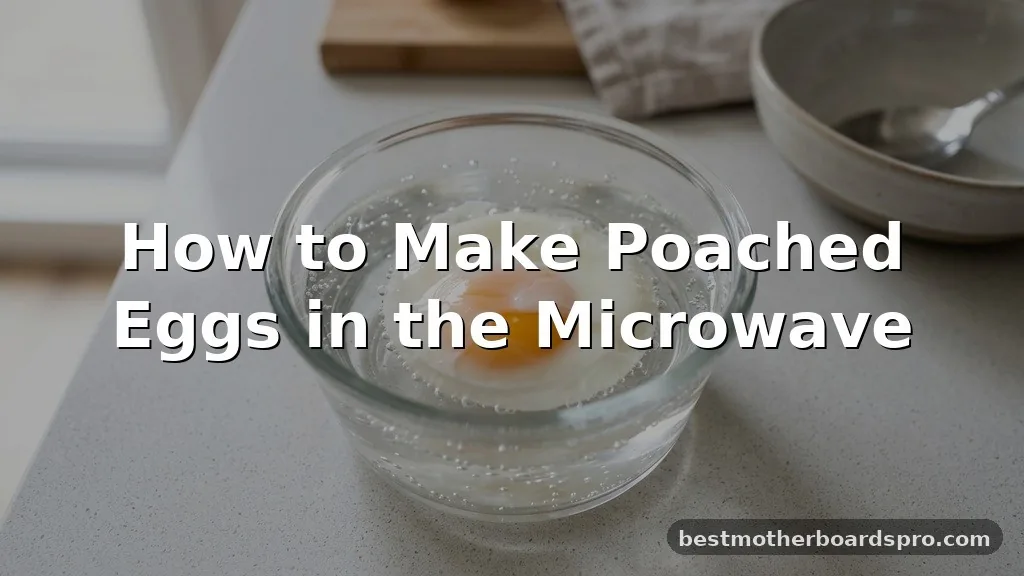
Learning how to make poached eggs in the microwave is a simple hack that saves you significant time on busy mornings. While traditional stove-top poaching requires a watchful eye over a simmering pot, the microwave method leverages consistent heat to achieve a similar result with minimal cleanup.
By mastering the balance of water volume and timing, you can enjoy a perfectly set white and a runny yolk in under two minutes. Whether you are preparing a quick breakfast for yourself or a speedy brunch for the family, this technique is a reliable addition to your kitchen repertoire.
The Science of Microwave Poaching
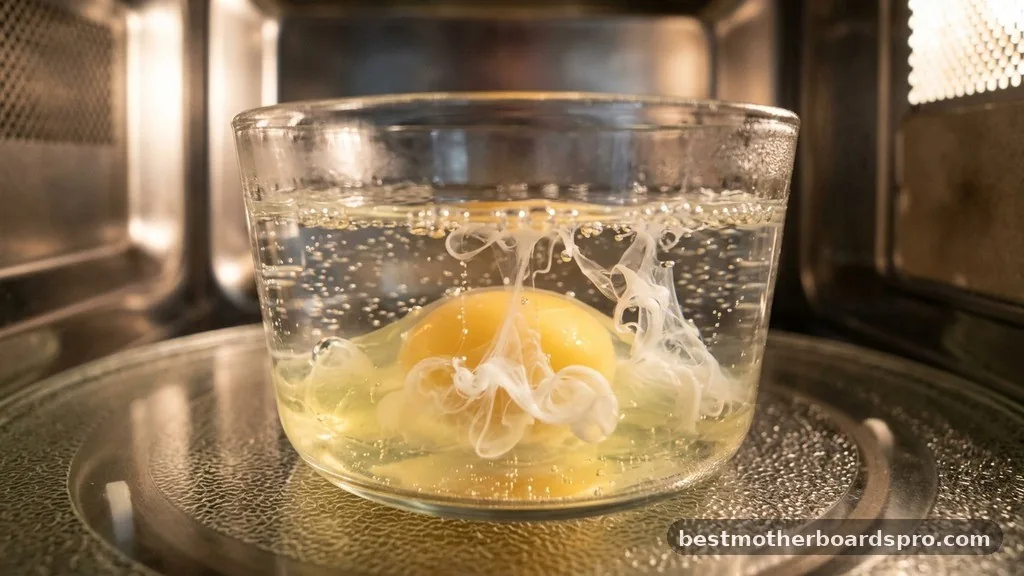
Microwaves work by agitating water molecules within food, causing them to vibrate and generate heat. When you poach an egg in this environment, you are essentially steaming the protein inside a liquid medium. The biggest challenge in this process is the rapid expansion of the egg as the interior heats up, which can lead to messy explosions if not managed correctly.
To prevent your egg from bursting, you must ensure the yolk is punctured or the egg is fully submerged in water. The water acts as a thermal buffer, distributing heat more evenly than the air would. This creates a gentle cooking environment that prevents the rubbery texture often associated with microwaved eggs.
Essential Tools for Success
You do not need specialized equipment to get started, but having the right bowl or container makes a noticeable difference. A microwave-safe mug or a small glass bowl works perfectly. It is important to choose a vessel that allows the water to completely cover the egg so that the heat surrounds it from all sides.
- Microwave-safe bowl or deep ramekin
- Small plate or saucer to cover the bowl
- Slotted spoon for easy removal
- Fresh eggs, ideally at room temperature
- Water and a splash of white vinegar
Step-by-Step Microwave Method
1. Fill your microwave-safe bowl with approximately half a cup of water.
2. Add a tiny splash of white vinegar to the water; this helps the egg white coagulate quickly and prevents it from spreading too thin.
3.
Crack the egg gently into the water. If you are nervous about breaking the yolk, crack it into a small ramekin first and slide it into the water bowl.
4. Use a toothpick to gently pierce the yolk once.
This is a crucial step to prevent pressure buildup.
5. Cover the bowl with a small plate. This traps the steam and ensures the top of the egg cooks at the same rate as the bottom.
6.
Microwave on medium-high power for 60 seconds. Every microwave is different, so check the doneness after this initial cycle.
7. If the whites are still translucent, add 10 to 15 seconds of cooking time.
Comparison of Cooking Methods
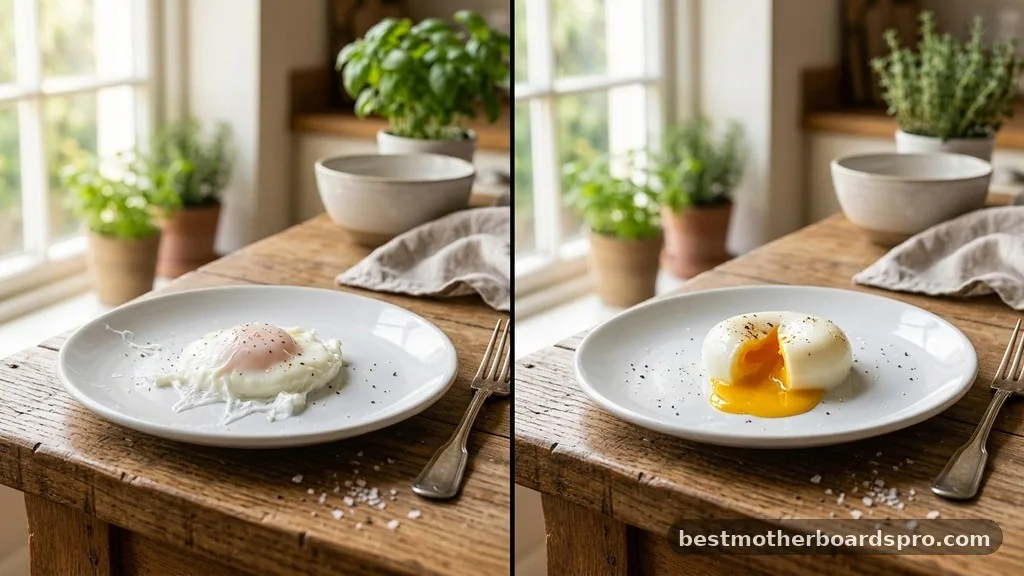
Choosing the right technique depends on your available time and the desired texture of the final dish.
| Method | Cooking Time | Texture | Cleanup Effort |
|---|---|---|---|
| Stove-top | 5-8 minutes | Silky and classic | High (pots and pans) |
| Microwave | 1-2 minutes | Firm whites, runny yolk | Low (one bowl) |
| Sous Vide | 45+ minutes | Perfectly uniform | Moderate |
Troubleshooting Common Issues
Many people struggle with rubbery whites or exploded eggs when they first try this technique. If your egg turns out tough, you are likely using too much power.
Microwaves pulse their energy, and high settings can cause the proteins to seize up rather than gently set. Try dropping your power level to 70% or 80% and adding a few extra seconds to the total time.
If the egg leaks or breaks during the process, ensure your water temperature is not too cold. Using room-temperature water helps the cooking process begin immediately once the microwave starts.
Additionally, always remember to cover the bowl. Without a lid, the steam escapes, leaving the top of the egg raw while the bottom overcooks.
Answering Topical Gaps
A common concern involves cooking multiple eggs simultaneously. While it is possible to cook two at once, it is generally discouraged unless you have a very large, wide bowl.
If the eggs touch each other in the water, they will fuse together into a single, unappealing mass. If you need to feed a crowd, it is far more efficient to cook them in individual bowls sequentially.
Another frequent question is whether you can skip the water entirely. While some “dry” microwave egg cookers exist, attempting to cook a raw egg in a standard bowl without water will almost certainly result in an explosion.
The water is non-negotiable for safety and texture. Always keep the yolk covered by the water line to ensure even heat distribution.
Refining Your Technique
Once you are comfortable with the basic process, you can experiment with different flavors. Adding a pinch of salt to the water can season the egg as it poaches, though it may slightly alter the texture of the whites. Some chefs prefer to add a drop of lemon juice instead of vinegar, which provides a milder acidity that doesn’t linger on the palate.
If you find that your eggs are consistently undercooked in the center, try letting the bowl sit in the microwave for one minute after the timer goes off. This “carry-over” cooking allows the residual heat in the water to finish setting the yolk without the harsh radiation of the microwave. This simple resting period is often the secret to a professional-looking result.
Frequently Asked Questions
Is it safe to poach eggs in the microwave?
Yes, it is perfectly safe as long as you follow the correct procedure. The most important safety rule is to pierce the yolk with a toothpick before cooking to prevent pressure buildup. Always use a cover to avoid splattering and ensure even, gentle heat distribution during the process.
Why do my microwave poached eggs explode?
Explosions occur because the internal moisture in the yolk turns into steam faster than the egg can expand, creating high pressure. Piercing the yolk allows that steam to escape safely. Additionally, using a cover helps maintain a consistent environment that prevents the egg from popping during the cooking cycle.
How can I tell when the egg is finished?
The egg is finished when the whites are completely opaque and firm to the touch, while the yolk remains soft and slightly jiggly. You can gently nudge the white with a spoon to check its firmness. If it still looks clear or jelly-like, add 10 seconds of cooking time.
Can I make poached eggs in the microwave without using vinegar?
You can skip the vinegar if you prefer, but it helps the egg whites hold their shape better. Without the acidic addition, the whites may spread out more in the water, creating a wispy appearance. If you dislike the taste, use a tiny amount of lemon juice instead.
Final Thoughts
Mastering the art of making poached eggs in the microwave provides a significant advantage for anyone looking to simplify their morning routine. By focusing on the right power settings, using a cover, and remembering to pierce the yolk, you can achieve delicious results that rival traditional methods. This technique demonstrates that you do not need an elaborate kitchen setup to prepare high-quality food.
Start with one egg, pay close attention to your appliance’s unique timing, and adjust as you go. With a little practice, this quick method will become second nature, allowing you to enjoy a nutritious, protein-packed breakfast in a fraction of the time it takes to boil a pot of water.