

Figuring out exactly how long does it take to microwave a potato is a common kitchen conundrum that often leads to either a rock-hard center or a mushy, overcooked mess. While many people assume it’s a simple set-it-and-forget-it task, the reality involves balancing potato size, microwave wattage, and moisture levels to achieve that perfect fluffy texture.
Understanding the nuances of this process will save you time on busy weeknights and ensure you get a consistent result every single time you need a fast side dish. Whether you are prepping for a quick lunch or getting a head start on a crispier oven-finished meal, mastering this technique is a essential skill for any home cook.
Factors Influencing Microwave Cooking Times
Determining how long it takes to cook a potato depends on several variables beyond just the weight of the vegetable. Most standard medium-sized potatoes require between 5 and 7 minutes, but this is merely a baseline.
The biggest factor is your microwave’s power output. A high-wattage unit (1100W or higher) will cook much faster than a compact 700W model.
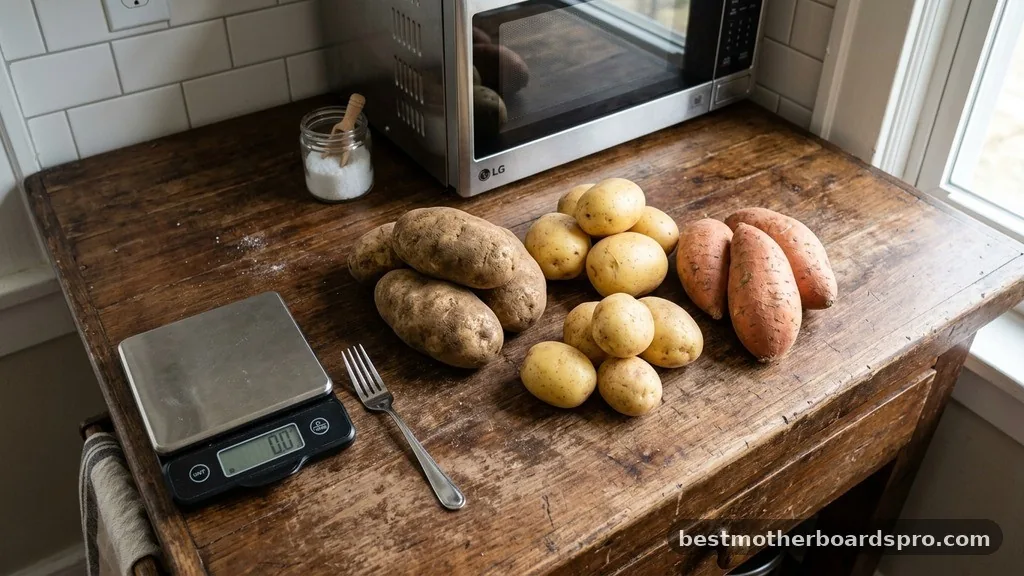
Additionally, the density and starch content of the potato variety play a role. Russet potatoes, which are high in starch, tend to fluff up beautifully, while waxier varieties like Yukon Gold hold their shape and may require a slightly different approach to avoid becoming gummy.
The Step-by-Step Preparation Method
Before you even touch the start button, proper preparation is key to ensuring an even cook. You don‘t want to skip these steps, as they prevent the potato from bursting and help steam escape during the process.
- Wash and scrub the potato thoroughly to remove any dirt from the skin.
- Pat the potato dry with a paper towel; excess surface moisture can lead to a steamed, soggy exterior rather than a tender one.
- Use a fork to pierce the skin 6 to 8 times all over the potato. This creates vents for internal steam.
- Place the potato on a microwave-safe plate. If you are cooking more than one, arrange them in a circle rather than a pile to ensure even heat distribution.
Cooking Times Based on Quantity
It is a mistake to assume that the cooking time doubles perfectly when you add more potatoes to the microwave. Because microwaves work by agitating water molecules, adding extra mass means the energy is shared across more surface area, which slows the overall progress.
| Number of Potatoes | Estimated Time Range | Recommended Wattage |
|---|---|---|
| One Medium Potato | 5 to 6 minutes | 1000W+ |
| Two Medium Potatoes | 8 to 10 minutes | 1000W+ |
| Four Medium Potatoes | 14 to 18 minutes | 1000W+ |
When cooking multiple potatoes, it is vital to flip them halfway through the cycle. This helps compensate for the uneven hotspots often found in microwave ovens, ensuring that the potato on the bottom doesn’t end up undercooked compared to the one on top.
Addressing Common Topical Gaps

One question that frequently arises involves the safety and quality of microwaving raw potatoes. Many people worry that the texture will never compare to a traditional oven-baked potato. While the microwave excels at speed, it does not produce the crispy, salty skin that a high-heat oven provides.
To bridge this gap, many chefs use a hybrid method. You can microwave the potato for about 4 to 5 minutes to soften the interior, then rub the skin with a little oil and salt before placing it in a preheated 400-degree oven for 10 minutes. This gives you the best of both worlds: a perfectly fluffy interior and a delicious, crisp skin.
Another common issue is the “soggy bottom” syndrome. This happens because the potato sits in its own steam on a plate. Placing the potato on a microwave-safe rack or even a paper towel can help keep the bottom from becoming overly moist.
Testing for Doneness
You shouldn’t rely solely on the timer when determining if your potato is finished. Microwaves vary significantly in how they distribute energy, and potato sizes are rarely uniform.
The most reliable test is the fork method. Insert a fork into the thickest part of the potato—usually the center. If the fork slides in with almost zero resistance, it is done.
If you feel a hard or firm core in the middle, give it another 60 seconds. Remember that the potato will continue to cook via residual heat for a minute or two after you take it out, so it is better to pull it out just as it becomes tender rather than waiting until it is falling apart.
Enhancing Your Microwave Potato
Once the potato is cooked, the real fun begins with toppings. A basic baked potato is a blank canvas. Start by slicing it open carefully to release the remaining steam, then fluff the inside with a fork.
For a classic flavor profile, a generous knob of butter and a sprinkle of sea salt work wonders. If you want something more substantial, consider adding:
- Sour cream and chopped chives or green onions.
- Shredded cheddar cheese, which will melt instantly from the residual heat.
- Crispy bacon bits or turkey bacon for a savory crunch.
- Steamed broccoli florets for a healthier, nutrient-dense meal.
Frequently Asked Questions
Is it safe to microwave a raw potato?
Yes, it is perfectly safe to microwave a raw potato. As long as you wash it and pierce the skin with a fork to allow steam to escape, the microwave will cook the potato thoroughly and safely, resulting in a soft, edible texture perfect for various meals.
What is the biggest downside to microwaving a potato?
The primary disadvantage is the lack of a crispy skin. Microwaves heat the moisture inside the potato, which prevents the skin from dehydrating and crisping up the way it would in a conventional oven. You end up with a tender potato, but the skin remains soft and somewhat chewy.
Should I wrap the potato in a paper towel?
Wrapping a potato in a damp paper towel can help it cook more evenly by trapping steam, which is useful if your microwave has uneven power distribution. However, if you prefer a slightly drier skin, you can skip the paper towel and place the potato directly on a microwave-safe plate.
How do I know when the potato is fully cooked?
The best way to check for doneness is to insert a fork into the center of the potato. It should slide in easily without any resistance. If it still feels hard or firm in the middle, continue cooking in 30 to 60-second intervals until it reaches the desired softness.
Final Thoughts on Microwave Cooking
Mastering the timing for a quick potato side dish is a convenient way to simplify your kitchen routine. By understanding how the specific wattage of your appliance interacts with the size and number of potatoes you are preparing, you can achieve perfect results without the guesswork. Remember that while the microwave is a fantastic tool for speed, you can always combine it with a short stint in the oven if you are craving that signature crispy skin.
Experimenting with different toppings and cooking times will eventually help you dial in the exact method that works for your personal taste and equipment. The next time you find yourself wondering how long does it take to microwave a potato, just keep these tips in mind and enjoy a fast, delicious meal.