
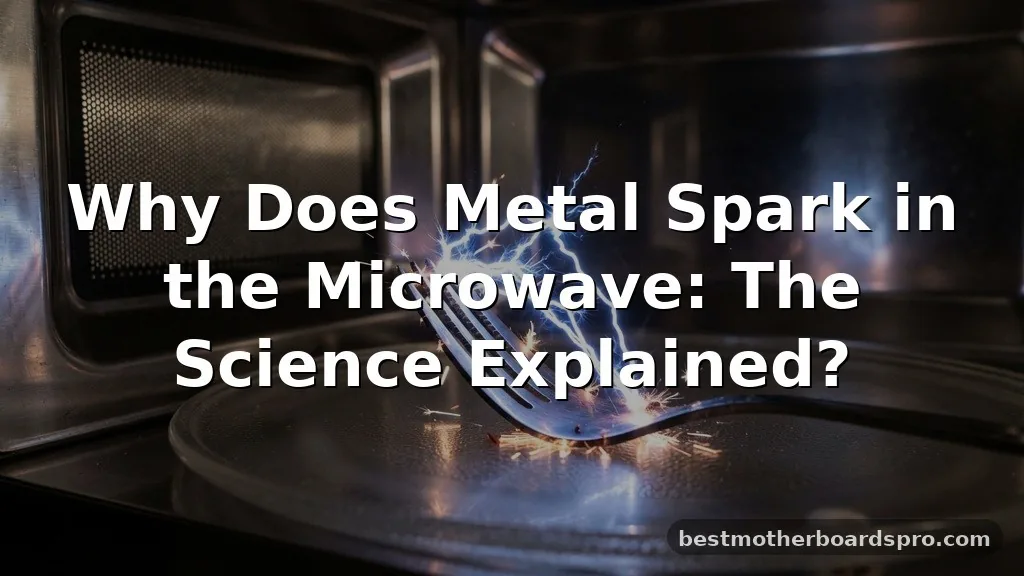
Seeing a flash of light inside your kitchen appliance is rarely a pleasant experience, and knowing why does metal spark in the microwave can save you from a potential kitchen disaster. Many of us have accidentally left a foil wrapper or a stray utensil in a bowl, only to be met with an alarming display of pyrotechnics. This phenomenon happens because of how electromagnetic waves interact with conductive materials.
By understanding the physics behind these interactions, you can better manage what goes into your appliance and avoid unnecessary damage to your equipment. Let’s look at the underlying science that causes these sparks and how you can keep your cooking routine safe.
The Physics of Microwave Energy
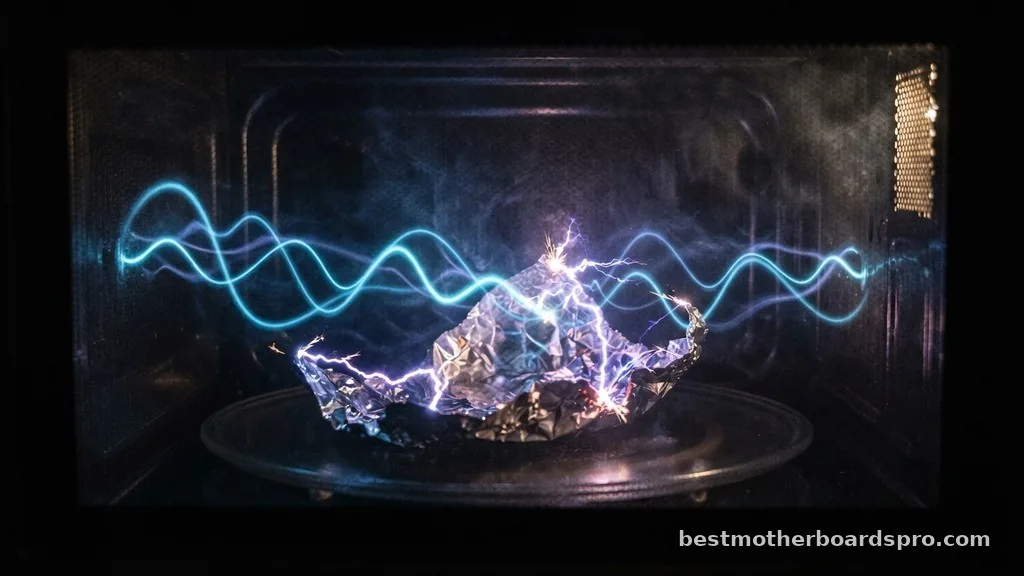
To understand the light show, we first need to look at how a microwave oven actually works. At the heart of the machine is a device called a magnetron. This component converts electrical energy into high-frequency electromagnetic waves, which are then directed into the cooking chamber.
These microwaves bounce off the metal walls of the oven, reflecting back and forth until they encounter food. When they hit items containing water, the energy causes water molecules to vibrate rapidly.
This friction generates the heat required to cook your meal. It is a highly efficient process for warming up leftovers, provided the energy is absorbed by the intended targets rather than being reflected by stray metallic objects.
Why Metal Causes Arcing
When you place metal in the oven, you are introducing a conductive material that reacts differently to electromagnetic fields than food does. Electrons within the metal are free to move, and they respond rapidly to the oscillating electric field of the microwaves.
As these electrons surge back and forth across the surface of the metal, they can accumulate at sharp edges or points. When the charge density at a sharp point becomes high enough, it ionizes the air molecules surrounding the object.
This rapid ionization creates a plasma, which manifests as the visible spark or arc you see. This process is known as arcing, and it can be harmful to your appliance if it continues for more than a fraction of a second.
Does All Metal Cause Problems
It is a common misconception that all metal is strictly forbidden in the microwave. The geometry of the object plays a much larger role than the material itself. A smooth, thick, and rounded metal object is much less likely to spark than a thin, jagged, or pointed one.
For example, a thick stainless steel spoon often sits in a bowl of soup without issue because it lacks the sharp points required to concentrate the electrical charge. Conversely, thin aluminum foil with crinkled edges or a fork with sharp tines provides the perfect conditions for electrons to build up and jump through the air.
Comparing Metal Behaviors in the Microwave
| Object Type | Risk Level | Reasoning |
|---|---|---|
| Smooth, thick spoon | Low | Lacks sharp points for charge buildup. |
| Crinkled aluminum foil | High | Jagged edges trigger rapid arcing. |
| Metal bowl with rim | Moderate | Edges may spark depending on the shape. |
| Microwave-safe rack | Very Low | Engineered specifically to avoid arcing. |
The Role of Geometry and Surface Area
The main reason why does metal spark in the microwave often comes down to the shape of the object. Sharp points and thin edges act as lightning rods for the electromagnetic field. When the microwave energy hits these points, the electric field strength becomes intense enough to break down the air’s resistance.
This is why you might see a spark jump from the tip of a fork to the wall of the microwave. The electrons are trying to find a path of least resistance to dissipate their charge. If the metal is smooth and rounded, the charge is distributed more evenly across the surface, which prevents the air from ionizing.
Safety Risks and Equipment Damage
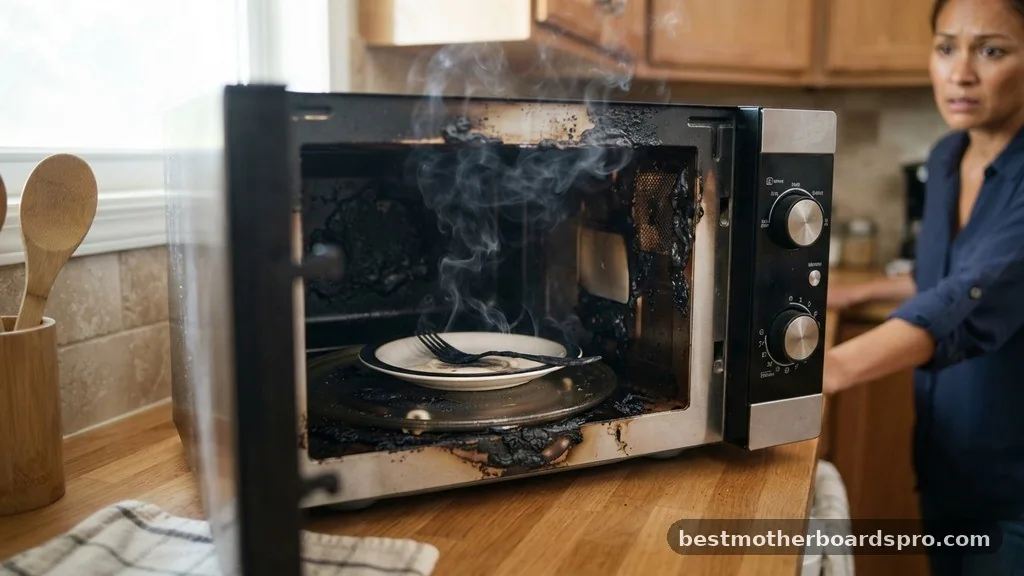
Beyond the startling visual of a spark, there are genuine risks to consider when metal arcs inside your oven. The intense heat generated at the site of the arc can permanently damage the interior finish of the microwave.
If the sparks are directed toward the wall of the oven, they can burn through the protective coating or damage the waveguide cover. Once the interior surface is compromised, the microwave may no longer reflect waves correctly, leading to decreased efficiency or total failure.
- Always remove metal twist ties from bread bags before heating.
- Avoid using containers with metallic trim or gold leaf patterns.
- Inspect your microwave interior for any signs of burn marks or peeling paint.
- If you see sparks, turn the appliance off immediately to prevent further damage.
Addressing Common Misconceptions
Many people wonder if they can safely heat food in metal containers. The reality is that manufacturers often design microwave-safe metal trays that are thick and smooth to prevent arcing. These items are safe because their dimensions are carefully calculated to keep the electromagnetic field stable.
However, using random metal items from your kitchen is a different story. The variable nature of household utensils means you can never be certain how they will react to the high-frequency waves. It is always safer to stick to glass, ceramic, or BPA-free plastics labeled for microwave use.
Understanding Microwave-Safe Labels
You might have noticed that most modern containers come with a stamp indicating they are safe for the oven. This testing process involves subjecting the material to high-energy waves to ensure it does not melt, release chemicals, or induce arcing.
When you see a container that is not marked, assume it is not safe. Using unverified materials can lead to dangerous situations, especially if the container has hidden metal components, such as a foil lining or metallic paint, that could trigger a spark.
FAQ
Is it safe to use a microwave after it has sparked?
If you saw a momentary spark and stopped the microwave immediately, it is likely fine. However, inspect the interior for burn marks or damage to the waveguide cover. If the appliance continues to spark or makes a loud buzzing sound, it should be serviced by a professional.
What should I do if I accidentally put metal in the microwave?
Do not panic, but act quickly. Immediately hit the stop or cancel button and open the door once the sparks cease. Carefully remove the metal object using an oven mitt, as it may be extremely hot from the induced electrical currents, and check your food for any debris.
Why do some metal containers not spark?
Metal containers that don’t spark are usually designed with rounded edges and thick walls. These features prevent the concentration of electrical charge that causes air ionization. If the metal is thick enough and lacks sharp points, it can effectively reflect the waves without creating an arc.
Does a wet paper towel affect microwave sparking?
A damp paper towel is generally safe and helps keep food moist by creating steam. It does not contain metal, so it will not cause arcing. However, ensure it is not draped over any metal components, as the moisture could potentially cause a short if it drips onto sensitive electronics.
Maintaining Your Appliance for Longevity
To keep your microwave running efficiently, you should treat it with care and avoid introducing materials that might cause damage. Understanding why does metal spark in the microwave is the first step toward better kitchen safety. Always keep the interior clean, as food splatters can sometimes carbonize and act as conductors, potentially leading to small sparks even without metal present.
If you ever notice strange noises or consistent arcing, it is a sign that your appliance needs attention. By following these guidelines, you can ensure that your meals are heated evenly and your kitchen remains a safe environment. If you have any further questions about your specific appliance, refer to the manufacturer’s manual for guidance on recommended materials and maintenance routines.