
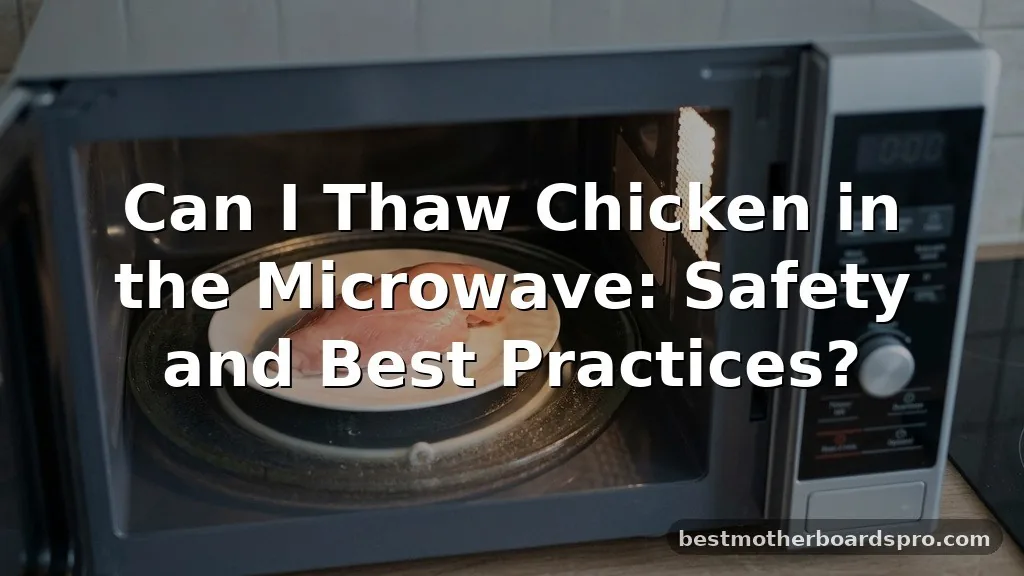
When you are staring at a rock-hard frozen block of poultry and dinner is only an hour away, the urge to use a quick-fix appliance is understandable. Many home cooks wonder if they can thaw chicken in the microwave to save time, and the answer is yes, provided you follow specific safety protocols.
While it is certainly the fastest way to transition your meat from the freezer to the pan, it requires careful attention to avoid uneven heating. If you manage the process correctly, you can safely prepare your ingredients without compromising quality or risking bacterial growth.
Understanding the Mechanics of Microwave Defrosting
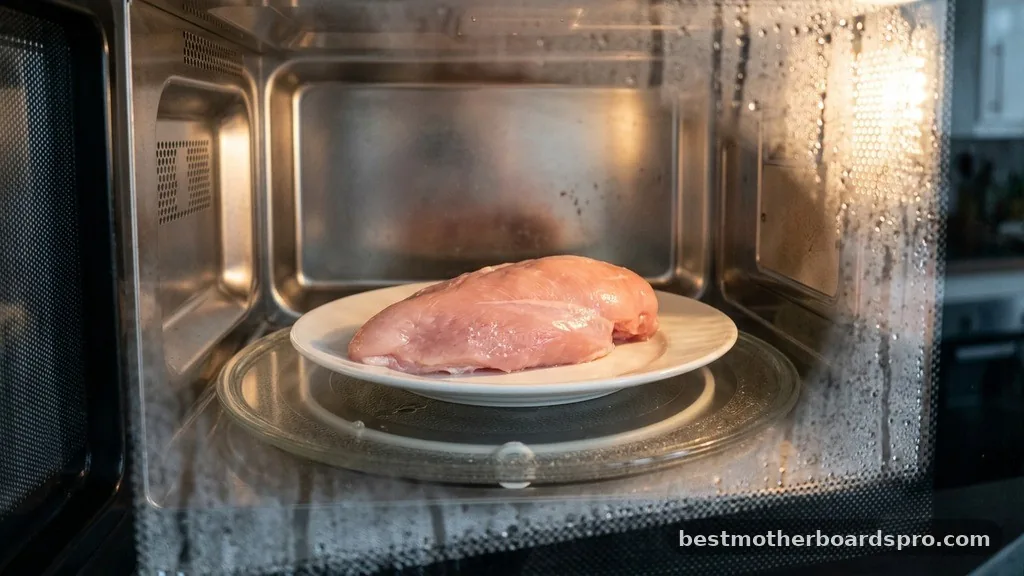
The microwave works by oscillating water molecules within the food, creating friction that generates heat. When you defrost chicken, the appliance uses a lower power setting to allow this heat to migrate through the meat more gently.
This is crucial because chicken is highly susceptible to the “danger zone”—the temperature range between 40°F and 140°F where bacteria multiply rapidly. If you use full power, you risk cooking the outer edges of the breast while the center remains frozen solid.
Why Power Settings Matter
Most modern microwaves have a dedicated “defrost” button, which typically operates at 30% to 50% power. This cycling of power allows the heat to distribute evenly throughout the bird.
If your microwave lacks a specific setting, manually adjusting the power level down is a non-negotiable step. Constant, low-intensity energy prevents the protein fibers from denaturing prematurely, which is what happens when the edges start to turn gray or white during the thawing process.
Safety Protocols for Rapid Thawing
The USDA provides clear guidelines on handling frozen poultry. The most important rule is that once you have successfully defrosted the chicken, you must cook it immediately. You cannot place partially thawed meat back into the refrigerator or freezer, as the temperature fluctuations provide the perfect environment for pathogens like Salmonella to thrive.
- Remove all original packaging, including plastic wrap or foam trays, before placing the chicken on a microwave-safe dish.
- Use a shallow container to prevent juices from spilling onto the microwave floor, which can cause cross-contamination.
- Turn or flip the chicken every two minutes to ensure the heat penetrates all areas of the meat.
- Check the thickest part of the meat to ensure it is no longer icy before removing it from the appliance.
- Clean the microwave interior thoroughly after use to eliminate any potential splatter.
Comparing Thawing Methods
Choosing the right technique depends on how much time you have available. While the microwave is undeniably the quickest route, other methods offer different benefits regarding texture and safety.
| Method | Estimated Time | Safety/Quality Note |
|---|---|---|
| Microwave | 5-10 minutes | Fastest; must cook immediately. |
| Cold Water | 1-3 hours | Requires airtight bag; change water every 30 mins. |
| Refrigerator | 12-24 hours | Slowest; safest and best for texture. |
Addressing Common Topical Gaps
A frequent point of confusion involves whether you can thaw chicken in the microwave if it is still in its store-bought packaging. You should never do this. Plastic wrap and styrofoam trays are not designed for the heat generated during the defrosting cycle.
Chemicals from the packaging can leach into the meat, and the plastic may melt directly onto the chicken. Always transfer the frozen item to a glass or ceramic plate that can handle the process safely.
Another gap in knowledge concerns the texture of the meat. Many people notice that microwave-thawed chicken becomes slightly rubbery or dry. This happens because the appliance has already begun the cooking process.
To mitigate this, consider cutting the chicken into smaller pieces or strips before defrosting. Smaller chunks thaw more uniformly, reducing the time the meat spends in the danger zone and preserving the integrity of the protein.
Managing Potential Bacterial Risks
Bacteria are the primary concern when dealing with raw poultry. Because microwaves heat unevenly, there is always a risk that parts of the chicken will reach a temperature that encourages bacterial growth while other parts remain frozen.
This is why immediate cooking is the primary safeguard. If you aren’t planning to fire up the stove or oven the moment the microwave dings, you are better off choosing a slower, safer method like cold water or refrigerator thawing.
If you find that your chicken has been sitting out for more than two hours after being removed from the freezer, discard it. Even if it feels cold to the touch, the internal temperature may have risen enough to facilitate dangerous bacterial activity. Never rely on smell or appearance alone to determine the safety of meat that has been left at room temperature.
Techniques for Better Results
If you are committed to using the microwave, you can improve your results by adding a small amount of liquid to the dish. A tablespoon of water at the bottom of the plate creates a humid environment, which helps prevent the edges of the breast from drying out.
You should also ensure the chicken is arranged in a single layer. If you are thawing multiple breasts, try to arrange them in a circle with the thickest parts facing the outer edge of the turntable, as this area receives the most energy.
Periodically stopping the microwave to separate pieces is also a smart strategy. As the ice crystals melt, the meat becomes pliable.
Using tongs to break apart individual breasts or drumsticks allows the heat to circulate more effectively. If you encounter a stubborn icy patch in the center, you can leave it for a few more minutes, but keep a close eye on the already-thawed edges.
Why Immediate Cooking Is Mandatory
The transition from frozen to cooked must be seamless. When you use the microwave to defrost, you are essentially “pre-cooking” the outer layer of the meat.
If you let that meat sit on the counter, you are essentially inviting bacteria to feast on the nutrients. The only way to stop this is to apply high heat—such as searing, baking, or boiling—to kill any microbes that may have begun to multiply during the defrosting phase.
Many home cooks make the mistake of thinking they can partially thaw the chicken and then finish it later. This is a significant food safety violation. If you find yourself in a situation where you have extra chicken, it is better to cook the entire batch thoroughly and store the leftovers in the refrigerator for later use, rather than trying to store partially raw, previously frozen meat.
Frequently Asked Questions
Is it safe to microwave chicken to defrost?
Yes, it is safe as long as you follow strict guidelines. You must use the defrost or low-power setting, remove all original packaging, and cook the chicken immediately after thawing. Never leave the meat to sit, as the uneven heating creates a prime environment for rapid bacterial growth.
How long does it take to defrost chicken in the microwave?
The time varies based on the weight of the chicken and your appliance’s wattage, but it generally takes about 5 to 10 minutes per pound. Always check the chicken frequently, turning and flipping it every two minutes to ensure that it thaws uniformly without partially cooking.
Can I thaw chicken in the microwave if it is in plastic?
No, you should never microwave chicken in its original store packaging. Styrofoam trays and plastic wraps can melt or release harmful chemicals when exposed to heat. Always remove the meat from all packaging and place it on a clean, microwave-safe glass or ceramic plate before starting.
What should I do if my chicken is still icy after microwaving?
If the chicken remains icy in the center, continue the defrosting process in short, one-minute intervals at a low power setting. If you have already started cooking the exterior, it is safer to finish the process in the oven or pan to ensure the entire piece reaches a safe temperature.
Final Thoughts on Safe Thawing
Mastering the art of quick meal preparation often involves knowing which shortcuts are reliable and which are risky. Knowing how to safely use your kitchen appliances allows you to manage your time without compromising the health of your household. While the microwave is a powerful tool for busy schedules, it requires a disciplined approach to ensure the chicken stays safe and palatable.
Always prioritize low power settings, remove packaging, and move directly to the cooking phase to ensure your final dish is both delicious and safe. By following these simple steps, you can confidently handle frozen poultry even on your busiest days. Feel free to experiment with these techniques and see how they fit into your weekly kitchen routine.