
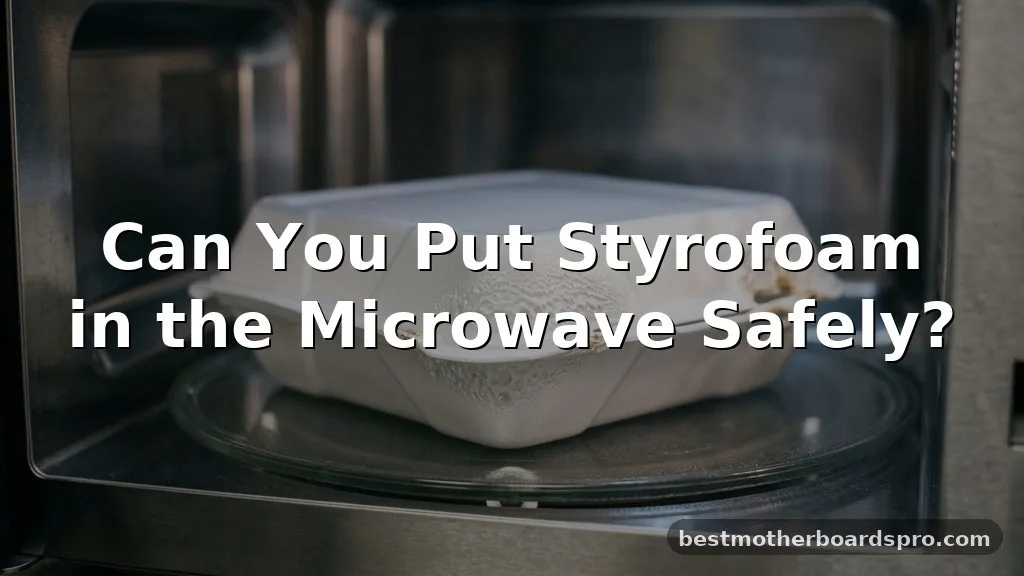
Deciding whether you can put styrofoam in the microwave is a common kitchen dilemma. Many people have leftovers in a white takeout box and wonder if they should transfer the food to a plate or just hit the start button. While it might seem convenient, the reality of how this material interacts with high-frequency waves is more complex than it appears.
Understanding the risks involved with heating your meal in these containers is essential for maintaining your health and avoiding a kitchen disaster. By learning the science behind these foam products, you will know exactly how to handle your next takeout meal without any unnecessary worry or potential hazards.
Understanding Polystyrene Foam
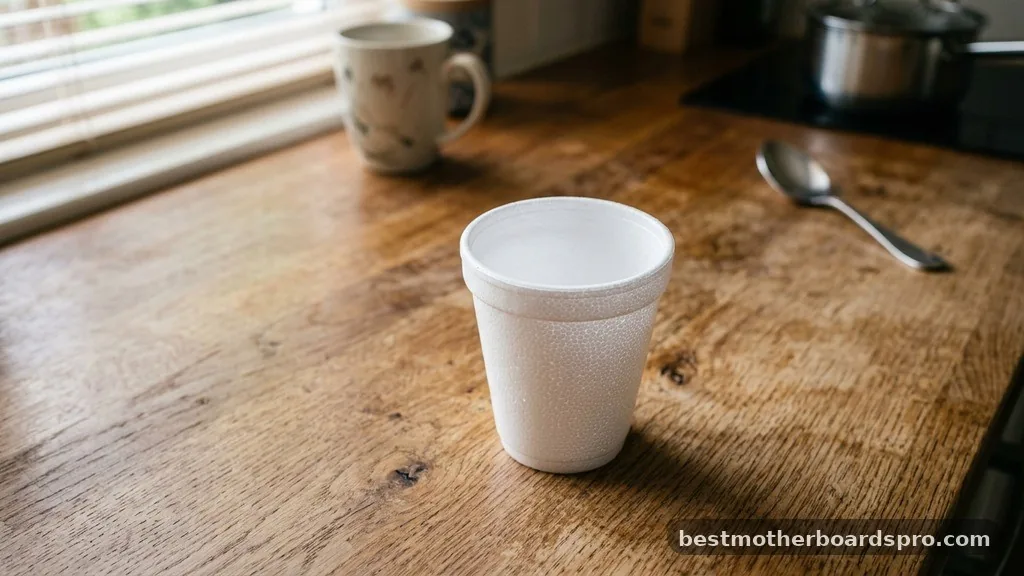
Styrofoam is a brand name often used interchangeably with expanded polystyrene, or EPS foam. Technically, Styrofoam is a registered trademark of the Dow Chemical Company for a specific type of closed-cell extruded polystyrene foam used primarily for building insulation. However, in the context of food service, most people are referring to disposable, white, lightweight containers made from expanded polystyrene.
This material is created by expanding polystyrene beads with a blowing agent, resulting in a structure that is mostly air. This makes it an excellent insulator for keeping hot food hot and cold food cold. Unfortunately, the same physical properties that make it a great insulator also make it poorly suited for the high-intensity environment found inside a microwave oven.
Why Microwaves and Foam Don’t Mix
When you consider if you can put styrofoam in the microwave, you must look at the melting point of the material. Polystyrene begins to soften and lose its structural integrity at temperatures as low as 212 degrees Fahrenheit, which is the boiling point of water. Many foods, especially those with high fat or sugar content, can easily exceed this temperature when subjected to microwave energy.
As the material reaches these temperatures, it can warp, melt, or even dissolve into the food you are trying to reheat. This physical degradation is not just a messy inconvenience; it poses a potential chemical risk. When the foam breaks down, it can release chemicals into the contents of the container, which is why experts generally advise against using it for heating food.
The Chemical Concerns of Heating Plastic
The primary concern regarding the use of these containers involves the potential migration of styrene. Styrene is a building block used to create polystyrene foam. While the finished product is mostly inert, heat acts as a catalyst that can accelerate the migration of residual monomers or other chemical additives from the plastic into your food.
| Factor | Styrofoam/EPS Foam | Microwave-Safe Glass/Ceramic |
|---|---|---|
| Heat Resistance | Low (begins to warp at ~212°F) | High (withstands extreme heat) |
| Chemical Stability | Variable under heat | Inert and stable |
| Structural Integrity | Can melt or dissolve | Maintains shape |
| Food Safety | Not recommended for reheating | Recommended for all uses |
Research into the long-term health implications of consuming trace amounts of these chemicals is ongoing. However, the precautionary principle suggests that it is better to avoid unnecessary exposure. When you choose to microwave your leftovers in their original foam container, you are essentially increasing the likelihood of these substances leaching into your meal.
Identifying Microwave-Safe Materials
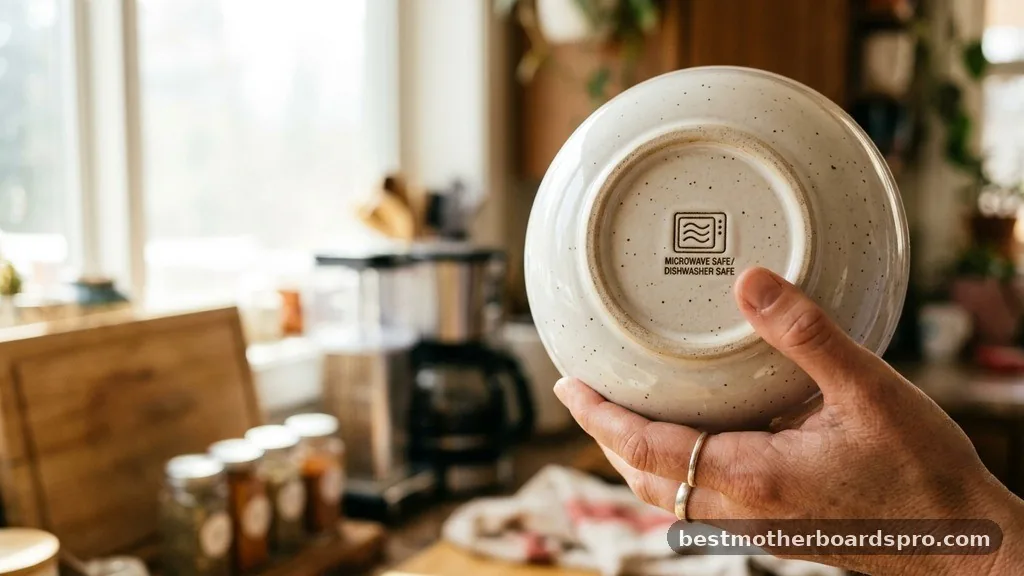
Not all plastic containers are created equal. Manufacturers often use specific symbols to help consumers identify which items are safe for use. If you are looking at a container and wondering if it is safe, look for a stamp on the bottom.
- Look for the recycling triangle with a number inside; look for #5 (Polypropylene) which is generally considered safer for heat.
- Check for the words “Microwave Safe” explicitly printed on the packaging.
- Avoid any containers that show signs of previous heat damage, as their structural integrity is already compromised.
- When in doubt, always transfer your food to a glass or ceramic dish before heating.
It is important to remember that even if a container is labeled as microwave-safe, it is often intended for short-term reheating rather than long-term cooking. If you frequently need to heat food, investing in a set of glass storage containers is a much safer, more durable, and environmentally friendly choice.
Addressing Common Misconceptions
Many people believe that if they only heat their food for a few seconds, it is safe. They often ask, “Can you put styrofoam in the microwave for 30 seconds?”
While a very short burst might not lead to visible melting, it does not mean that no chemical migration is occurring. The heat is still being generated within the food, which then transfers to the container walls.
Another misconception is that all foam containers are the same. Some modern containers are designed with coatings or different compositions that claim to be more heat-resistant.
However, without a clear, verified “microwave-safe” label, it is never worth the risk. It is far better to spend the extra thirty seconds transferring your food to a plate than to risk consuming melted plastic residue.
Practical Alternatives for Reheating
If you want to avoid the risks associated with foam containers, there are several simple steps you can take to ensure your food is heated properly and safely.
First, keep a small collection of glass or ceramic dishes in your workspace or home kitchen. These materials do not react to microwaves and will not leach chemicals into your meal.
Second, if you are stuck with a foam container, simply use a spoon or spatula to move the food to a safe vessel. Finally, if you are at a restaurant, you can always ask the server if they have microwave-safe takeout options, or bring your own reusable container if you know you will have leftovers.
Frequently Asked Questions
Is it safe to microwave styrofoam containers for any amount of time?
It is generally not considered safe. Even if the container does not visibly melt, the heat from your food can cause the foam to degrade or warp. This process may release chemical compounds into your meal, posing potential health risks that are easily avoided by using safer alternatives.
Why do some people think it is okay to microwave foam for 30 seconds?
Some people assume that because the foam does not immediately collapse or melt during a short duration, it is harmless. However, chemical leaching can occur at temperatures lower than the melting point of the material, meaning invisible risks may exist even if the container appears to remain intact.
How can I identify if a container is truly microwave-safe?
Always check the bottom of the container for a “microwave-safe” label or icon. If the container lacks this specific marking, do not assume it is safe. When in doubt, it is always safer to transfer your food to a glass or ceramic dish before you begin heating.
What happens to the foam if it gets too hot in the microwave?
If the foam reaches its thermal limit, it will begin to soften, warp, or melt. In severe cases, it can dissolve, causing the container to lose its shape and potentially leak hot food onto your microwave turntable. This creates both a significant mess and a food safety hazard.
Final Thoughts on Microwave Safety
Navigating the rules of kitchen safety does not have to be difficult. While the convenience of using a takeout container is tempting, the potential for chemical migration and structural failure makes it a practice worth avoiding. By choosing to transfer your food to glass or ceramic, you ensure that your meal remains untainted and that your equipment stays clean.
Understanding that you should not put styrofoam in the microwave is a simple yet effective way to protect your health and extend the life of your kitchen appliances. Next time you are staring at those leftovers, skip the foam and opt for a safer dish. It is a small change that leads to much better results, ensuring your dining experience is as safe as it is satisfying.