
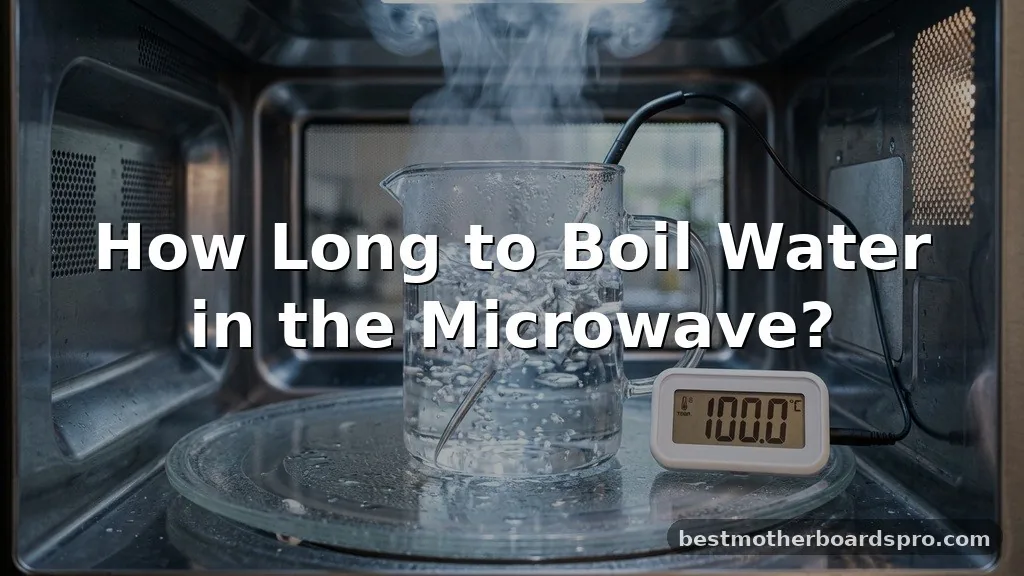
Figuring out exactly how long to boil water in the microwave often feels like a guessing game that ends in either lukewarm liquid or a messy spill. Because microwaves vary in power and efficiency, there isn’t a single universal timer setting that works for every kitchen.
By understanding how your specific appliance interacts with the volume of fluid you are heating, you can achieve a perfect result every time without unnecessary trial and error. This breakdown covers the variables that influence your heating time, ensuring you can safely and efficiently prepare hot water for your morning tea or quick kitchen tasks.
The Variables Affecting Microwave Efficiency
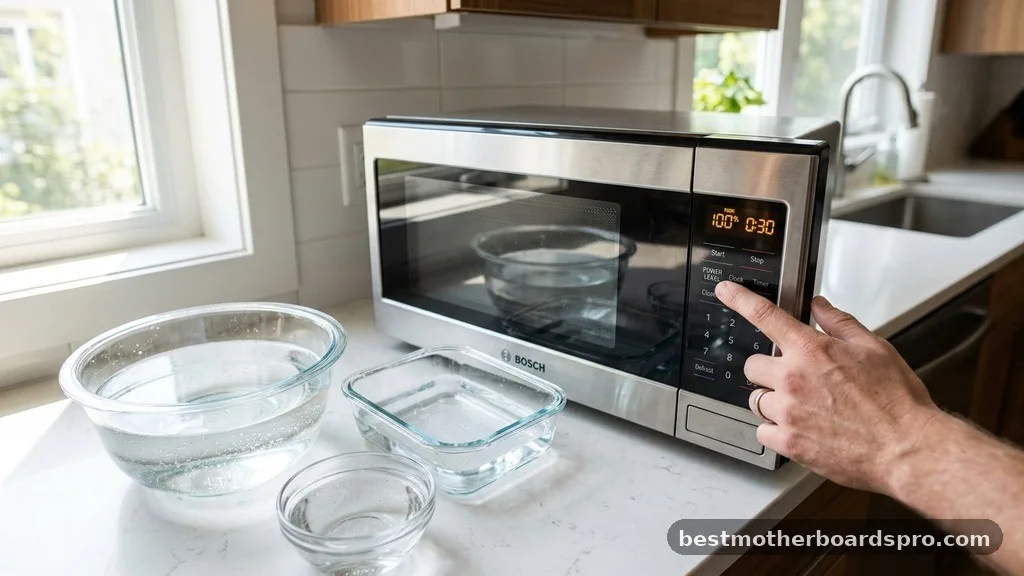
When you set out to heat water, the primary factor determining the duration is the wattage of your appliance. A 1200-watt unit will obviously heat a cup of liquid much faster than a standard 700-watt model. You should always check the interior door frame or the back of your machine to identify its power output, as this dictates how quickly you reach the desired temperature.
Beyond wattage, the total volume of water is the next most significant hurdle. Heating a small amount of liquid requires less energy, but the surface area of the container also plays a role in how rapidly the molecules gain kinetic energy. If you are aiming for a rolling boil, you must account for the fact that microwaves excite water molecules directly, meaning the process is more about energy absorption than the conduction of heat from a burner.
Estimating Time Based on Volume
While individual microwaves differ, general benchmarks help you avoid overshooting the target and causing a boil-over. Most standard household microwaves will bring a single cup of room-temperature water to a near-boil in about two to three minutes. If you are dealing with larger quantities, the time increases linearly, though you should always pause to stir halfway through to ensure even heat distribution.
The following table provides a rough estimate for heating times based on common microwave power levels. Note that these are approximations and may require slight adjustments depending on the starting temperature of your tap water.
| Volume of Water | 700W Microwave | 1000W Microwave |
|---|---|---|
| 1 Cup | 3.0 – 3.5 minutes | 2.0 – 2.5 minutes |
| 2 Cups | 5.0 – 6.0 minutes | 3.5 – 4.5 minutes |
| 4 Cups | 9.0 – 10.0 minutes | 7.0 – 8.0 minutes |
Safety Precautions and Superheating
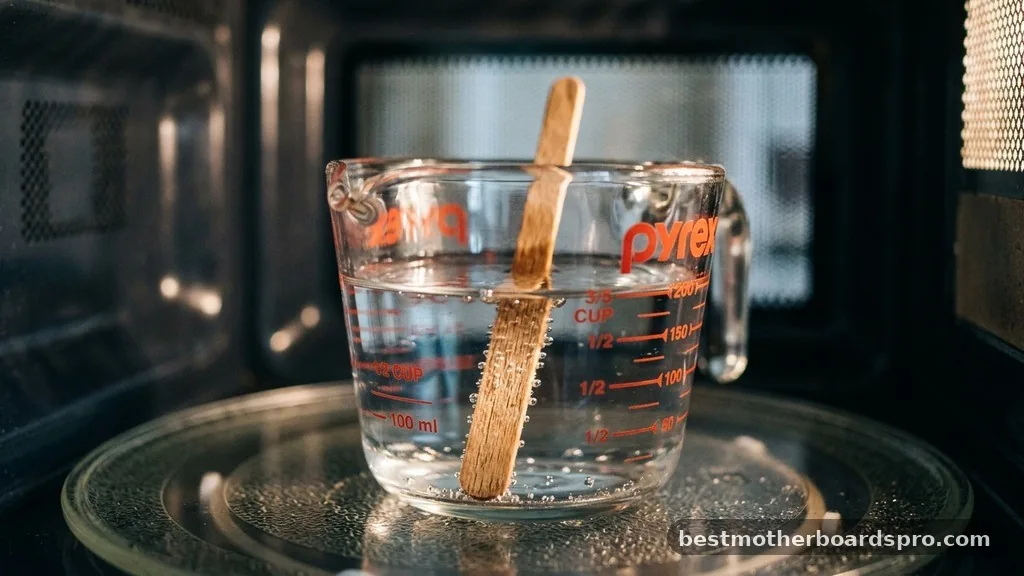
One of the most critical aspects of using a water microwave method is preventing a phenomenon known as superheating. This occurs when water reaches a temperature above its boiling point without actually forming bubbles. If you disturb the liquid—such as by dropping in a tea bag or stirring it—the energy is released instantly, which can cause the water to erupt violently from the container.
To mitigate this risk, always follow these safety guidelines:
- Use a microwave-safe container that is clearly labeled for high-heat use.
- Place a wooden stir stick or a non-metallic object in the water to provide a nucleation point for bubbles.
- Allow the container to sit inside the microwave for at least thirty seconds after the timer stops before removing it.
- Keep your face away from the container when you first open the door to check the temperature.
- Never use a container with a narrow neck, as this restricts steam release and increases pressure.
Achieving the Perfect Rolling Boil
If you need a true rolling boil for cooking or sterilization, you will likely need to extend the heating time by thirty to sixty seconds beyond the initial steaming phase. Be aware that the longer you heat the water, the more heat is transferred to the container itself. Always use oven mitts, as ceramic or glass mugs can become dangerously hot, even if the water inside hasn’t quite reached the boiling point yet.
If you are using the microwave to heat water for tea, you don’t necessarily need a full rolling boil. In fact, many delicate green or white teas taste better when the water is just below the boiling point. If you notice large bubbles forming on the bottom of the mug and steam rising steadily, you have likely reached the optimal temperature for most brewing purposes.
Addressing Common Topical Gaps
Many users struggle with the inconsistency of microwave heating, often finding that the top of the water is hot while the bottom remains cool. This is because microwaves create standing waves, leaving cold spots in the chamber.
To solve this, always ensure your container is placed off-center on the rotating tray if possible. This allows the water to move through different zones of the electromagnetic field, resulting in more uniform heating.
Another common gap involves the use of covered versus uncovered containers. Covering your container with a microwave-safe lid or a small plate will significantly reduce the time required to reach a boil by trapping steam and pressure. This is a highly effective way to save electricity and reduce the total time you spend waiting for your water to reach the right temperature.
Frequently Asked Questions
Is it safe to boil water in the microwave?
Yes, it is perfectly safe as long as you use microwave-safe containers and avoid superheating. Always add a wooden stir stick to the water to encourage bubbles to form, which prevents the liquid from erupting when you move it or add other ingredients like tea or coffee.
How long should I heat two cups of water?
For a standard 1000-watt microwave, two cups of water typically require about four minutes to reach a boil. If your microwave is lower in power, you might need to add an extra minute or two. Always monitor the progress through the glass to prevent messy spills.
Why does my water get hot but not bubble?
This is likely a case of superheating, where the water temperature exceeds the boiling point but lacks nucleation sites for bubbles. This is dangerous because the water can flash-boil if disturbed. Always place a non-metallic object in the container to help the water boil safely and consistently.
Can I boil water for tea in a microwave?
Absolutely, it is a very common method for brewing tea. Just be mindful of the container you choose; ensure it is microwave-safe, as some materials can crack under intense heat. Heat the water in short bursts and stir it occasionally to ensure that the temperature is uniform throughout.
Final Thoughts on Microwave Efficiency
Mastering the art of how long to boil water in the microwave is largely about observation and adjusting for your specific equipment. By starting with smaller time increments and noting how your particular machine performs, you eliminate the guesswork entirely. Remember that safety is paramount, so always allow the water to settle for a moment before handling the container, and use caution when removing hot items.
With these simple habits, you will find that the microwave is a reliable, fast, and efficient tool for your daily kitchen needs. If you find your current method works well, stick to those specific timings every time for consistent, reliable results in your daily routine.