
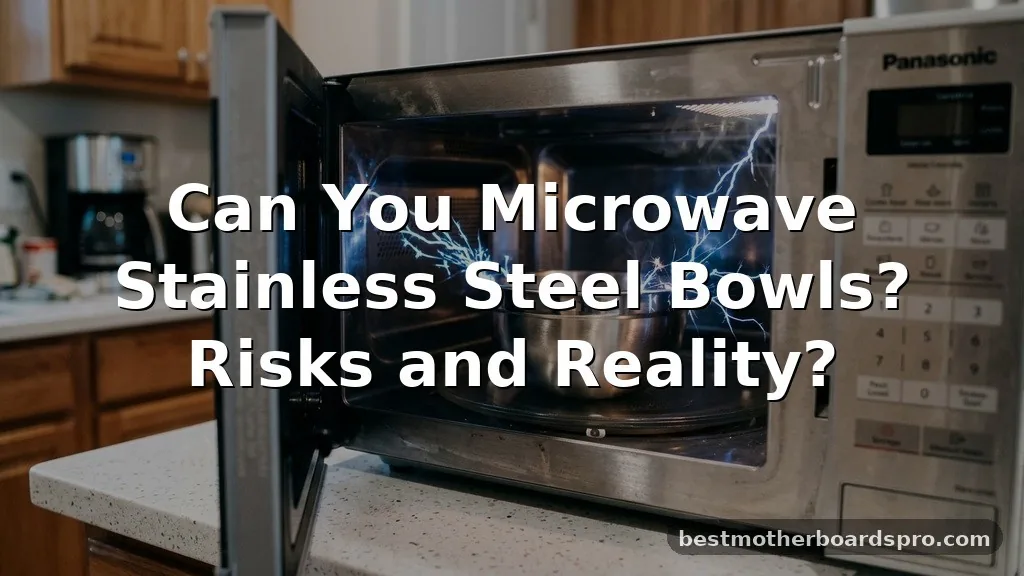
Deciding whether you can microwave stainless steel bowls often leads to conflicting advice, leaving many home cooks unsure about the safety of their kitchenware. While it might seem convenient to reheat leftovers directly in the container you used for storage, understanding the physics behind how electromagnetic waves interact with metal is essential for kitchen safety.
Placing the wrong materials inside your appliance can lead to serious damage or fire hazards. By learning the technical limitations of your equipment, you’ll gain the confidence to choose the right vessels for your daily meal prep and heating tasks without risking your home or your dinner.
The Physics of Metal in Microwaves
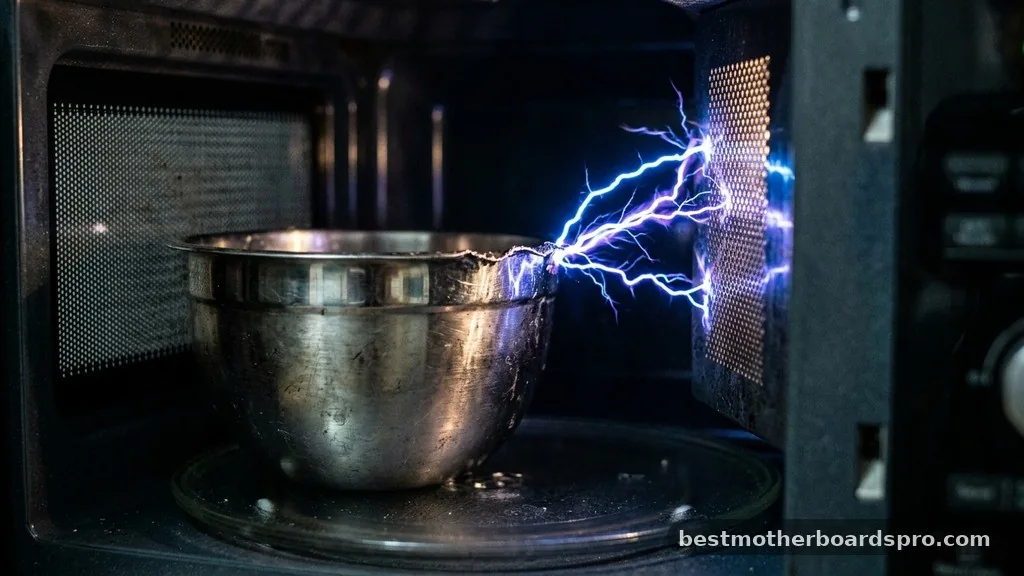
Microwave ovens function by emitting electromagnetic waves that excite water molecules in food, generating heat through friction. When you introduce metal, such as a stainless steel bowl, into this environment, the behavior of those waves changes drastically. Metal is a conductor, meaning it reflects the electromagnetic energy rather than allowing it to pass through or be absorbed by the food.
Because metal reflects these waves, the energy must go somewhere. This often results in the concentration of electrical charges along the edges, corners, or sharp points of the metal object. If the charge becomes intense enough, it can jump through the air to another surface, a process known as arcing.
This produces the characteristic sparks and popping sounds that signal you have made a significant error. Even if you don’t see immediate sparks, the reflected energy can bounce back toward the microwave’s magnetron—the component responsible for generating the waves—potentially causing it to overheat and fail permanently.
Why Stainless Steel Bowls Are Often Prohibited
Most manufacturers explicitly warn against using metal in their appliances because the risks far outweigh the convenience. While some modern, high-end microwave designs claim to be compatible with specific metal shapes—usually low-profile, smooth, and rounded containers—the vast majority of standard stainless steel bowls do not fall into this category.
The shape of a typical kitchen bowl is problematic. Its deep, curved sides can act as a shield, preventing the microwaves from reaching the food inside. If you are trying to warm up a soup or a pasta dish, the metal walls will block the energy, leaving your meal cold while the microwave components work overtime.
Furthermore, many bowls feature rolled edges, seams, or thin handles. These areas are prime locations for electric charge buildup, making the risk of arcing and subsequent fire damage much higher than with a flat, smooth piece of metal.
Comparing Common Kitchen Materials
Choosing the right container for heating depends on the material’s interaction with microwave energy. Understanding how different substances respond helps you avoid common kitchen accidents.
| Material | Microwave Safety | Reasoning |
|---|---|---|
| Glass | High | Allows waves to pass through; does not absorb energy. |
| Ceramic | High | Generally safe, provided it has no metallic glaze or trim. |
| Plastic | Variable | Must be labeled “microwave-safe” to avoid melting or leaching. |
| Stainless Steel | Low | Reflects waves; poses arcing and equipment damage risks. |
Addressing Common Misconceptions
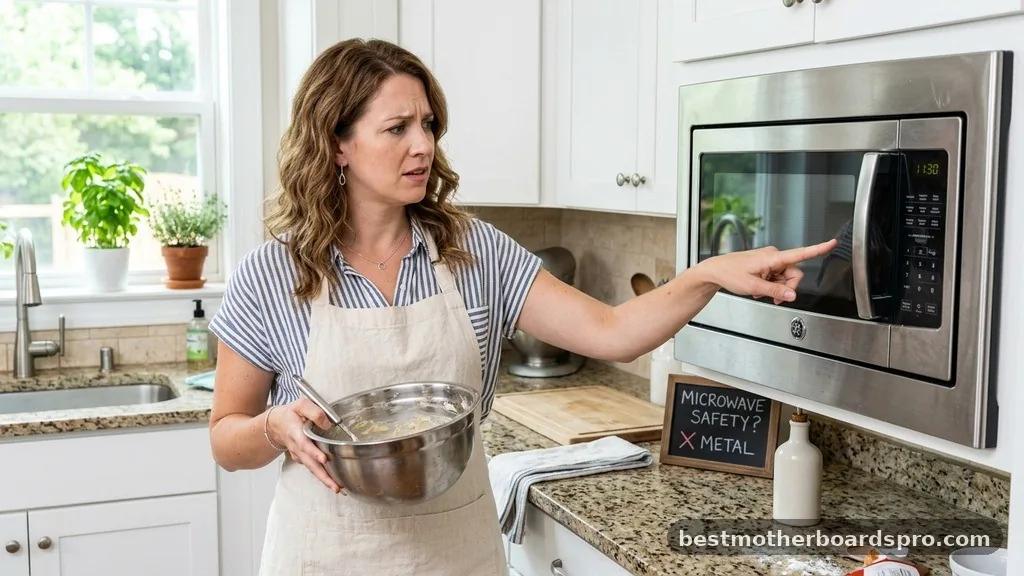
A common myth suggests that if you fill a bowl with enough food, the metal won’t cause issues. The logic is that the food will absorb the energy before the metal can reflect it.
While this might work for a few seconds in a controlled laboratory setting, it is a dangerous practice for the average home kitchen. It only takes a small gap in the food coverage or a slight shift in the bowl’s position to trigger arcing.
Another misconception involves the use of metal lids or foil. Many people believe that as long as the bowl itself is safe, a lid is fine. However, lids often contain thin, flimsy metal that is even more prone to sparking than the bowl itself.
When you add a lid to a container, you create a closed environment where trapped steam can increase pressure, potentially leading to an explosion if the heat distribution is uneven. Sticking to materials specifically designed for microwave use is the only way to ensure total safety.
Recommended Alternatives for Meal Prep
When you are planning your meal prep, you need storage containers that can move from the fridge to the microwave without a second thought. Investing in high-quality materials will save you time and protect your appliances.
- Borosilicate glass containers are excellent because they handle thermal shock well and won’t leach chemicals into your food.
- Ceramic dishes are durable and provide a stable, heat-resistant surface for reheating almost any meal.
- High-density, BPA-free plastic boxes labeled as microwave-safe offer a lightweight option for those on the go.
- Silicone lids are a great way to cover your food during the heating process to prevent splatters without using metal foil.
The Risks of Ignoring Safety Guidelines
Ignoring the warnings against using metal in your microwave can lead to more than just a ruined lunch. The financial cost of replacing a damaged microwave is significant, but the safety implications are even more concerning. Arcing can ignite nearby items, such as paper towels, plastic wrap, or even the food itself, starting a fire that can quickly spread to your cabinetry or surrounding areas.
Even if a fire does not occur, your appliance may suffer internal damage that isn’t immediately visible. The magnetron is a sensitive piece of technology, and forcing it to reflect energy repeatedly will shorten its lifespan significantly.
You might notice that your microwave begins to heat unevenly or makes strange humming noises long before it finally stops working altogether. By simply choosing a different bowl, you eliminate these unnecessary risks and keep your kitchen running smoothly.
Frequently Asked Questions
Can I use a stainless steel bowl if it is only for a few seconds?
It is generally not recommended. Even short intervals can cause electrical arcing if the metal has sharp edges, thin spots, or is positioned near the walls of the microwave. The risk of damaging your appliance’s magnetron or starting a fire is simply too high to justify the convenience.
Are there any specific stainless steel containers designed for microwaves?
Some specialized manufacturers have produced microwave-safe metal containers with specific shapes and thicknesses to minimize reflection. However, these are rare and expensive. Unless your bowl is explicitly labeled “microwave-safe” by the manufacturer, you should assume it is not safe to use in your microwave at all.
Why does my microwave spark when I use metal?
Sparks occur due to a phenomenon called arcing. When microwaves hit metal, the electrical current builds up at sharp points or edges.
When the voltage becomes high enough, it jumps through the air, creating a visible spark. This can damage the interior walls of your microwave and the magnetron.
What should I do if I accidentally put a metal bowl in the microwave?
Turn the appliance off immediately. Do not open the door right away if you see sparks, as the sudden influx of oxygen could potentially fuel a fire. Once the sparking stops and the unit is off, carefully remove the item and check your microwave for any burn marks or internal damage.
Choosing Safety in the Kitchen
The question of whether you can microwave stainless steel bowls is best answered with a firm no. While metal is a staple in professional kitchens for prep and storage, it is inherently incompatible with the electromagnetic technology used in home microwaves. Relying on glass, ceramic, or certified microwave-safe plastics ensures that your food heats evenly and your appliances remain in good working condition.
By moving away from metal for your reheating needs, you remove the risk of arcing, fire hazards, and costly equipment repairs. Stick to these proven materials to keep your meal prep routine safe and efficient every single day. If you have questions about your specific cookware, always check the manufacturer’s instructions or look for the microwave-safe symbol on the bottom of the vessel.