
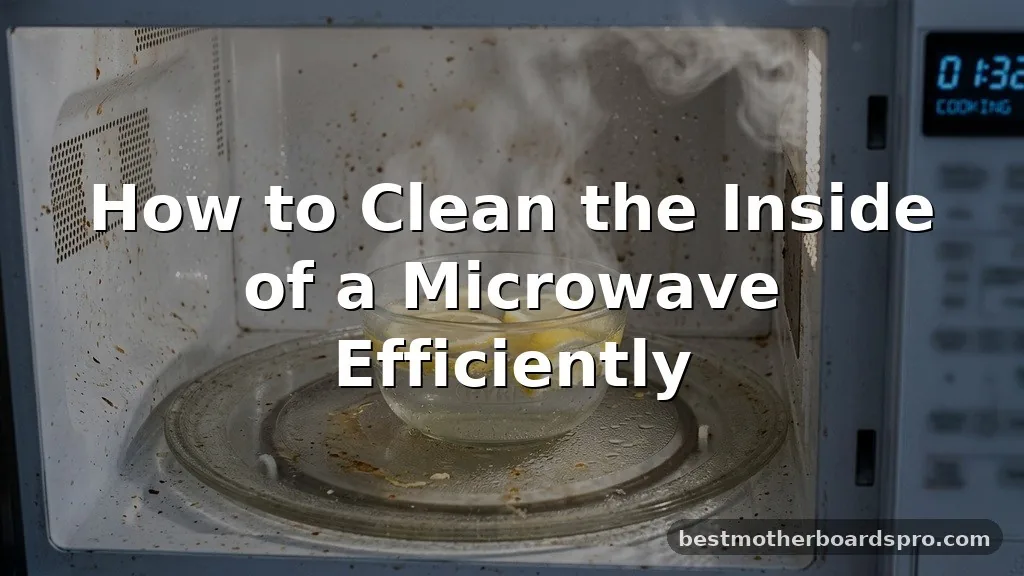
Tackling the caked-on food and stubborn grease inside your appliance is often a chore people put off until it becomes an eyesore. Knowing how to clean the inside of a microwave effectively saves you from hours of aggressive scrubbing and helps maintain the longevity of your kitchen equipment. By utilizing basic pantry staples, you can break down hardened debris without relying on harsh chemicals that might linger near your food.
This process is straightforward, requiring only a few minutes of active effort to restore a pristine interior. You will find that simple steam-based methods are often superior to traditional manual labor when dealing with heavy splatters.
The Steam Method for Effortless Maintenance
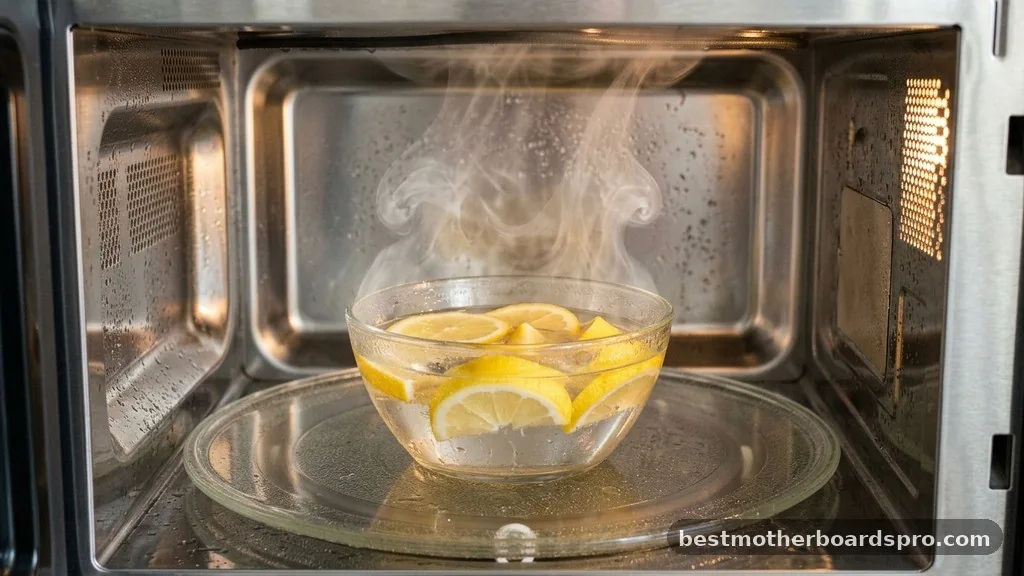
The most effective way to remove dried-on residue is to let steam do the heavy lifting for you. By creating a humid environment within the cavity, you soften the hardened proteins and fats, making them easy to wipe away with a simple sponge or soft cloth.
To start, fill a microwave-safe bowl with one cup of water. You can add a tablespoon of white vinegar or a few slices of lemon to help neutralize lingering odors. Place the bowl inside the unit and run it on high power for three to five minutes.
The goal is to get the water boiling so that steam fills the entire chamber. Once the timer dings, do not open the door immediately. Leave it closed for another five minutes to allow the steam to penetrate the stuck-on splatters.
Essential Cleaning Tools and Supplies
You rarely need specialized industrial cleaners to maintain your appliance. Most effective solutions are already sitting in your kitchen cabinets. Using the right tools prevents scratching the delicate interior surfaces, especially if you have a model with a specialized finish.
- Microfiber cloths for streak-free wiping.
- A non-abrasive sponge to lift loosened debris.
- White vinegar or lemon juice as natural degreasers.
- Baking soda for scrubbing persistent, stubborn spots.
- A small brush or toothbrush for the crevices around the door seal.
Avoid using steel wool or harsh scouring pads. These items can damage the interior coating, potentially causing rust or issues with the microwave’s ability to reflect waves correctly. A soft cloth is almost always sufficient once the steam has loosened the grime.
Comparing Cleaning Agents
Different substances offer varying levels of efficacy depending on the type of mess you are dealing with. While water and steam are the foundation, additives can improve the sanitization and scent of the interior.
| Cleaner | Best For | Key Benefit |
|---|---|---|
| White Vinegar | Grease and Odors | Natural disinfectant and degreaser |
| Lemon Juice | Fresh Scent | Natural acidity cuts through grime |
| Baking Soda | Stubborn Splatters | Mild abrasive for scrubbing |
| Dish Soap | Light Maintenance | Breaks down surface oils |
Addressing Specialized Components
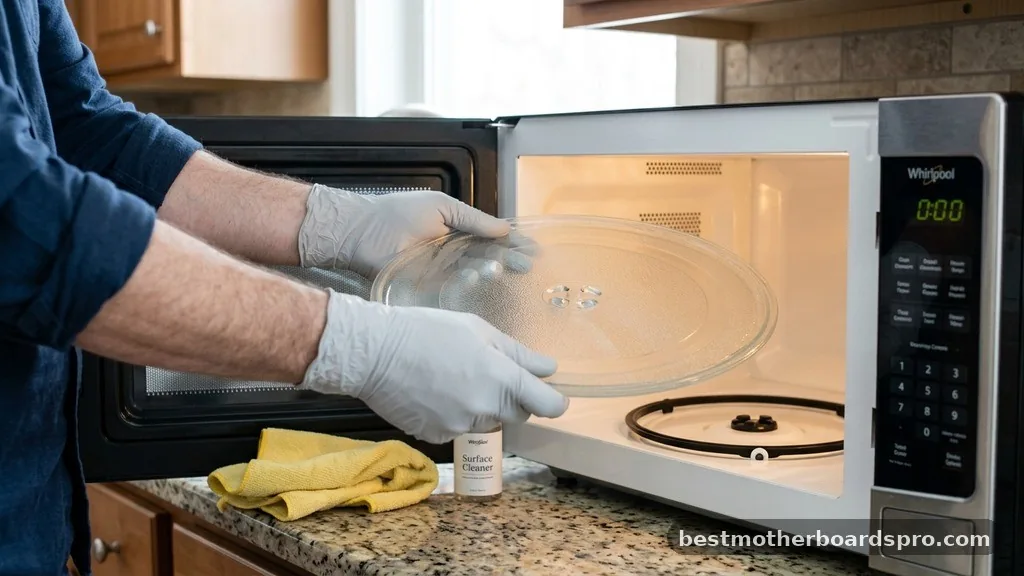
The interior of your unit is more than just the walls. The turntable and the door seal are high-traffic areas that often collect the most debris. If you ignore these parts, you might notice persistent smells or uneven heating.
Cleaning the Turntable
Most glass turntable trays are dishwasher safe. If yours is too large or you prefer hand washing, soak it in warm, soapy water for ten minutes. Use a damp cloth to wipe down the rollers underneath, as crumbs often get trapped in this track and cause the plate to wobble during use.
Maintaining the Door Seal
The door seal, or gasket, is prone to catching food particles. If this area is dirty, the door might not close tightly, which affects the efficiency of the oven. Use a damp cloth with a mild soap solution to wipe the seal gently. Never use harsh chemicals here, as they can degrade the rubber or plastic material over time.
Solving Common Cleaning Challenges
Sometimes, standard methods are not enough to address specific issues like burnt-on sugar or trapped odors. When you face these hurdles, you need a slightly more targeted approach to restore the unit.
For burnt sugar or syrup, create a paste using baking soda and a tiny amount of water. Apply this directly to the spot and let it sit for a few minutes.
The mild abrasive nature of the baking soda will lift the carbonized sugar without damaging the underlying surface. Wipe it away with a damp cloth afterward to ensure no residue remains.
If you encounter persistent odors that refuse to budge, try placing a bowl of baking soda inside the empty microwave overnight. The powder acts as a natural deodorizer, absorbing stale smells from the interior walls. Ensure the unit is turned off and unplugged if you are worried about accidental activation while the bowl is inside.
Frequency and Preventative Care
Consistent maintenance is the secret to avoiding deep-cleaning sessions. If you wipe down the interior once a week, you prevent grease from hardening into a permanent layer.
Cover your food with a microwave-safe lid or a paper towel to stop splatters before they happen. This simple habit keeps the interior clean and significantly reduces the amount of time you spend scrubbing.
FAQ
Can I use bleach to clean the microwave?
You should avoid using bleach inside your appliance. Bleach is a harsh chemical that can damage the interior finish and leave behind toxic fumes that may be absorbed by your food during future use. Stick to vinegar, lemon juice, or mild dish soap for safe cleaning.
Is it safe to use dish soap for the interior?
Yes, a small amount of mild dish soap mixed with water is perfectly safe. Use a damp cloth to apply the soapy solution to the walls and floor of the unit. Ensure you rinse the cloth thoroughly and wipe away all soap residue to prevent any chemical taste in food.
How do I handle stubborn burnt food?
For burnt-on debris, create a thick paste using baking soda and water. Apply the mixture to the affected area and let it sit for five to ten minutes. The baking soda acts as a gentle abrasive that lifts the burnt material without scratching the appliance’s interior surface.
What if the door seal is very dirty?
Use a soft toothbrush or a cotton swab dipped in a warm, soapy solution to clean the door seal. Gently scrub the crevices to dislodge hidden crumbs or grease. Wipe the area dry with a clean paper towel afterward to keep the rubber gasket in good condition.
Maintaining Your Appliance
Keeping your microwave in top shape is about consistency rather than intensity. By integrating a quick steam cycle into your weekly routine, you eliminate the need for heavy-duty scrubbing and keep the interior looking brand new. Remember that the best approach to cleaning the inside of a microwave involves prevention, such as covering dishes to minimize splatters.
When messes do occur, rely on natural acidic solutions like vinegar or lemon to break down grease safely. Taking these small, regular steps ensures your appliance remains a hygienic and efficient tool in your kitchen.
If you find yourself struggling with a particularly stubborn stain, don’t hesitate to repeat the steam process, as patience is often more effective than abrasive force. Happy cooking and enjoy your fresh, clean kitchen space.