

It is incredibly frustrating when you go to reheat your coffee or defrost a quick meal, only to find that your appliance has completely lost power. When you wonder why did my microwave stop working, the answer often lies in a tripped circuit or a faulty internal component that has cut the power to protect your home.
Before you rush to buy a replacement, it is helpful to understand that many common issues are surprisingly simple to diagnose. By checking a few basic electrical connections and safety features, you can often pinpoint the exact cause of the failure without needing a professional technician.
Checking Basic Power Supply Issues
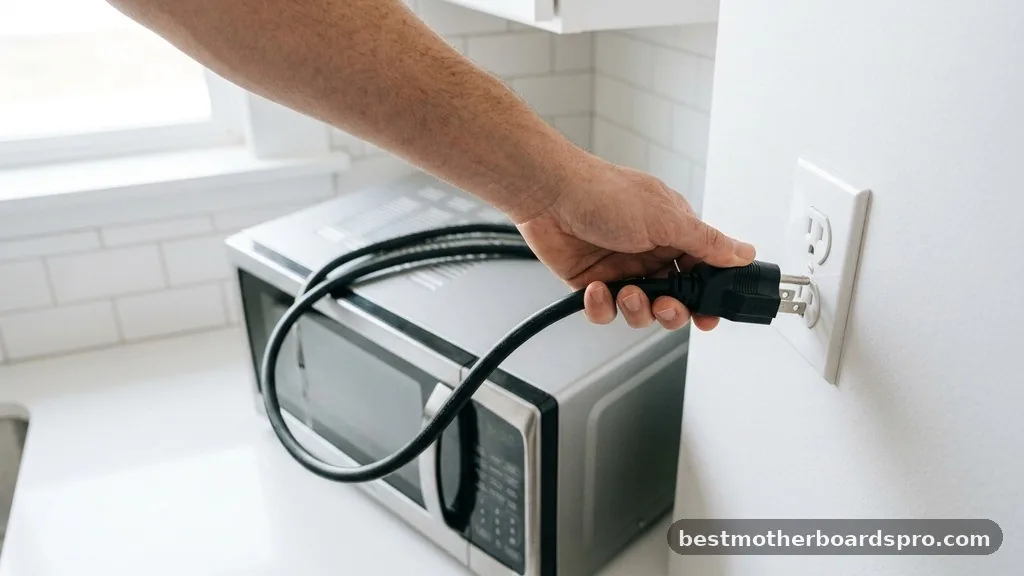
The most common reason for a sudden shutdown is a simple interruption in the electrical supply. Before looking at the internal components, ensure the microwave is actually receiving electricity. Start by checking your home’s breaker panel to see if a circuit has tripped.
If you have the appliance plugged into a GFCI outlet, that specific outlet may have triggered its own internal safety mechanism. Press the reset button on the outlet to see if the power returns.
Sometimes, a minor power surge can cause the unit to lock up or enter a protective state. Unplug the microwave for at least one minute to allow any residual energy to dissipate from the internal circuitry.
After waiting, plug it back in and check if the control panel lights up. If it remains dead, the issue is likely internal, requiring a closer look at the appliance’s hardware.
Understanding Safety Switches and Latches
Microwaves are designed with a complex array of safety features that prevent them from running while the door is open. If your door latch assembly is damaged or the door hook fails to engage properly, the microwave will refuse to start as a safety precaution. You might hear the light turn on, but the unit will not heat because the door interlock switch is not sending the signal that the cavity is sealed.
Inspect the door for any signs of misalignment or physical damage. If the door does not click shut firmly, the interlock switches may not be making the necessary contact to complete the electrical circuit. In some cases, the plastic hooks on the door break off due to wear and tear over time, making it impossible for the unit to recognize that it is closed.
Internal Components and Electrical Fuses
If the power is reaching the unit but nothing happens, a blown ceramic fuse or thermal fuse is often the culprit. These components serve as the first line of defense against overheating and electrical spikes. A thermal cutout is designed to trip if the microwave cavity gets too hot, typically due to a blocked vent or a failing fan motor.
Common Internal Failure Points
* Ceramic Fuse: Often blows during a power surge to protect the delicate control board.
* Thermal Fuse: Trips when the unit overheats, effectively killing the power to prevent a fire hazard.
* Door Interlock Switch: Prevents operation if the door is not perfectly latched.
* High Voltage Diode: If this fails, the unit might sound like it is running, but it will not heat food.
The Danger of High Voltage Components
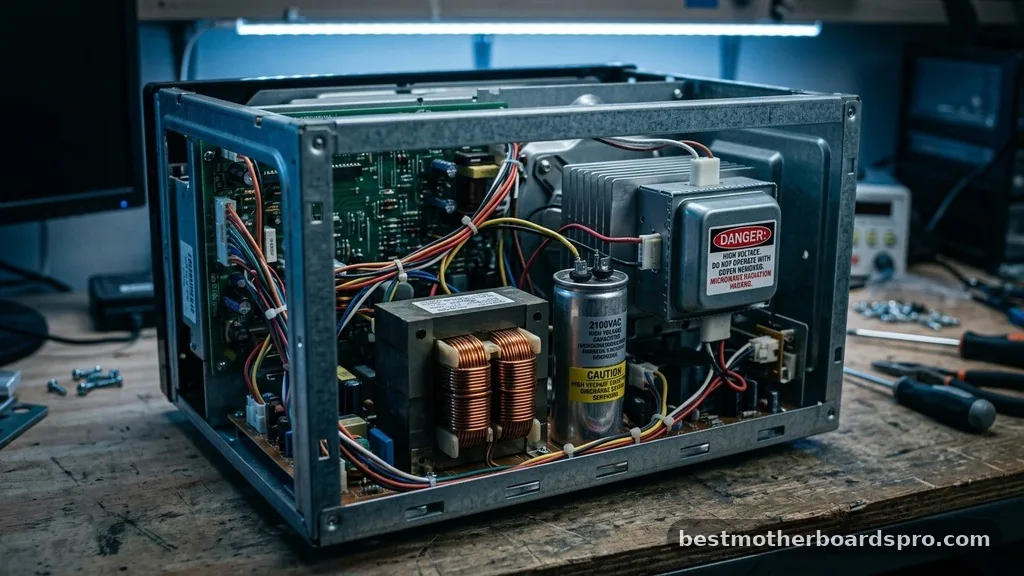
You must exercise extreme caution if you decide to open the outer casing of your microwave. Even when the unit is unplugged, the internal capacitor can hold a lethal charge for a long time.
Always perform a proper capacitor discharge procedure before touching any internal wiring. If you are not comfortable working with high-voltage electronics, it is much safer to contact a professional.
Comparison of Common Microwave Failures
| Component | Symptoms | Difficulty of Repair |
|---|---|---|
| Thermal Fuse | Complete power loss | Moderate |
| Door Switch | Light on, but won’t start | Moderate |
| Magnetron | Unit runs, but no heat | High |
| Control Board | Buttons unresponsive | High |
Testing Components with a Multimeter
If you have basic electrical knowledge, a multimeter is your most valuable tool for diagnosing why did my microwave stop working. You can use it to perform a continuity test on the fuses and switches. A healthy fuse or switch should show zero resistance, while a failed one will show an open circuit.
To test a fuse, set your multimeter to the continuity setting and touch the probes to both ends of the fuse. If the meter beeps or shows a value near zero, the fuse is intact.
If there is no reaction, the fuse is blown and needs to be replaced with an exact match. Never bypass a fuse with foil or wire, as this creates a significant fire risk.
Addressing Magnetron and Transformer Issues
A magnetron failure is a common cause for microwaves that run but fail to heat. The magnetron is the heart of the appliance, responsible for generating the waves that cook your food. If this part burns out, you will often hear a loud humming sound or notice a burning smell.
Similarly, the high voltage transformer works alongside the capacitor to provide the necessary power to the magnetron. If the transformer fails, the entire heating process stops.
The Role of the Waveguide Cover
Sometimes, the issue is not electrical but mechanical or related to cleanliness. The waveguide cover sits inside the microwave cavity and protects the magnetron from food splatters.
If this cover becomes heavily soiled or damaged, it can cause arcing, which may lead to a thermal fuse trip or even permanent damage to the magnetron. Regularly cleaning this small piece of mica or plastic can prevent significant repair costs.
FAQ
Is there a reset button on my microwave?
Most microwaves do not have a dedicated external reset button. However, you can often “reset” the unit by unplugging it from the wall outlet for at least sixty seconds. This allows the internal control board to clear its memory and reset the safety sensors after a power surge.
What makes a microwave suddenly stop working?
A microwave typically stops working due to a blown thermal fuse, a tripped circuit breaker, or a faulty door interlock switch. These components are designed to cut power to the unit if they detect overheating, electrical surges, or an improperly closed door to ensure your home’s safety.
How do you tell if a microwave fuse is blown?
You can identify a blown fuse by using a multimeter to perform a continuity test. If the multimeter does not show a complete circuit or provide a reading when touching the ends of the fuse, the internal wire has snapped and the fuse must be replaced.
Can I fix a microwave myself?
You can perform basic troubleshooting like checking the outlet or the door latches. However, due to the dangerous high-voltage capacitor, internal repairs should only be attempted by those with proper training. Always prioritize safety and consider professional repair services if the issue requires opening the unit’s casing.
Conclusion
When you find yourself asking why did my microwave stop working, remember that most issues are tied to simple safety mechanisms like fuses or door switches. Taking the time to verify your power source and inspect the door latch can often save you from an unnecessary service call. If you determine that the fault lies within the high-voltage components, prioritize your safety by unplugging the device and consulting a professional.
Regular maintenance, such as keeping the waveguide cover clean and ensuring the door closes securely, will significantly extend the lifespan of your appliance. With a methodical approach to troubleshooting, you can often get your kitchen back in order without replacing the entire unit.