
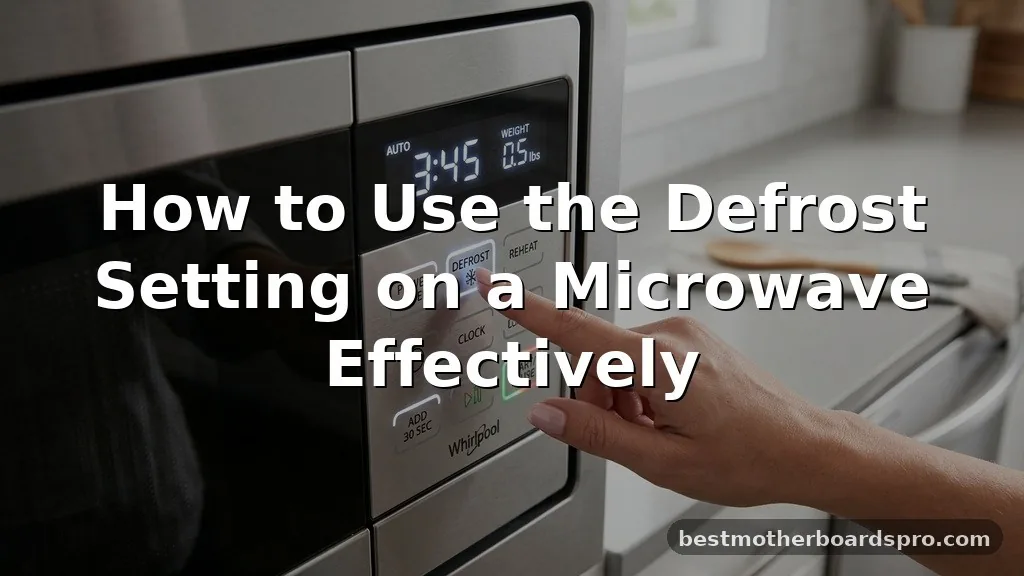
Mastering the art of using the defrost setting on a microwave can save you from last-minute dinner disasters when you realize your protein is still frozen solid. While many people simply hit the express cook button and hope for the best, this often leads to uneven results where the edges of your food start cooking while the center remains a block of ice.
By learning how to properly engage the defrost functions on your specific appliance, you ensure your ingredients thaw safely and maintain their texture. This process is about timing and technique, turning a frozen obstacle into a ready-to-cook meal in just a few minutes.
Understanding Your Appliance Defrost Logic
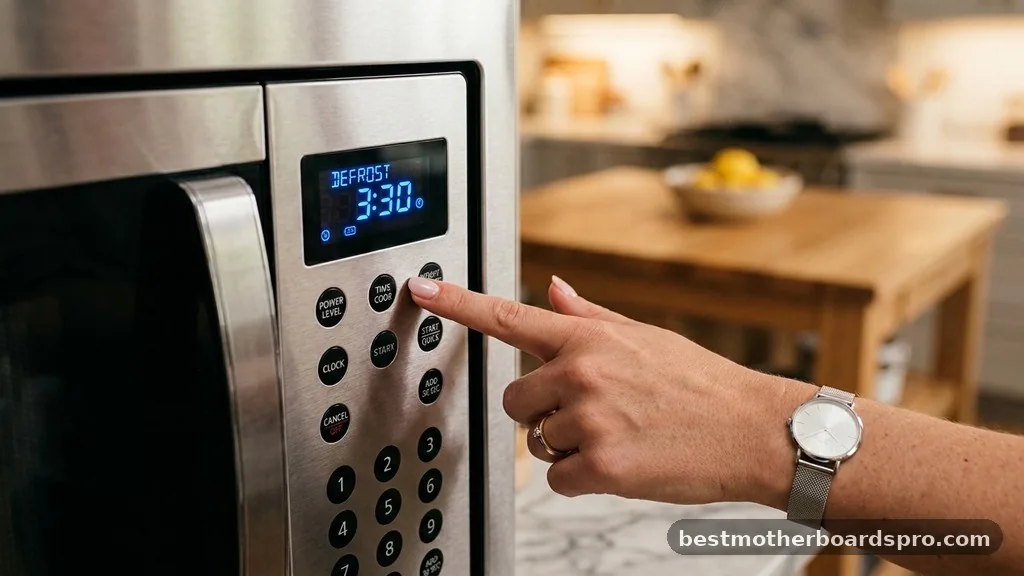
Most modern microwaves come equipped with two main ways to thaw food: time-based defrosting and weight-based defrosting. Time-based defrosting is straightforward; you simply tell the appliance how many minutes it should run at a lower power level. Weight-based defrosting is more sophisticated, as it allows you to enter the approximate weight of the food, which then prompts the oven to calculate the optimal cycle length automatically.
When you use the defrost setting on a microwave, the machine pulses its power. It doesn’t run at full intensity because that would just cook the outer layer of your meal while leaving the interior frozen.
Instead, it cycles the magnetron on and off. This pause allows the heat generated at the surface to conduct inward, effectively equalizing the temperature across the entire item without actually boiling or searing the edges.
Step-by-Step Guide to Thawing Food
To achieve the best results, consistency is key. You should always remove your items from their original store packaging, especially if it contains metal clips or foil, as these can cause sparks inside the microwave. If you are thawing a large piece of meat, place it on a microwave-safe plate to catch any juices that might leak during the process.
Follow these steps to ensure a safe thaw:
- Place the frozen item in the center of the microwave turntable.
- Select the defrost button or setting on your control panel.
- Enter the weight of the item if your machine prompts you for it, or input the estimated time.
- Press start to initiate the cycle.
- Pause the machine halfway through to flip or rotate the food, which prevents hot spots.
- Let the item stand for several minutes after the cycle finishes to allow the heat to distribute evenly.
Comparing Different Defrosting Methods
Not all thawing methods are created equal. While using an appliance is quick, it is important to understand how it stacks up against traditional methods like refrigerator thawing. The following table highlights the primary differences you should keep in mind when planning your meal prep.
| Method | Speed | Texture Retention | Effort Required |
|---|---|---|---|
| Microwave Defrost | Very Fast | Moderate | Medium |
| Refrigerator Thaw | Very Slow | High | Low |
| Cold Water Bath | Moderate | High | High |
Addressing Common Challenges
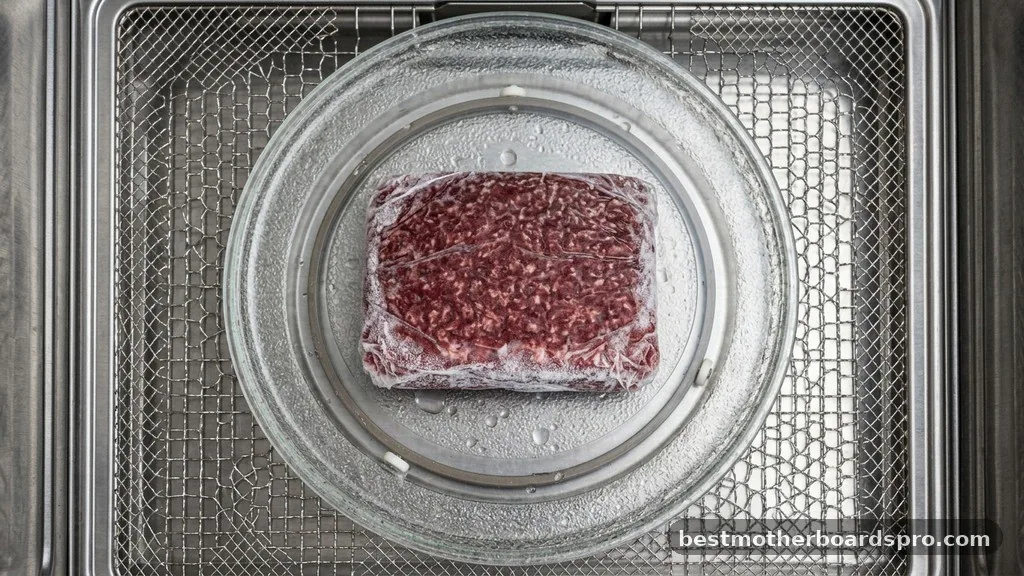
Many users struggle with the edges of their food starting to cook during the cycle. This is a common issue known as “edge cooking.” To mitigate this, always use a lower power level if your microwave allows it.
If you are defrosting ground beef or chicken breasts, breaking the meat apart as soon as it becomes pliable is essential. Don’t wait for the entire cycle to finish before you start separating the portions.
Another frequent issue involves the shape of the food. Irregularly shaped items, like a whole chicken or a thick roast, will naturally thaw unevenly.
If you notice a particular area getting warm, shield it with a small piece of aluminum foil—but only if your specific microwave manual permits this. Always check your manufacturer’s guidelines, as some models are more sensitive to metal than others.
Weight-Based Versus Time-Based Settings
Choosing between weight and time often confuses home cooks. Weight-based defrosting is generally more accurate because the appliance uses a pre-programmed algorithm based on the density and mass of the food. When you enter the weight, the microwave determines exactly how much energy is needed to reach a safe temperature.
Time-based defrosting is more of a manual override. Use this when the weight-based feature doesn’t seem to get your food quite where it needs to be, or when you are dealing with items that don’t fit the standard weight categories.
When using time-based mode, start with a conservative estimate. You can always add more time, but you cannot “un-cook” a protein that has been partially seared by too much microwave exposure.
Safety and Hygiene Protocols
Safety remains the most critical aspect of using the defrost setting on a microwave. Bacteria thrive in the “danger zone” between 40°F and 140°F.
Because microwave thawing can sometimes push food into this temperature range, you must cook the food immediately after it has thawed. Never leave partially thawed meat sitting on the counter or back in the refrigerator for later use.
Keep your microwave interior clean to prevent contamination. If juices from raw meat splatter during the cycle, wipe down the walls and the turntable immediately with a food-safe disinfectant.
This prevents cross-contamination for your next meal. Always ensure that your microwave-safe container is truly suitable for high-heat cycles to avoid chemical leaching or melting.
Optimizing Results for Specific Foods
Different foods require different approaches. Ground meat, for instance, thaws much better if you press it into a flat, disc-like shape before freezing.
This increases the surface area and allows the microwave rays to penetrate more effectively. For vegetables, you often don’t need a full defrost cycle at all; a short burst of 30 seconds is usually enough to loosen them up for a stir-fry.
If you find yourself frequently using the defrost setting on a microwave for large cuts of meat, consider dividing them into smaller portions before freezing. Smaller, uniform pieces will always thaw more evenly than a single dense block. Keeping a chart on your fridge of common weights for your most-cooked items can also speed up the process, allowing you to enter the data quickly without guessing.
FAQ
Do I have to use the defrost button?
You don’t strictly have to use the dedicated button, but it is highly recommended. The defrost setting automatically modulates power levels to prevent your food from cooking on the outside while the center stays frozen. Using standard power settings often results in uneven, rubbery textures in proteins.
How long should I defrost chicken?
The time depends on the weight of the chicken. As a general rule, allow for about 6 to 8 minutes per pound. Always check the chicken halfway through the cycle to flip it or separate pieces, and ensure it is cooked thoroughly immediately after the thawing process completes.
Can I leave food in its original packaging?
It is best to remove original packaging. Many store-bought wraps are not heat-resistant, and some may contain metallic ties or foil linings that can cause sparks. Place your food on a microwave-safe dish to ensure safety and prevent potential damage to your appliance during the cycle.
Why does my microwave cook the edges of the food?
Microwaves heat food by exciting water molecules, and edges thaw faster because they have more surface area exposed. To minimize this, use the defrost setting, which cycles power on and off. Rotating or flipping the food halfway through the process is the most effective way to ensure even results.
Final Thoughts on Microwave Thawing
Getting comfortable with your microwave’s defrosting capabilities transforms how you manage your kitchen inventory. By understanding the difference between weight and time inputs, and remembering to pause for manual intervention, you can safely thaw proteins without compromising quality. The goal is to keep the internal temperature of your food low while effectively breaking down the ice crystals.
Once you have mastered these techniques, you will find that the convenience of a quick thaw far outweighs the minor effort required to monitor the process. Start by experimenting with smaller portions to get a feel for how your specific appliance handles different food densities, and enjoy the flexibility of having dinner ready on your own schedule.