
You might find yourself staring at a sealed bag of microwave popcorn while your kitchen remains without a functional appliance. Fortunately, learning how to make microwave popcorn without a microwave is surprisingly simple, and it often results in a better texture than the original method. Whether you are dealing with a broken machine or simply prefer a stovetop crunch, you can easily repurpose those pre-packaged bags or use loose kernels.
By shifting the heat source from electromagnetic waves to direct conductive heat, you gain more control over the final product. This process ensures you never have to waste a good snack just because your primary appliance is out of commission.
Transitioning from Microwave to Stovetop
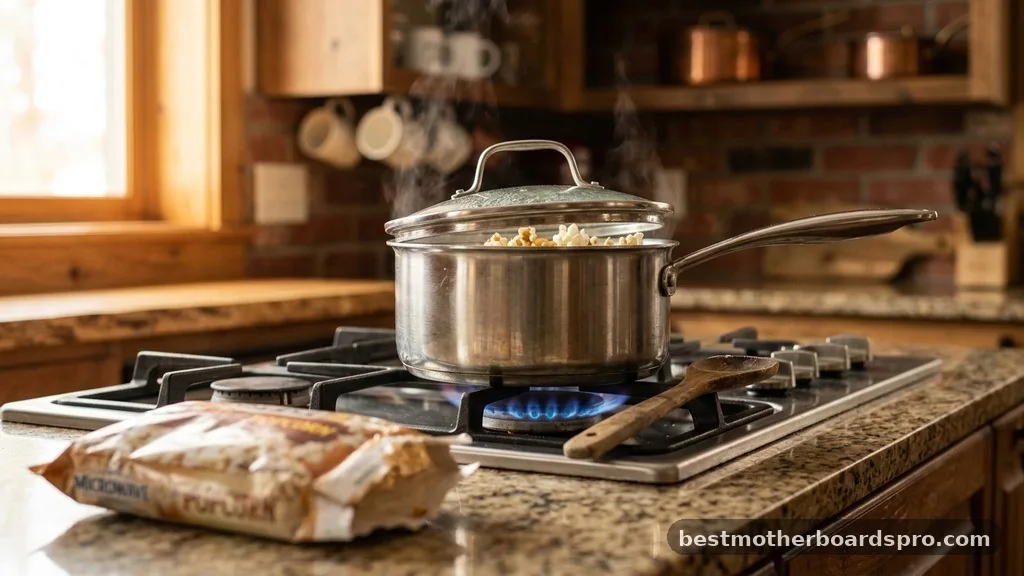
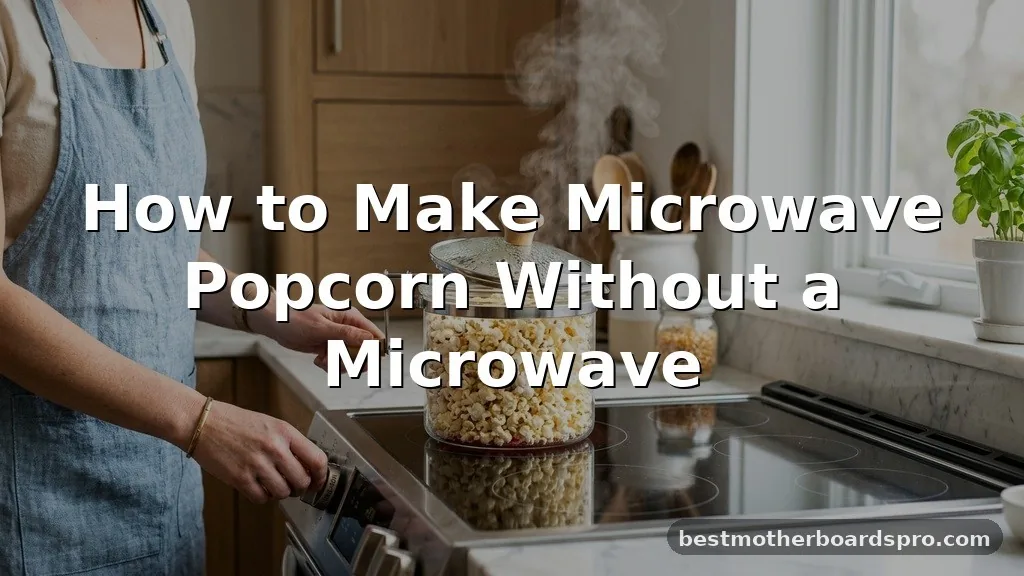
When you decide to cook popcorn intended for the microwave on a stovetop, the primary goal is to safely release the contents of the bag into a controlled heating environment. You shouldn’t try to put the paper bag directly on a burner, as it will likely catch fire. Instead, you need to open the package carefully and transfer the contents into a heavy-bottomed pot.
Many pre-packaged bags contain a mixture of dehydrated kernels, solidified oil, and flavorings. When you dump this into a pan, you are essentially starting with a pre-seasoned base. Because the oil is already included, you rarely need to add more, though a tiny splash of neutral oil can help if the pan seems dry.
Choosing the Right Equipment
The success of your stovetop transition depends heavily on the vessel you choose. A heavy-bottomed pot, such as a Dutch oven or a stainless steel saucepan, provides the best heat distribution. This prevents hot spots that might burn the kernels before they have a chance to fully expand.
Essential Tools for Stovetop Popping
- Heavy-bottomed pot: Thick metal retains heat better and prevents scorching.
- Tight-fitting lid: This keeps the steam inside while allowing excess pressure to escape.
- Long-handled spoon: Use this to shake the pan or stir the contents during the initial heating phase.
- Heat-resistant mitts: Essential for handling the pot when it gets hot.
The Step-by-Step Stovetop Method
To replicate the experience, pour the contents of your bag into the pot. Turn your burner to medium-high heat. If you use too much heat, the outer shell of the corn will burn before the interior can turn into fluffy white starch.
Place the lid on the pot, but leave it slightly cracked to allow steam to escape. If you trap all the moisture, your snack will turn out chewy rather than crisp. As the heat rises, listen for the first few pops.
Once the popping begins, shake the pot back and forth over the burner every few seconds. This motion ensures that the unpopped kernels settle at the bottom near the heat source while the finished pieces move toward the top.
Addressing the Paper Bag Dilemma
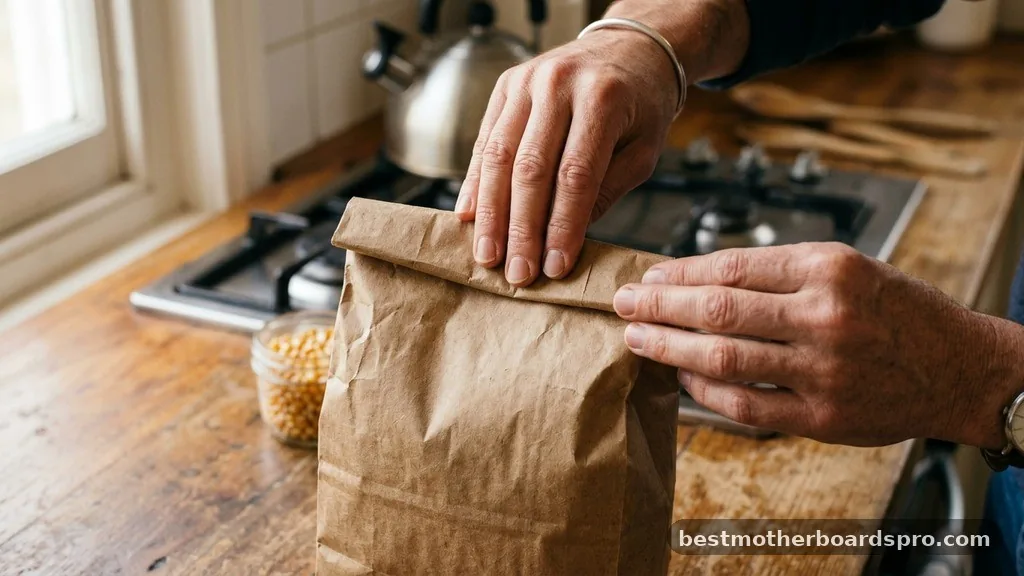
Some people wonder if they can simply place the paper bag in a different appliance. While the paper bag is designed for a specific frequency of radiation, it is not heat-safe for direct contact with electrical heating elements or open flames. Never place a microwave-safe bag inside a toaster oven or on a stove burner.
If you are determined to use the bag, you would need to empty the contents into a glass or metal bowl first. Once the corn is popped, you can return it to the bag if you want that nostalgic feeling, but the cooking process must happen in a proper culinary vessel.
| Feature | Stovetop Method | Microwave Method |
|---|---|---|
| Heat Source | Conductive (Direct) | Electromagnetic Waves |
| Texture | Crispier, less moisture | Softer, potentially soggy |
| Control | High (manual shaking) | Low (automatic timer) |
| Safety | Requires supervision | Set and forget |
Managing Heat and Timing
The duration of the popping process usually takes between three and five minutes. You should remove the pot from the heat as soon as the interval between pops slows down to about two seconds. If you wait for the very last kernel to explode, you will almost certainly burn the batch.
If you are using loose kernels rather than a pre-packaged bag, you will need to add your own fat. A high-smoke-point oil like avocado, coconut, or grapeseed oil works best. Add enough to coat the bottom of the pan, and wait until a single test kernel pops before adding the rest of the batch.
Enhancing the Final Result
One of the benefits of avoiding the microwave is the ability to customize your snack. Microwave-packaged versions often have a uniform, artificial buttery taste. When you cook on the stove, you can use real melted butter and high-quality sea salt.
Consider adding extra seasonings right after the popping stops. Because the corn is hot, the butter and salt will adhere much better than they do in a pre-packaged bag. You can experiment with smoked paprika, nutritional yeast, or even a drizzle of honey for a sweet and salty profile.
Topical Gaps: Air Fryers and Toaster Ovens
Many home cooks ask if they can use an air fryer or a toaster oven to achieve the same result. While technically possible, these methods are often inefficient. An air fryer blows air at high speeds, which can cause unpopped kernels to fly into the heating element, creating a fire hazard.
A toaster oven is similarly risky. The heating coils are usually too close to the container, which can scorch the paper or cause the oil to smoke.
If you must use a toaster oven, use a metal pan and keep the temperature moderate. However, the stovetop remains the superior choice for consistent, safe results.
FAQ
Can I use a paper lunch bag in the oven?
No, you should never put a paper lunch bag in an oven or toaster oven. The paper is not designed to withstand high temperatures and can easily ignite when placed near heating elements, creating a significant fire hazard in your kitchen. Always use metal or glass cookware instead.
Is it possible to cook popcorn without any oil?
Yes, you can pop corn using only dry heat, but it is challenging to prevent burning. Without oil to conduct the heat evenly, the kernels may scorch before they pop. If you want a lower-calorie snack, try using a specialized air-popping machine rather than a standard stovetop pot.
How do I stop my popcorn from burning on the stove?
The secret is constant movement. By shaking the pot frequently, you redistribute the kernels and prevent the ones at the bottom from sitting in one spot for too long. Additionally, listen closely and remove the pot from the heat the moment the popping frequency slows down significantly.
What if I don’t have a lid for my pot?
If your pot lacks a lid, you can use a large metal baking sheet or a piece of heavy-duty aluminum foil to cover it. Ensure the cover is secure enough to keep the popcorn inside but loose enough to allow steam to escape, which keeps your snack from becoming soggy.
Final Thoughts
Learning how to make microwave popcorn without a microwave opens up a world of better snacking. By moving away from the limitations of pre-packaged convenience, you gain the ability to control the quality of your ingredients and the texture of the final product. Whether you prefer the classic taste of butter and salt or want to experiment with gourmet seasonings, the stovetop method provides a reliable and satisfying experience.
Just remember to use a heavy-bottomed pot, keep the heat at a manageable level, and stay attentive to the sound of those kernels popping. With a little practice, you will find that the traditional way is often the most delicious way to enjoy your favorite corn-based treat.