

Deciding whether you can microwave formula is a common dilemma for sleep-deprived parents looking to speed up the feeding process. While it might seem like a convenient way to warm a bottle, the reality is that using this appliance poses significant risks to your baby. Microwaves heat liquids unevenly, often creating dangerous hot spots that can cause severe burns in an infant’s mouth.
Understanding the science behind these risks is essential for ensuring your child’s safety during every meal. By learning safer, more effective methods to prepare a bottle, you can protect your little one and ensure they receive their nutrients at the perfect, comfortable temperature.
Understanding the Dangers of Microwaving Formula
The primary reason you should avoid the microwave is the way it interacts with liquid. Microwaves do not heat substances uniformly; they excite water molecules in a way that creates pockets of extreme heat while other areas remain cool. When you test the outside of the bottle, it might feel lukewarm, but the liquid inside could be scalding hot.
Infants have extremely sensitive skin and delicate oral tissues. Even a small amount of liquid that is too hot can cause first or second-degree burns. Because babies cannot communicate their discomfort effectively before swallowing, the damage often occurs before a parent realizes there is a problem.
Furthermore, the rapid heating process can degrade the nutritional quality of infant formula. High temperatures may denature delicate proteins and vitamins, potentially reducing the health benefits your baby receives from each feeding. Sticking to gentler warming methods preserves the integrity of the nutrients your infant needs to grow.
Safe Alternatives for Warming Baby Bottles
Since the microwave is off the table, you need reliable, safe ways to bring a bottle to a comfortable temperature. Most babies actually tolerate room-temperature formula quite well, so warming is often a matter of preference rather than necessity. If your baby refuses a cool bottle, try these trusted techniques instead.
- Warm Water Bath: Place the bottle in a bowl or pot filled with warm—not boiling—water for a few minutes.
- Bottle Warmers: Use an electric bottle warmer specifically designed to heat formula or breast milk to a safe, controlled temperature.
- Running Tap Water: Hold the bottle under a stream of warm running water, swirling it gently to ensure the liquid heats evenly.
- Consistency Check: Always shake the bottle thoroughly after heating to distribute the temperature throughout the liquid.
Comparing Warming Methods
Choosing the right approach depends on your environment and the tools you have available. The following table compares common methods used to prepare a bottle for a hungry infant.
| Method | Safety Level | Speed | Consistency |
|---|---|---|---|
| Microwave | Low (High Burn Risk) | Very Fast | Poor |
| Warm Water Bath | High | Moderate | Good |
| Electric Warmer | High | Fast | Excellent |
| Room Temperature | Highest | Instant | Perfect |
Addressing Common Myths and Misconceptions
Many parents wonder if there is a “safe” way to use a microwave, such as heating the liquid for only five or ten seconds. Unfortunately, even short bursts can create localized hot spots. The physical properties of microwaves mean that the heating pattern is unpredictable, regardless of the duration.
Another myth involves the container itself. Some believe that using a glass bottle instead of plastic makes it safe to use a microwave.
While glass is generally safer for health reasons, it does not solve the problem of uneven heating. The liquid inside will still develop dangerous temperature gradients.
It is also important to note that these safety guidelines apply to both formula and breast milk. Breast milk, in particular, contains living cells and antibodies that can be destroyed by the intense, uneven heat generated by microwaves. Always prioritize gentle, indirect heat sources for any liquid you plan to feed your baby.
Best Practices for Proper Feeding Preparation
Preparation is half the battle when it comes to infant feeding. Establishing a routine helps you avoid the temptation to rush, which is often when safety shortcuts like using a microwave become appealing.
Checking the Temperature
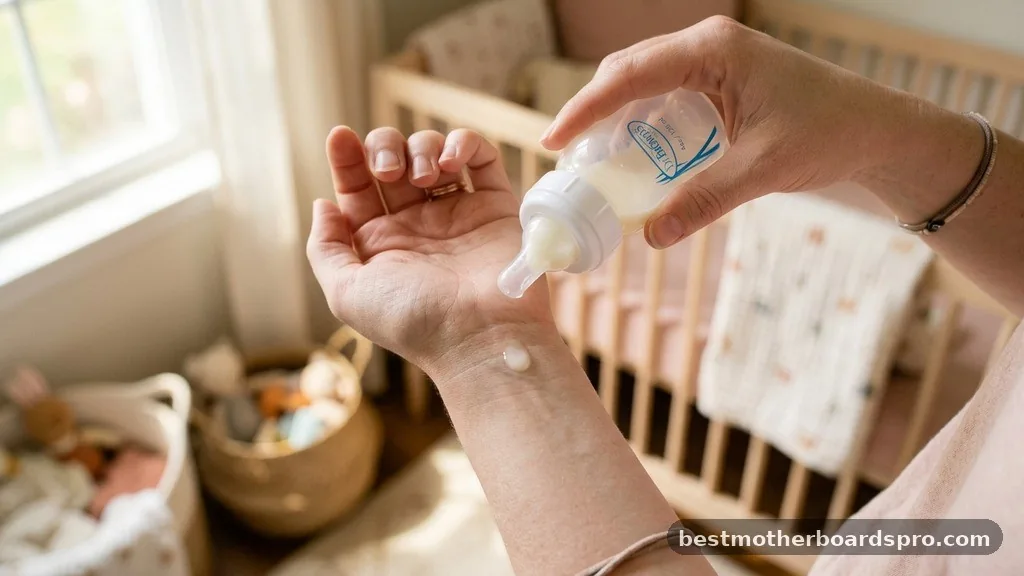
Before offering the bottle, always test the liquid on the inside of your wrist. Your skin here is sensitive enough to detect if the formula is too hot. If you feel any stinging or excessive heat, let the bottle sit for a moment or run it under cool water before trying again.
The Importance of Swirling

Never skip the step of mixing the bottle after warming. Whether you use a bottle warmer or a water bath, the liquid at the bottom of the bottle is usually warmer than the liquid near the nipple. A firm shake or a thorough swirl ensures the temperature is uniform throughout the entire volume of the liquid.
Hygiene Considerations
Always ensure your hands are clean before preparing a bottle. If you are using pre-mixed formula, follow the storage instructions on the packaging carefully. Never save a bottle that has already been partially consumed, as bacteria from the baby’s mouth can multiply rapidly in the leftover liquid.
Why Microwaves Fail to Provide Consistent Heat
The physics of a microwave revolve around electromagnetic waves that cause water molecules to vibrate. This process is highly dependent on the composition and density of the item being heated. Because formula is a complex mixture of proteins, fats, and carbohydrates, it does not heat as predictably as plain water.
When you heat a bottle, the waves often bounce off the sides of the container or focus on specific points. This results in the “hot spot” phenomenon.
Even if you stir the bottle, you might miss a small, hidden pocket of boiling liquid that can cause immediate injury. It is simply not worth the risk when safer alternatives are so readily available.
FAQ
Is it ever okay to microwave a baby bottle to save time?
No, you should avoid using a microwave for baby bottles entirely. The risk of creating hidden, boiling hot spots in the liquid is too high. These spots can cause severe internal burns to your baby’s mouth and throat, even if the bottle feels cool on the outside.
How can I tell if the formula is the right temperature?
The most reliable way to check is by placing a few drops on the inside of your wrist. You should feel warmth, but it should not be hot or stinging. If you are uncertain, it is always better to serve the formula slightly cooler rather than too warm.
Does heating formula in a microwave destroy nutrients?
Yes, high and uneven heat can degrade the essential proteins, vitamins, and minerals found in infant formula. Microwaving creates localized temperatures that can denature these delicate nutrients, effectively reducing the nutritional value of the meal you are providing to your infant.
Should I stop warming bottles altogether?
Not necessarily, but you should prioritize safety. Many infants are perfectly happy drinking formula at room temperature. If your baby prefers a warm bottle, use a dedicated bottle warmer or a warm water bath, as these methods provide a much safer and more controlled heating process.
Ensuring a Safe Feeding Environment
Prioritizing your baby’s safety means avoiding the convenience of the microwave when preparing their meals. While the speed of an appliance might be tempting during a middle-of-the-night feeding, the potential for accidental burns and nutrient loss is far too great. By utilizing safe warming methods like water baths or electric warmers, you ensure that every bottle is at a comfortable, consistent temperature.
Remember that testing the liquid on your wrist before every feeding is a simple, effective habit that provides extra peace of mind. Keeping these practices in mind will help you maintain a safe and healthy feeding routine for your little one as they continue to grow.