

Determining how many amps does a microwave use is a common concern for homeowners planning their kitchen layout or setting up an off-grid power system. While most modern appliances seem to run seamlessly, understanding the electrical load is essential for preventing tripped breakers and ensuring your household wiring remains safe.
Whether you are installing a new appliance or curious about your energy consumption, knowing the relationship between wattage and amperage helps you manage your home’s electrical capacity effectively. By looking at the power input of your specific model, you can easily calculate the current draw and avoid overloading your circuits during daily meal preparation.
Understanding the Relationship Between Watts and Amps
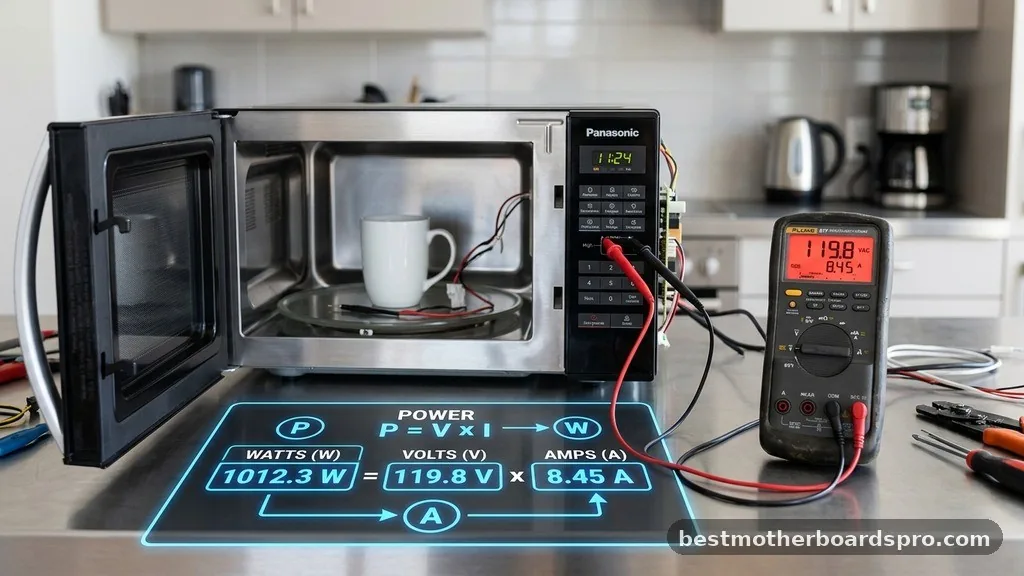
To figure out how many amps does a microwave use, you must first understand the fundamental relationship between wattage and electrical current. In a standard North American residential setting, most appliances operate on a 120-volt system. The formula for calculating amperage is straightforward: you divide the total wattage of the appliance by the voltage of the outlet.
If you have a 1,000-watt microwave, the calculation is 1,000 divided by 120, which results in approximately 8.3 amps. However, this figure represents the power output for cooking, not the total energy the machine pulls from the wall. You must account for the efficiency of the unit, which often means the actual input draw is higher than the rated cooking power.
Typical Current Draw by Microwave Size
Microwave ovens vary significantly in their power requirements based on their size and features. A compact unit designed for a dorm room or office breakroom will naturally draw less current than a large, over-the-range convection model. Most household microwaves range between 600 and 1,500 watts of cooking power.
The following table provides a general comparison of how different power ratings translate into estimated amperage requirements:
| Microwave Cooking Power | Estimated Input Wattage | Typical Amperage Draw |
|---|---|---|
| 600 Watts | 900–1,000 Watts | 7.5 – 8.3 Amps |
| 1,000 Watts | 1,500–1,600 Watts | 12.5 – 13.3 Amps |
| 1,200 Watts | 1,700–1,800 Watts | 14.1 – 15.0 Amps |
| 1,500 Watts | 1,900–2,000 Watts | 15.8 – 16.6 Amps |
Why a Dedicated Circuit Matters
Because a high-wattage microwave oven pulls a significant amount of current, it is frequently recommended to place it on a dedicated circuit. If your microwave shares a circuit with other high-draw appliances like a toaster, coffee maker, or blender, the combined load can easily exceed the capacity of a standard 15-amp breaker.
When you exceed the capacity of an amp circuit, the breaker will trip to prevent the wires from overheating. This is a safety feature, but it is inconvenient when you are in the middle of cooking. If you find your lights flickering or the breaker tripping every time you heat up food, your circuit is likely overloaded.
Running Microwaves on Portable Power Stations
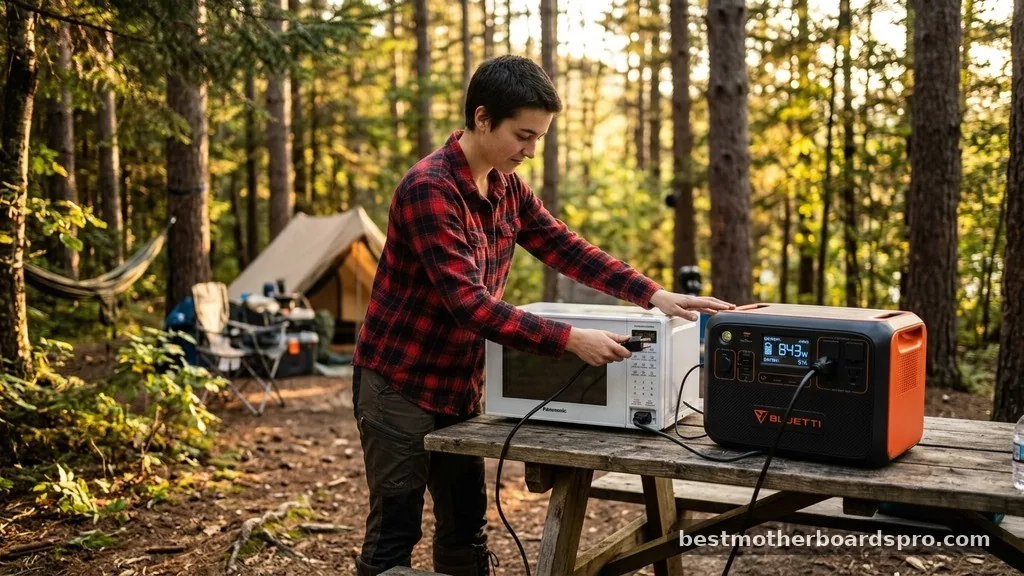
Many people ask if they can run a microwave using a portable power station while camping or during a grid outage. The short answer is yes, but you must ensure the power station has a high enough continuous watt rating to handle the microwave’s startup surge.
Microwaves often require a higher burst of power when they first start than they do while running. If your power station is rated for 1,500 watts, it might struggle to start a 1,200-watt microwave, even if the steady-state draw is manageable. Always check the peak surge capacity of your inverter before attempting to power kitchen appliances off-grid.
Common Factors That Influence Power Usage
Several variables determine the exact current draw of your machine. Understanding these can help you better manage your energy consumption.
- Inverter Technology: Modern inverter microwaves maintain a constant power level, which can be more efficient than traditional models that cycle the magnetron on and off.
- Age of the Appliance: Older microwaves may have less efficient internal components, leading to higher energy waste.
- Cooking Settings: Using the highest power level consistently creates a higher load than using lower power settings or defrost modes.
- Internal Cooling Fans: The fans and lights inside the unit add a small amount of extra wattage to the total current draw.
Addressing Topical Gaps: Standby Power and Efficiency
A common misconception is that microwaves only use electricity when they are actively cooking. While the primary load occurs during use, there is also a “phantom” load.
Many microwaves use a small amount of electricity while in standby mode to power the digital clock and the internal control board. While this amount is negligible—usually only a few watts—it contributes to your overall household energy consumption over the course of a year.
Another gap in understanding involves the difference between input and output. Manufacturers often market microwaves by their output wattage (e.g., 1,000 watts).
However, the appliance must draw more power from the wall to generate those 1,000 watts of cooking power due to energy lost as heat during the conversion process. This is why a 1,000-watt microwave often requires a 15-amp or 20-amp outlet to function safely without tripping the breaker.
FAQ
Can you run a 1,200-watt microwave on a 15-amp circuit?
Yes, you can, but it is close to the limit. A 1,200-watt microwave typically draws about 14 to 15 amps. Since 15-amp circuits are designed to handle 15 amps of continuous load, running other appliances on the same circuit will likely trip the breaker immediately.
Does leaving a microwave plugged in use a lot of electricity?
Leaving a microwave plugged in consumes a very small amount of electricity, primarily for the digital clock and standby features. This “vampire” power draw is minimal and typically costs only a few dollars per year, so unplugging it is not necessary for energy savings.
Why does my microwave trip the breaker when I turn it on?
If your microwave trips the breaker, it is likely because the circuit is overloaded. High-wattage kitchen appliances should ideally be on a dedicated circuit. If you have a toaster or coffee maker running on the same line, the total amperage will exceed the breaker’s limit, causing it to trip.
Is it better to use a 20-amp circuit for a large microwave?
For high-performance or built-in microwaves, a 20-amp circuit is often preferred. This provides extra headroom, ensuring the appliance can pull its required current without stressing the wiring or risking a trip, especially if the microwave is used frequently or for long cooking durations.
Conclusion
Evaluating how many amps does a microwave use is an important step in maintaining a safe and efficient home electrical system. By identifying the input wattage of your specific model, you can determine if your current setup is sufficient or if you need to dedicate a circuit to handle the load. Remember that while the cooking power is a key spec, the actual current draw is what determines your circuit requirements.
Whether you are setting up a kitchen or exploring portable power options for your next adventure, keeping these electrical basics in mind will help you avoid frustrating power outages. If you find your circuits are frequently overloaded, consulting with a licensed electrician is always the safest way to ensure your home is properly equipped for your appliances.