
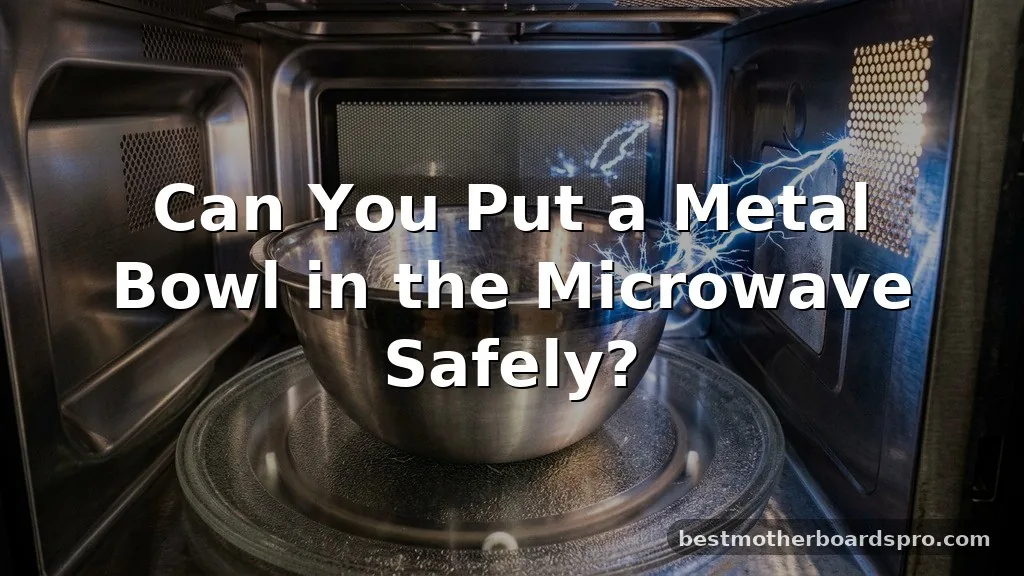
Determining whether you can put a metal bowl in the microwave is a common kitchen dilemma that often stems from a misunderstanding of how these appliances actually function. Many people have heard horror stories about sparks flying or fires starting, yet they see professional chefs or manufacturers occasionally suggesting metal containers for specific tasks.
Understanding the physics behind why your kitchen appliance behaves this way helps you avoid potential hazards and protects your equipment. By grasping how electromagnetic waves interact with different materials, you can confidently decide which containers belong inside your machine and which ones are strictly off-limits, ensuring your daily cooking remains both efficient and perfectly safe.
The Science of Microwaves and Metal
Microwaves function by producing electromagnetic waves generated by a component called a magnetron. These waves travel into the main cavity and bounce off the walls, penetrating food to cause dielectric heating, where water molecules vibrate rapidly to generate heat. When you introduce metal into this environment, the rules change significantly.
Metal is highly conductive. Because of its conductivity, the surface of the metal responds to the oscillating electromagnetic fields by allowing electrons to move freely. This creates eddy currents on the surface of the object.
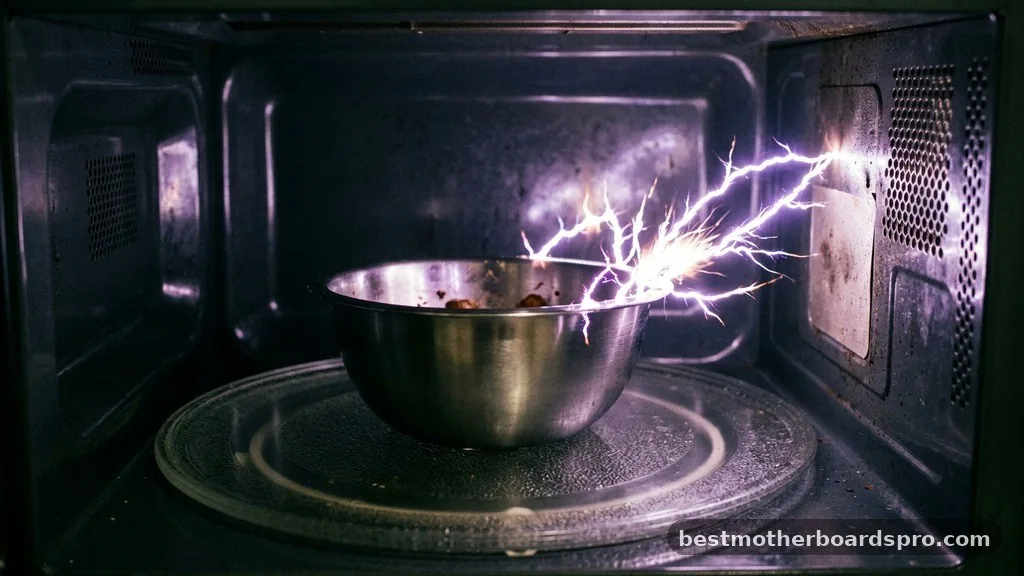
If the metal object has sharp edges, points, or thin gaps, these currents can concentrate at those specific spots, leading to an electrical discharge commonly known as arcing. These sparks are not just visual spectacles; they can damage the internal walls of the microwave or potentially ignite nearby paper or food items.
Why Arcing Occurs in Your Microwave
Arcing happens when the electrical potential difference between two points on a metal object becomes too high for the surrounding air to act as an insulator. When you place a metal bowl in the microwave, the shape of the bowl plays a massive role in whether it will arc. A smooth, rounded, and thick-walled stainless steel bowl might not spark immediately if it is placed in the center of the tray, but it is rarely a good idea to experiment.
Thin, jagged metal surfaces—like the crinkled edges of aluminum foil or a fork with sharp tines—are notorious for creating high-intensity fields at the tips. When these fields exceed the dielectric breakdown strength of the air, a spark jumps across the gap.
This process is essentially a miniature lightning strike, and it poses a genuine risk to your kitchen appliance safety. Even if a bowl does not spark, the presence of metal blocks the waves from reaching the food, leading to poor heating efficiency and potentially overheating the magnetron, which is an expensive part to replace.
The Faraday Cage Effect
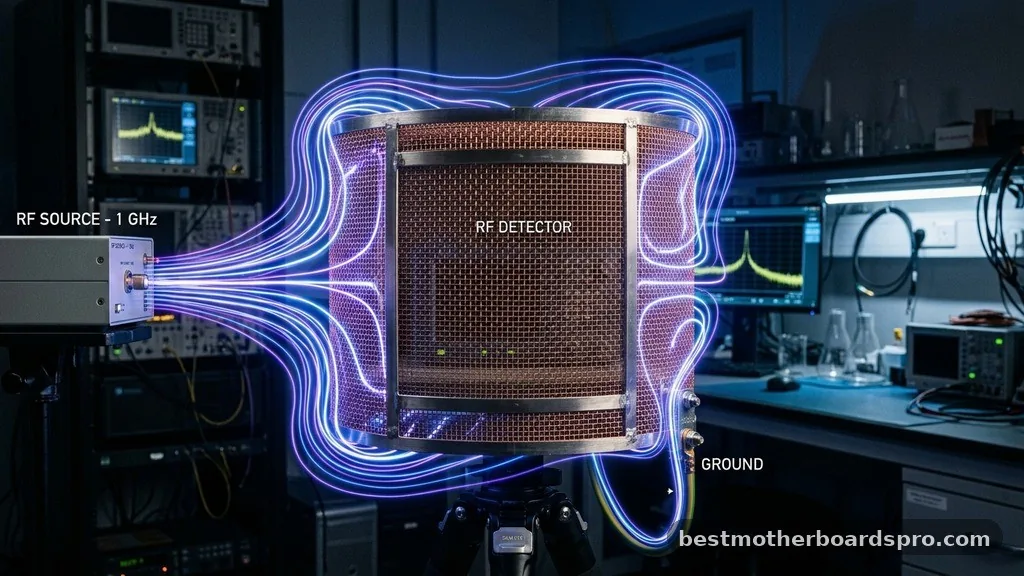
Many people wonder if a metal bowl acts as a Faraday cage. In technical terms, a metal container can indeed act as a shield, preventing the waves from passing through the metal to heat the food inside. If you place food inside a deep, solid metal bowl, the food will likely remain cold because the metal reflects the energy away from the contents.
However, the risk remains that the bowl itself will heat up due to the eddy currents circulating on its surface. While the food stays cool, the bowl can become extremely hot, creating a burn hazard when you attempt to remove it. Furthermore, the reflected energy can create “hot spots” within the microwave cavity that might damage the internal components over time.
| Material Type | Microwave Suitability | Reasoning |
|---|---|---|
| Borosilicate Glass | Excellent | High thermal shock resistance and transparent to waves. |
| Ceramic Dishes | Generally Safe | Most are safe, provided they lack metallic glazes or trim. |
| Stainless Steel | Risky | High conductivity leads to arcing and poor heating efficiency. |
| Plastic (Microwave-Safe) | Safe | Designed to withstand heat without melting or leaching. |
How to Identify Safe Cookware
Navigating cookware safety doesn’t have to be a guessing game. Manufacturers usually provide clear labels on the bottom of containers. If you are unsure about a specific dish, there are several ways to verify its suitability for your appliance.
- Look for the microwave-safe symbol, which typically features a square box with wavy lines inside.
- Avoid any dish that has gold, silver, or metallic-looking trim or patterns, as these contain trace metals that will arc.
- Test a container by placing it in the microwave alongside a small cup of water for 30 seconds on high power. If the container itself gets hot while the water stays cool, it is absorbing energy and should not be used.
- Prioritize non-metallic containers whenever possible to ensure even cooking and prevent potential damage to your appliance.
Addressing Common Misconceptions
A common myth is that all metal is strictly forbidden. While it is true that you should generally avoid metal, some modern microwaves come with specific racks or trays designed to be used safely. These are engineered to prevent thermal runaway and arcing by being placed at specific distances from the walls.
However, applying this logic to a standard kitchen bowl is dangerous. A mixing bowl is not designed with the same engineering tolerances as a dedicated microwave rack.
Even if you have seen someone successfully heat soup in a stainless steel bowl, the risk of an electrical discharge or damaging the magnetron is simply not worth the convenience. Always stick to glass, ceramic, or BPA-free plastic containers to ensure your safety.
FAQ
What happens if I accidentally put a metal bowl in the microwave?
If you start the microwave with a metal bowl inside, you may see sparks, known as arcing, jumping from the bowl to the oven walls. This can damage the interior finish of the appliance, ruin the magnetron, or even ignite nearby food, leading to a potential kitchen fire.
Are there any types of metal that are safe to microwave?
Generally, no. While some manufacturers include specific metal racks with ovens, these are designed to be used in precise ways. Standard metal bowls, cutlery, and foil should never be placed in the microwave because their shape and material properties often lead to dangerous electrical arcing and uneven heating.
How do I tell if my bowl is safe to use?
Check the bottom of the bowl for a microwave-safe symbol or a label explicitly stating it is safe for microwave use. If you are still unsure, perform the water test: heat the empty bowl with a glass of water for 30 seconds; if the bowl gets hot, it is not safe.
Can I microwave a bowl with a gold or silver rim?
You should avoid microwaving any dish with metallic trim, even if the base material is ceramic or glass. The metallic paint contains actual metal particles that will respond to the electromagnetic waves, causing the rim to spark, heat up rapidly, and potentially crack the dish.
Conclusion
Deciding whether you can put a metal bowl in the microwave is straightforward when you understand the physics of electromagnetic interaction. Because metal is highly conductive, it interferes with the way the magnetron distributes energy, creating a high risk of arcing and permanent damage to your appliance. While it might be tempting to use whatever dish is closest at hand, the potential for fire or expensive repairs makes it clear that metal has no place in your microwave.
By sticking to glass, ceramic, or labeled microwave-safe plastics, you ensure your cooking process remains efficient and hazard-free. Always check for the appropriate safety symbols before heating your food and avoid any items containing metallic glazes or trim. If you have questions about specific materials in your kitchen, feel free to reach out or check the manufacturer’s guidelines for your specific appliance model to stay on the safe side.