

When you look at a pile of discarded electronics, it is easy to wonder if the rumors about hidden riches are true. Many people hear that motherboards are packed with precious metals, but understanding how much gold is in a motherboard requires looking past the hype and into the reality of industrial recovery.
While these circuit boards are indeed a source of value, the quantities are often much smaller than the average enthusiast expects. If you have ever considered the potential for reclaiming materials from old hardware, grasping the actual gold content is the first step toward separating myth from the technical reality of electronic waste.
The Reality of Gold Content in Motherboards
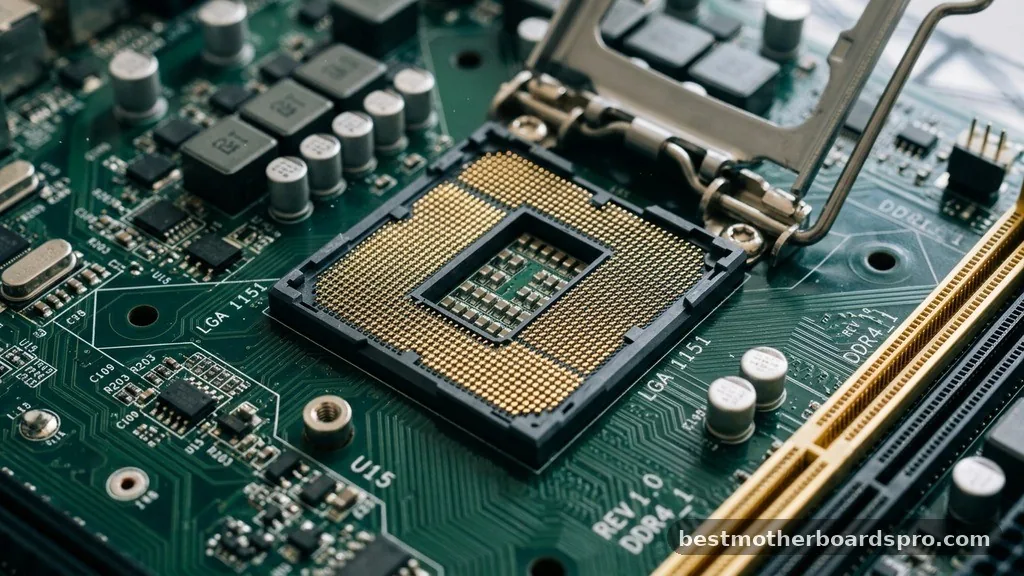
The amount of gold found in a typical motherboard is significantly lower than most people assume. On average, a standard consumer-grade computer motherboard contains between 0.01 and 0.05 grams of gold.
This gold is not sitting in a solid nugget; instead, it is distributed as a thin layer of gold plating on various connectors, pins, and processor sockets. Because this metal provides excellent conductivity and resists corrosion, manufacturers use it sparingly to ensure long-term reliability.
When you look at a single board, the gold is almost invisible to the naked eye. It exists primarily on the contact points of the RAM slots, the PCI Express slots, and the pins inside the CPU socket.
Because the layer is microscopically thin, it would take a massive volume of scrap to accumulate a significant amount of gold. If you are hoping to find a quick fortune in your closet of old tech, the reality is that the labor required to isolate that tiny fraction of a gram often outweighs the current market value of the gold itself.
Why Gold Plating is Used in Electronics
The use of gold in circuit boards is a purely functional design choice rather than an aesthetic one. Gold is a noble metal, meaning it does not oxidize or tarnish when exposed to air or moisture.
In the world of high-speed computing, a stable electrical connection is non-negotiable. Even a tiny layer of corrosion on a connector could lead to signal interference, data loss, or system failure.
Manufacturers apply this thin gold plating to contact surfaces to ensure that the hardware remains functional for years, even in humid or harsh environments. While silver and copper are more conductive, they tarnish quickly, which would eventually degrade the connection.
Gold provides the perfect balance of conductivity and chemical stability. Because it is so malleable, it can be applied in extremely thin layers, which helps keep the production costs of complex electronics manageable while still providing high-end performance.
Comparing Gold Yields Across Hardware Components
Not all parts of a computer are created equal when it comes to precious metal recovery. While motherboards are the primary focus for many hobbyists, other components often hold a higher concentration of gold per unit of mass. The following table provides a general comparison of where you are likely to find the most value in your scrap electronics.
| Component | Relative Gold Yield | Primary Location of Gold |
|---|---|---|
| CPU (Processor) | High | Pins and internal bond wires |
| Motherboard | Low to Medium | Connectors, pins, and slots |
| RAM Sticks | Medium | Edge connectors (gold fingers) |
| Hard Drives | Very Low | Internal circuit board and connectors |
As the data suggests, the CPU is the “heavy hitter” in terms of gold content. The pins on older ceramic processors, in particular, are densely plated. In contrast, the motherboard acts as a mounting surface that relies on many different components to function, spreading the total gold content across a much larger surface area.
The Challenges of Electronic Waste Recycling
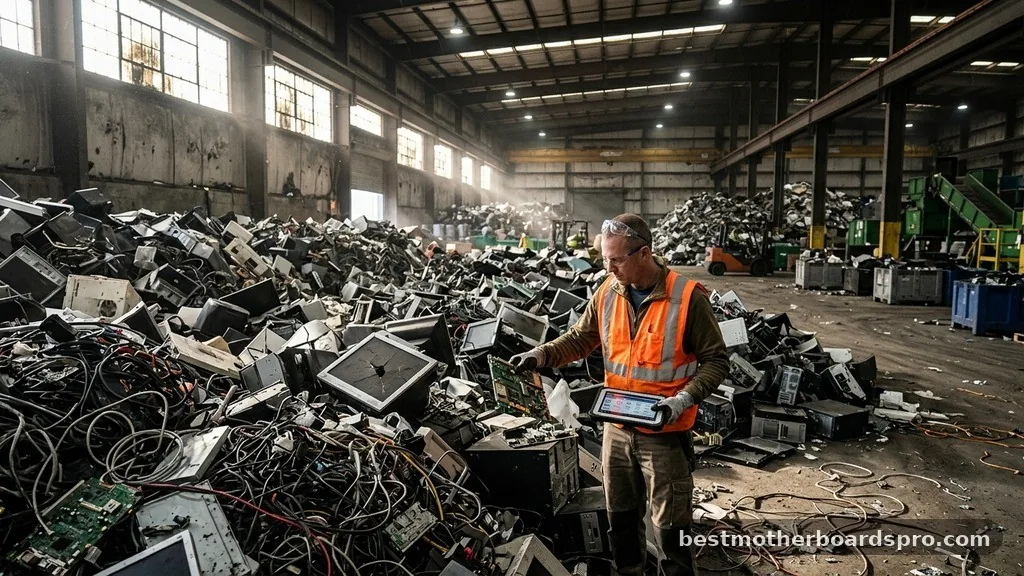
Recycling circuit boards is a complex process that goes far beyond simple physical separation. Because the gold is bonded to other materials like fiberglass, plastic, and copper, you cannot simply peel it off.
Industrial refining facilities use chemical leaching or high-heat smelting to isolate these precious metals. These processes are not only expensive but also potentially hazardous, involving toxic acids and heavy fumes.
Small-scale recovery methods often seen on the internet rarely account for the true environmental or financial cost. When you attempt to process scrap at home, you are dealing with concentrated waste streams that are difficult to manage safely.
For the vast majority of people, the most efficient way to handle electronic waste is to send it to certified recycling centers. These facilities have the scale and technology to ensure that the materials are recovered in an environmentally responsible way, which is far more efficient than individual recovery attempts.
Factors Influencing the Value of Scrap
Several variables determine the actual worth of a motherboard when sold as scrap. It is not just about the gold; it is about the total mix of metals, including copper, silver, and palladium.
The age of the board plays a massive role in its potential value. Boards manufactured in the 1990s or early 2000s often contain significantly more gold than modern boards, as manufacturers have become much more efficient at using the bare minimum amount of precious metal required for performance.
If you are evaluating a batch of motherboards, keep these factors in mind:
- Manufacturing Year: Older boards generally feature thicker gold plating than modern, cost-optimized designs.
- Board Size: Larger server-grade boards often have more connectors and pins than compact consumer boards.
- Component Density: Boards with more expansion slots and integrated features usually offer a higher yield of precious metals.
- Current Market Prices: The global spot price for gold fluctuates daily, directly impacting the payout for scrap lots.
Common Misconceptions About Gold Recovery
One of the most persistent myths is that you can recover significant wealth from just a few motherboards. People often imagine that the gold plating is thick enough to be scraped off with a tool, but that is simply not the case.
The gold is usually applied via electroplating, resulting in a layer so thin that it is measured in microns. If you removed the gold from ten average modern motherboards, you would likely struggle to collect even a small fraction of a gram.
Another common misconception is that all circuit boards are identical. In reality, a motherboard from a high-end enterprise server is built to a much higher standard than a budget laptop motherboard.
Server boards are designed for 24/7 reliability, which often translates to higher-quality connectors and more robust gold plating. If you are looking at scrap for potential value, always differentiate between consumer hardware and enterprise-grade equipment.
FAQ
Which computer component contains the most gold?
The CPU, or central processing unit, typically contains the most gold of any individual computer component. Older ceramic-based processors are particularly valuable because they have dense gold pins and internal wiring that are much easier to process compared to the thin plating found on motherboard connectors.
Is it profitable to extract gold from motherboards at home?
It is rarely profitable for an individual to extract gold from motherboards at home. The chemicals required for a proper refining process are expensive and dangerous to handle, and the actual yield from a few boards is usually worth less than the cost of the reagents used.
How many motherboards are needed to get one ounce of gold?
Because modern motherboards contain very little gold, it would take hundreds, if not thousands, of boards to recover one full ounce. The exact number depends on the age and quality of the boards, but you would likely need several hundred pounds of scrap to reach that specific weight.
Where does the gold go when motherboards are recycled?
When motherboards are processed at professional recycling facilities, they are shredded and separated into different material streams. The precious metal-bearing fractions are then sent to specialized smelters or refineries, where the gold is chemically separated, purified, and eventually returned to the global bullion market for reuse.
Final Thoughts
Understanding how much gold is in a motherboard reveals the fascinating intersection of high-speed technology and resource recovery. While the dream of finding hidden treasures in old electronics is a common one, the reality is that the gold is spread thin, serving as a critical but microscopic guardian of data integrity. For most people, the best approach is to recognize the value of responsible recycling rather than attempting home extraction.
By keeping old hardware out of landfills and ensuring it reaches proper recycling streams, you support the circular economy and help recover precious metals that can be used again in the next generation of computing. If you have a collection of old boards, the most practical step is to contact a reputable e-waste recycler who can handle the refining process safely and efficiently.



